The problem
Aquaculture is the world’s fastest-growing source of animal protein, and shrimp and fish need protein-rich feed. Much of it still comes from fishmeal, made from wild-caught fish, or soy grown on farmland. Both carry environmental costs, and both swing in price when fish stocks or harvests fall.
Meanwhile methane escapes from landfills, farms, wastewater plants and gas infrastructure. String Bio’s 2022 material, citing the IPCC’s AR6 report, notes that methane traps around 27 times as much heat as CO2 over a century and is responsible for about a third of warming to date. Turning that gas into something valuable gives an economic reason to capture it.
The product
PRO-DG is a dried protein ingredient made from methanotrophic bacteria, microbes that use methane as their only source of energy and carbon. String Bio says it contains about 70% protein and is made to defined specifications through a controlled, traceable process, without relying on the land and marine resources behind soy and fishmeal. In an August 2026 post, the company said PRO-DG has been validated in aquaculture, poultry, swine and canine diets across several species and regions.
The same platform makes crop products. In 2022 String Bio said its methane-derived biostimulants ImpaKt and CleanRise had been used in 11 Indian states on more than 30 crops. CleanRise is tailored to rice paddies, which emit methane from submerged soil. Harvard Business School students who visited in January 2026 reported agricultural products covering 11 crops, a protein powder for people, and animal nutrition from pet food to chicken feed.
How it works
- Feed gas. Methane and oxygen are bubbled into a fermenter holding the bacterial culture, water and mineral nutrients.
- Grow. Bacteria oxidise methane for energy and build protein-rich cells from its carbon.
- Move gas. Both gases dissolve poorly in water, so much of the engineering lies in transferring them efficiently.
- Automate. The Bengaluru plant runs with no direct human labour once a batch begins, according to the HBS visit.
- Harvest and dry. Cells are harvested and dried into a powder that feed mills blend into pellets.
- Choose the gas. CEO Ezhil Subbian says the process can run on methane from biogas as well as natural gas.
Timeline
| Date | Milestone |
|---|---|
| 2014 | Subbian and Kumar bring the venture to India after her years in Silicon Valley biotech |
| 26 May 2017 | Wins the inaugural Future Food Asia Award in Singapore, a $100,000 grant |
| 2020 | Begins working with Skretting’s global team on a feed ingredient |
| 4 Feb 2022 | BusinessLine reports biostimulants used in 11 states on 30+ crops |
| 11 Jul 2022 | $20 million Series B first close and Woodside Energy development agreement |
| 30 Aug 2022 | Skretting Australia starts aquaculture feeding trials of PRO-DG |
| 26 Jul 2024 | Self-affirmed US GRAS for crustacean feed announced |
| Jan 2026 | Harvard Business School field course visits the plant |
| Sep 2026 | Gates Foundation commits $1,168,348 for biofertiliser validation |
Impact and numbers
The regulatory step is real but specific. String Bio says its GRAS conclusion for crustacean feed in the US was affirmed by an independent expert panel after more than two years of safety documentation. Self-affirmed GRAS is not an FDA approval, and it covers crustacean feed only.
Industry interest has been strong. Skretting, Nutreco’s aquafeed arm, said in 2022 that it aims for 5% to 10% novel ingredients in its feed formulations and chose PRO-DG for trials in Australia and New Zealand. The July 2022 Series B, with a first close of $20 million, brought in Woodside Energy alongside investors including Ankur Capital and Dare Ventures. Woodside’s interest was in placing the technology at sites where methane is otherwise wasted.
The newest backing targets farming. In September 2026 the Gates Foundation committed $1,168,348 over 24 months “to validate the gas-fermentation derived microbial biofertilizers for small scale producers crop yield and income increase,” serving Africa and Asia.
The economic claim goes back years. At the 2017 award, Subbian said the product could cut costs for feed makers by 30% to 50%, a company claim that has not been independently confirmed.
Honest caveats
Little public data. String Bio does not publish production volumes, prices or emission savings per tonne, so the climate benefit cannot be quantified here.
Gas source matters. Running on fossil natural gas has a very different footprint from biogas; the share of each is not disclosed.
Narrow approval. US GRAS covers crustacean feed. Other species and markets, including the EU, need their own approvals.
Funding. No equity round since the 2022 Series B was found; the 2026 Gates money is a grant for crop products. The company appears active, with no sign of insolvency.
Selling to smallholders. The HBS visitors noted that village distributors steer farmers’ choices, so String Bio may need costly incentives to win share.
What’s next
Subbian, who holds two PhDs and worked at fuels start-up Gevo alongside later Nobel laureate Frances Arnold, leads a team that is developing crop products with Gates support, pushing PRO-DG into feed for several species, and exploring human nutrition. Scaling gas fermentation economically is the main challenge, as other companies in the field have found.
Why it matters for Europe and green buyers
For Europe, which has its own gas fermentation companies such as Finland’s Solar Foods and a methane reduction push under the EU Methane Strategy, String Bio shows a low-cost route that could suit European biogas plants, turning a waste gas into feed. EU buyers would need EU feed approval and clear data on the methane source.
In India, a homegrown platform that makes feed protein and rice-paddy products from one gas addresses food security and emissions at once. For the world, converting methane into protein tackles one of the fastest levers on near-term warming.
Sources & image credits
- The Edge Malaysia, “Feed ingredient maker String Bio wins US$100,000 at the Future Food Asia Award”, 26 May 2017. https://theedgemalaysia.com/article/feed-ingredient-maker-string-bio-wins-us100000-future-food-asia-award
- The Hindu BusinessLine, “String Bio shows the way to convert methane into biostimulants for crops, animal feed”, 4 February 2022. https://www.thehindubusinessline.com/business-tech/converting-methane-into-biostimulants-for-crops-animal-feed-bengaluru-firm-shows-the-way/article64943131.ece
- String Bio, media release on Woodside collaboration and Series B, 11 July 2022 (PDF). https://www.seventure.fr/wp-content/uploads/2022/07/String-Bio-media-release-11th-July-2022.pdf
- String Bio and Skretting Australia, media release, 30 August 2022 (PDF). https://stringbio.com/StringBio_Skretting-Australia.pdf
- The Hindu BusinessLine, “String Bio achieves GRAS status for its microbial protein”, 26 July 2024. https://www.thehindubusinessline.com/economy/agri-business/string-bio-achieves-gras-status-for-its-microbial-protein/article68449678.ece
- Harvard Business School, Business & Environment, “IFC India 2026: String Bio, turning methane into productivity”, 2026. https://www.hbs.edu/environment/blog/ifc-india-2026-stringbio
- String Bio, LinkedIn post on PRO-DG for animal nutrition, 27 August 2026. https://www.linkedin.com/posts/string-bio-pvt-ltd_stringbio-prodg-animalnutrition-activity-7498601442149064704-Y8UQ
- Gates Foundation, committed grant INV-105105 to String Bio Private Limited, September 2026. https://www.gatesfoundation.org/about/committed-grants/2026/09/inv-105105
- Wikimedia Commons, “Methylococcus capsulatus”. https://commons.wikimedia.org/wiki/File:Methylococcus_capsulatus.png
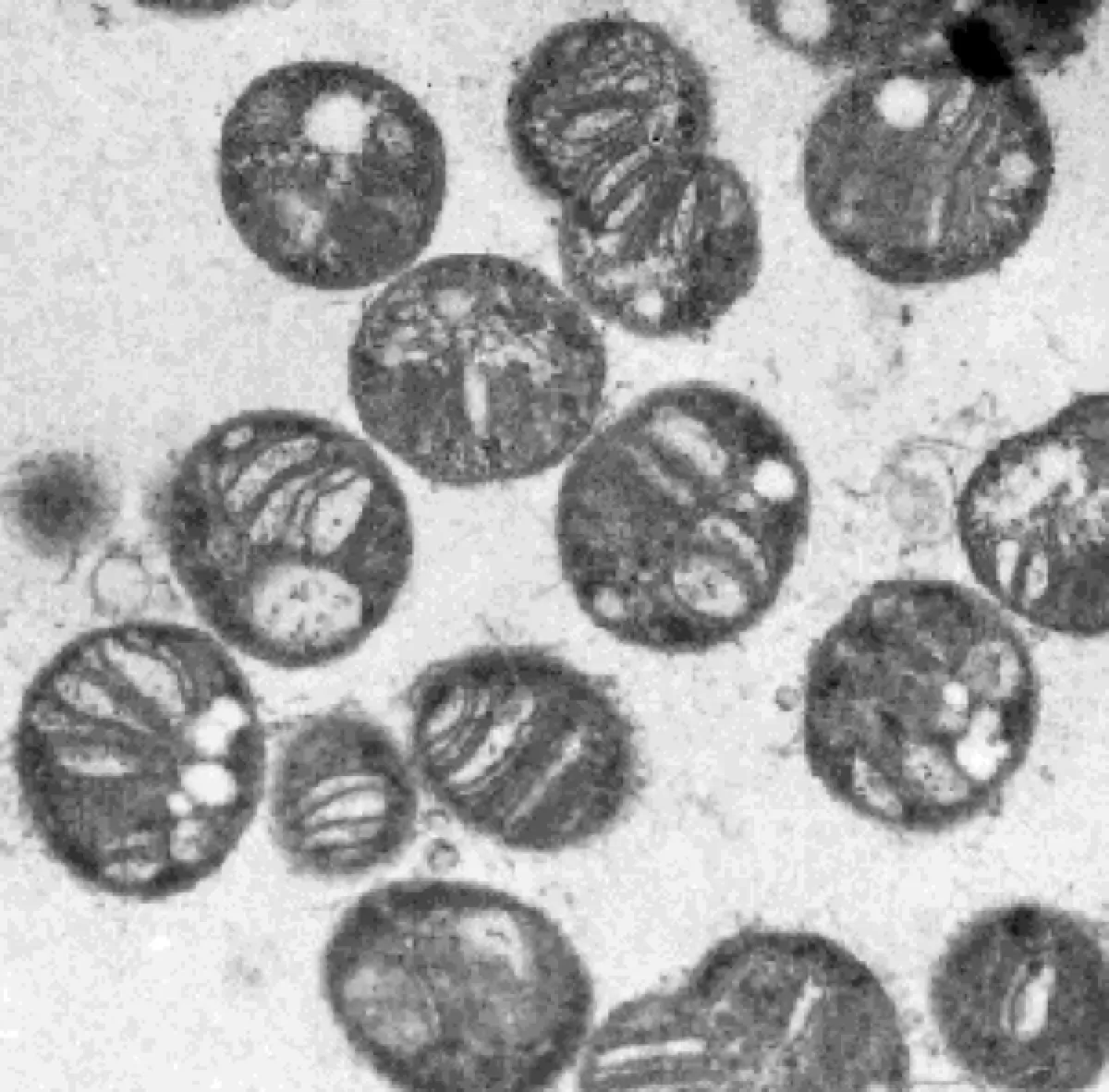
Images: “Methylococcus capsulatus”, Anne Fjellbirkeland, CC BY 2.5, via Wikimedia Commons. Illustrative; a generic methanotroph, not String Bio’s strain or plant.