The problem
Animal feed is a hidden footprint of what we eat. Much of the protein in European pig, poultry and fish feed comes from imported soy, linked to land-use change in South America, and from fishmeal made from wild-caught fish. Meanwhile the food industry produces large volumes of by-products, from vegetable trimmings to processing residues, that often go to low-value uses.
Insects can link the two problems. Many animals eat insects naturally, and black soldier fly larvae turn low-grade organic material into protein and fat efficiently.
The product
Protix farms the black soldier fly (Hermetia illucens), a harmless species whose larvae eat a wide range of organic matter. It sells ProteinX, a protein meal; LipidX, an insect fat; fresh insect meat as a high-moisture protein for pet food; and frass, the larvae’s residue, as organic fertiliser. Customers are pet food makers, aquafeed producers, livestock feed companies and the fertiliser sector.
Protix describes itself as fully integrated, with breeding, rearing and processing in one plant. King Willem-Alexander opened the Bergen op Zoom facility on 11 June 2019, during the company’s tenth anniversary. In October 2023 Tyson Foods took a minority stake and formed a joint venture to build a plant in the US, and in January 2024 the European Investment Bank signed a loan of up to EUR 37 million under InvestEU for a planned plant in Poland.
How it works
- Breed. Adult flies mate and lay eggs in a breeding unit; Protix counts its fly genetics among its core assets.
- Hatch. Eggs become neonates, tiny larvae.
- Feed. Neonates go into rearing crates of permitted food-industry by-products.
- Grow. Larvae grow rapidly in a climate-controlled, highly automated system.
- Harvest. Before pupating, larvae are separated from their frass.
- Process. Larvae are split into protein meal and fat; frass becomes fertiliser.
Timeline
| Date | Milestone |
|---|---|
| 2009 | Protix founded by Kees Aarts and Tarique Arsiwalla |
| 11 Jun 2019 | King Willem-Alexander opens the Bergen op Zoom plant |
| 17 Oct 2023 | Tyson Foods takes a minority stake and forms a US joint venture |
| 22 Jan 2024 | EIB signs a loan of up to EUR 37 million for a planned Polish plant |
| 2025 | Peer-reviewed life-cycle study of Protix products published |
| Nov 2025 | Maiko van der Meer becomes CEO |
| 17 Mar 2026 | Protix announces a shift to Asia; Nebraska project on hold |
| 4 to 5 Aug 2026 | Wakker Dier advertising complaint and first protest against insect farming |
| 29 Sep 2026 | Innovafeed and Protix publish assessment on industrial-scale insect protein |
Impact and numbers
The strongest evidence is a 2025 peer-reviewed study in the Journal of Cleaner Production, based on primary data from Protix’s commercial plant running around the clock at full capacity. Protix reports that it found ProteinX lowers CO2 emissions by 78% compared with poultry meal, by 20.4% compared with fishmeal and by 52.6% compared with soy meal. LipidX uses 100% less land than coconut oil, and fresh insect meat uses 99.8% less water than poultry meat. Protix says these results were the same as, or better than, its own 2024 figures, mainly because the external databases had changed.
The sector’s numbers vary widely. In a September 2026 assessment, Innovafeed and Protix note that published studies of black soldier fly production report 0.5 to 77 kg CO2 equivalent per kilogram of protein, depending on feedstock, energy and method. They argue the high end reflects lab and pilot plants; Innovafeed says its own figure fell fivefold between 2022 and 2025 to 1.2 kg.
Honest caveats
Feedstock rules. EU law treats farmed insects as farm animals, so larvae may only eat permitted feed, excluding post-consumer food waste and most animal by-products. Van der Meer says feedstock is the biggest driver of cost.
Scrutiny of claims. On 4 August 2026 Wakker Dier complained to the Dutch Advertising Code Committee about Protix’s website claims, arguing that some side streams could feed livestock directly. The next day campaigners held what they called the world’s first protest against insect farming, urging Invest-NL not to fund Protix. Protix says its LCA does not treat feedstocks as zero-impact waste, but it is reviewing whether website comparisons can be made more precise.
Stalled expansion. The Nebraska plant with Tyson is on hold. Van der Meer says Protix will put no more capital into Bergen op Zoom.
A fragile sector. Ÿnsect and others have failed, and Danish firm Enorm was declared bankrupt. Protix is still operating, but it is a survivor, not yet a proven profit story.
What’s next
“We want to go east,” van der Meer told AgFunderNews. Protix signed a memorandum of understanding with South Korean post-consumer waste collector Reco and is seeking a partner in Thailand, Malaysia, Vietnam or Indonesia, using joint ventures in which Protix brings genetics and know-how and local partners bring feedstock and cash. Bergen op Zoom becomes a development hub, and Protix plans to earn revenue from consulting, technology licensing and neonate sales.
Why it matters for Europe and green buyers
For Europe, Protix is both a success and a warning. It built the leading insect protein plant, yet EU feedstock rules and high energy and labour costs push its next factories abroad. If policymakers want circular protein made in Europe, they will need to review which safe residual streams insects may eat, as Protix itself argues. Buyers should ask for feedstock details and product-specific LCAs, and check supply security.
For India, with abundant organic waste and a warm climate, the low-automation Asian model Protix describes could fit well. For the world, insects that upcycle residues into feed could ease pressure on soy and wild fish.
Sources & image credits
- Het Koninklijk Huis, “Opening nieuwe insectenkwekerij tijdens 10-jarig bestaan Protix”, 11 June 2019. https://www.koninklijkhuis.nl/actueel/agenda/2019/06/11/opening-nieuwe-insectenkwekerij-tijdens-10-jarig-bestaan-protix
- Tyson Foods, “Tyson Foods announces partnership with Protix for more sustainable protein production”, 17 October 2023. https://www.tysonfoods.com/news/news-releases/2023/10/tyson-foods-announces-partnership-protix-more-sustainable-protein
- European Investment Bank, “Poland: InvestEU, EIB supports Protix in scaling up its sustainable protein production”, 22 January 2024. https://www.eib.org/en/press/all/2024-014-investeu-poland-eib-supports-protix-in-scaling-up-its-sustainable-protein-production
- Journal of Cleaner Production, peer-reviewed life-cycle assessment of Protix black soldier fly ingredients, 2025. https://www.sciencedirect.com/science/article/pii/S0959652625015902
- Protix, “Protix’s strong sustainability data confirmed by peer review”, 2025. https://protix.com/discovery-centre/protix-s-strong-sustainability-data-confirmed-by-peer-review
- AgFunderNews, “Dutch insect ag firm Protix shifts focus to Asia”, 17 March 2026. https://agfundernews.com/dutch-insect-ag-firm-protix-shifts-focus-to-asia-we-could-be-cost-competitive-there-from-day-one
- Aquafeed.com, “How regulation is shaping the sustainability case for insect farming”, September 2026. https://www.aquafeed.com/newsroom/editors-picks/how-regulation-is-shaping-the-sustainability-case-for-insect-farming/
- Feed Business MEA, “Innovafeed, Protix study finds insect protein gains at scale”, 29 September 2026. https://www.feedbusinessmea.com/2026/09/29/innovafeed-protix-study-finds-insect-protein-gains-at-scale/
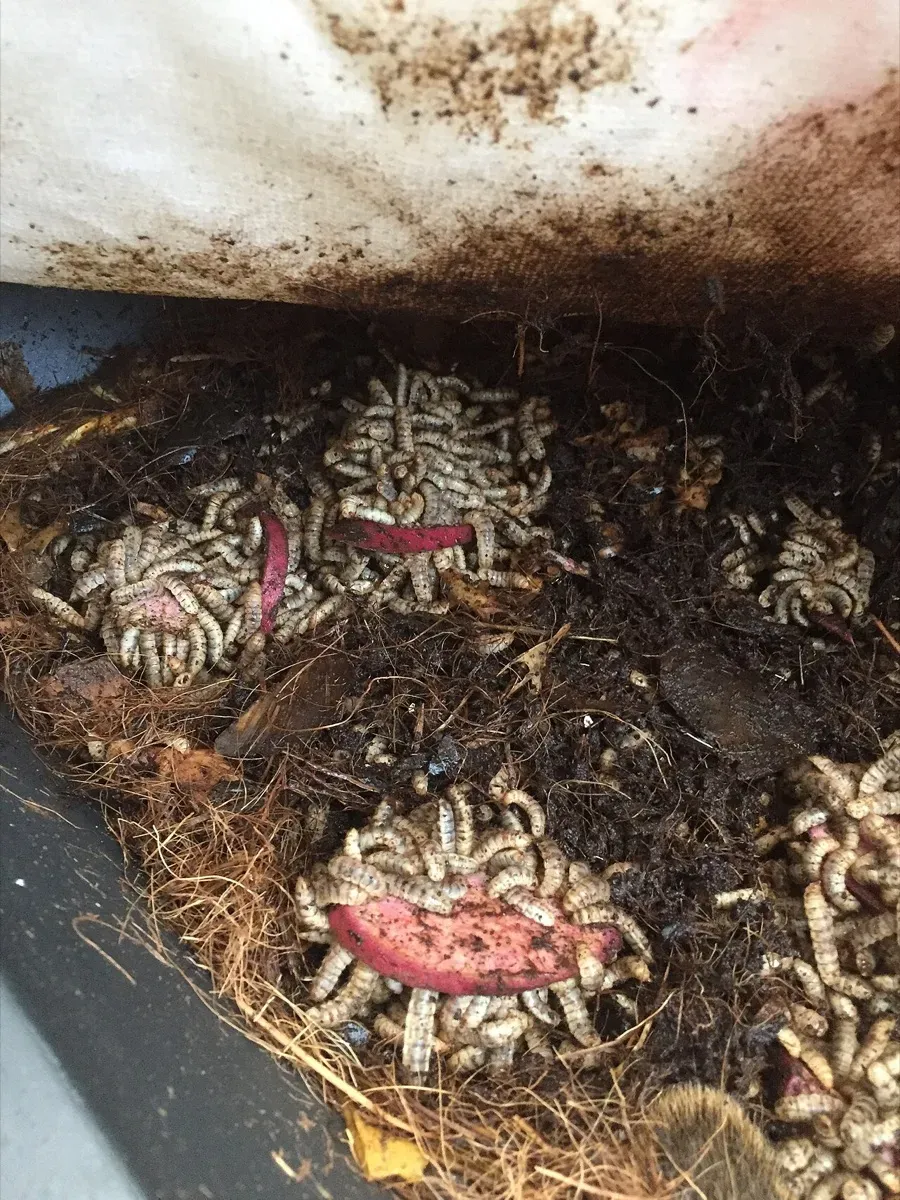
- Wikimedia Commons, “Black soldier fly larvae eating yam”. https://commons.wikimedia.org/wiki/File:Black_soldier_fly_larvae_eating_yam.jpg
Images: “Black soldier fly larvae eating yam”, Zenyrgarden, CC BY-SA 4.0, via Wikimedia Commons. Illustrative; the species, not a Protix facility.