The problem
Most phones are glued together to make them thin and waterproof. That makes the battery, screen and charging port hard to replace, so a phone with a worn-out battery or cracked screen is often thrown away. On the other hand, repairable phones that use screws and connectors have usually offered weak protection against water and dust, which itself shortens their lives.
Software is the other half of the problem. A phone that still works becomes unsafe to use once security updates stop. In Europe, new rules since June 2025 require phone makers to supply spare parts for seven years and give a repairability score, and from February 2027 the Battery Regulation will require batteries in portable devices to be removable and replaceable by the user.
The product
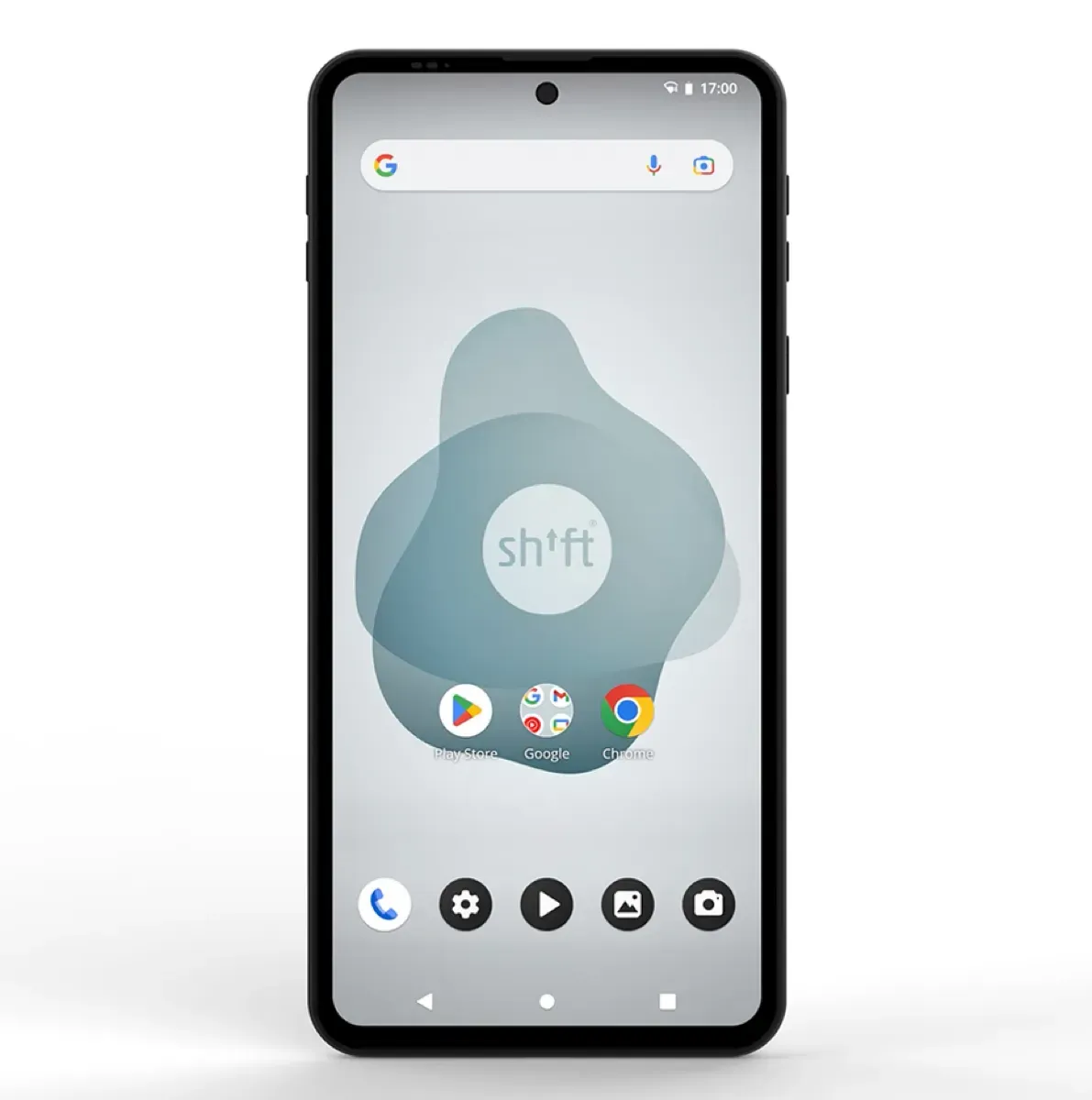
The SHIFTphone 8 is SHIFT’s eighth model and its first with an official IP rating. It is certified IP66, meaning it is dust-tight and protected against powerful water jets, while still letting owners replace parts themselves. The current version, the SHIFTphone 8.1, has a 6.67 inch AMOLED screen, a Qualcomm QCM6490 industrial chip based on the Snapdragon 778G, 12 GB of RAM and 512 GB of storage expandable with microSD, two 50 MP Sony rear cameras and a 3,820 mAh battery. Physical kill switches under the back cover cut power to the cameras and microphones (SHIFT shop).
SHIFT says Qualcomm supports the chip until 2036, and it guarantees Android upgrades provided by Qualcomm until then and security updates beyond. The phone has a two-year warranty, a 12-month battery warranty and a five-year repair guarantee, meaning SHIFT promises parts and repair will still be possible, at the owner’s cost. The battery can be changed without tools in under a minute and fits older SHIFT models too. The price is EUR 695 to EUR 755 depending on delivery time, plus a EUR 22 deposit refunded when the phone is returned.
How it works
- Modules: the phone is built from 18 modules, including display, battery, cameras, charging port and antennas, sold separately in SHIFT’s shop.
- Sealing without glue: SHIFT reached IP66 without gluing the phone shut, so screws keep it openable; a screwdriver comes in the box.
- Deposit: the EUR 22 deposit is an incentive to send the phone back to SHIFT at end of life for reuse or recycling.
- E-waste offset: for each phone sold, SHIFT and its partner Closing the Loop collect an old phone from the Global South and bring it to Europe for proper recycling.
- Own factory: the phone is designed in Falkenberg and assembled in SHIFT’s own facility in Hangzhou, China, which SHIFT says operates under fair conditions.
Timeline
| Date | Milestone |
|---|---|
| 5 Jan 2023 | Crowdfunding opens; 132 pre-orders in under 30 minutes |
| 30 Jan 2023 | Funding threshold of 555 pre-orders reached |
| Feb 2024 | 3,333 pre-orders unlock 12 GB RAM |
| Sep 2024 | First SHIFTphone 8.0 units shipped; IFA launch |
| Dec 2024 | 2G problem found; hardware revision to SHIFTphone 8.1 |
| Apr 2025 | SHIFTphone 8.1 shipping begins |
| Aug to Nov 2025 | Supplier problem and financing talks delay deliveries |
| 1 Dec 2025 | Bundespreis Ecodesign 2025 |
| 15 Dec 2025 | Pre-order phase closes with about 10,000 orders |
| 17 Mar 2026 | Over 96% of pre-orders shipped |
Impact and numbers
- Community funding: about 10,000 pre-orders by December 2025, the largest crowdfunding in SHIFT’s history, which allowed it to build the phone without outside investors (SHIFT status page).
- Award: the Bundespreis Ecodesign jury called it the first modular repairable smartphone with IP66 protection and said more than 15 components can be replaced by users. Germany’s environment ministry said it “sets standards across the industry for circular design” (Bundespreis Ecodesign).
- Delivery: about 2,000 SHIFTphone 8.0 phones were delivered in 2024. SHIFT then shipped 3,000 of the first 8.1 batch by June 2025, and more than 96% of all pre-orders by March 2026.
- Software: a Google-certified ShiftOS based on Android 14 receives regular security patches, with a light version without Google services, and the phone is also sold with Murena’s privacy-focused /e/OS.
Honest caveats. The project ran very late. Shipping was first expected in March 2024; the first phones went out in autumn 2024, and SHIFT then found that 2G calls did not work properly on some networks, which needed new circuit boards and a second version, the 8.1. In 2025 a supplier changed a process without telling SHIFT, which held up production, and in November SHIFT said it needed to close financing talks before it could finish production. The company was open about all of this on its status page, but buyers waited up to three years. Reviewers also find the hardware dated: Stuff called it “comparatively ancient”, with a chip close to the five-year-old Snapdragon 778G, average cameras and modest battery capacity, and noted that the Fairphone (Gen. 6) is cheaper (Stuff). Finally, the 3,820 mAh battery is small by today’s standards, so many users may want a spare.
What’s next
SHIFT now sells the phone from stock with faster delivery, and is working on further products such as the SHIFTscreen and SHIFTbook 2. Its long-term idea is “universal computing”, where the phone does all the computing and screens, tablets and watches simply display it, cutting the materials needed for extra devices.
Why it matters for Europe / green buyers
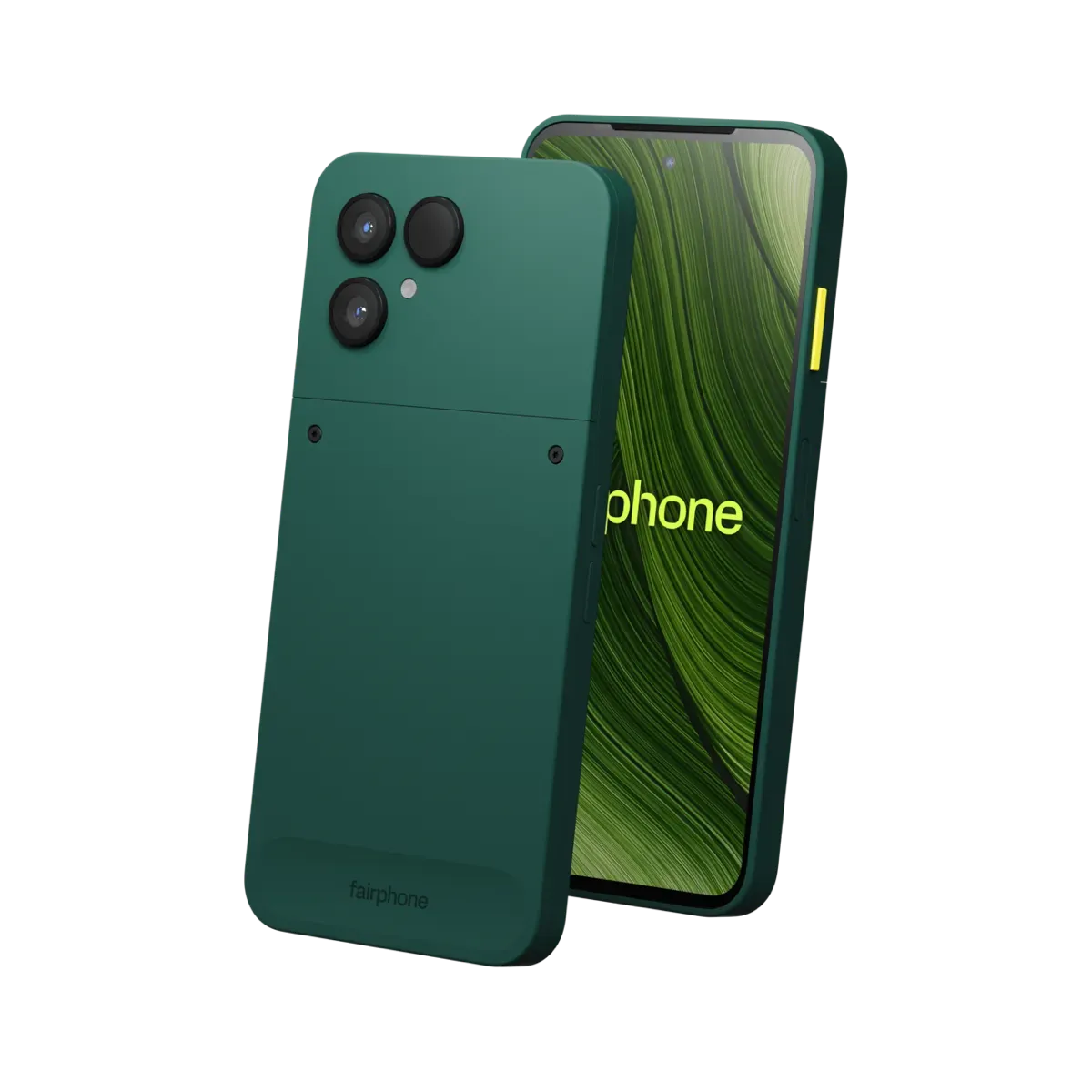
The SHIFTphone 8 shows that the trade-off between repairability and water protection is not a law of nature, which matters as EU rules push all manufacturers towards removable batteries and long spare parts supply. Together with Fairphone, SHIFT gives European buyers a choice of two home-grown repairable phones with different strengths: SHIFT offers more modules, kill switches and longer promised chip support, Fairphone a more modern design and lower price. For privacy-minded buyers and public bodies, the kill switches and de-Googled software options are also important.
SHIFT does not sell in India, but its community-funded model, deposit scheme and own small factory are interesting examples for Indian hardware start-ups, especially as India expands phone manufacturing and discusses repairability rules.
Sources & image credits
- SHIFT, “Status des SHIFTphone 8” (SHIFTphone 8 status page), updated 30 June 2026: https://www.shift.eco/shiftphone-8-status/
- SHIFT shop, “SHIFTphone 8.1” product page with specifications and warranty, accessed October 2026: https://shop.shift.eco/shiftphone-8
- Bundespreis Ecodesign, “SHIFTphone 8: Preisträger 2025 in der Kategorie Produkt”, December 2025: https://bundespreis-ecodesign.de/de/gewinner/2025-shiftphone-8
- Stuff, “The Murena Shiftphone 8 does its best to get rid of Google, but I couldn’t live with one”, 7 November 2025: https://www.stuff.tv/features/the-murena-shiftphone-8-does-its-best-to-get-rid-of-google-but-i-couldnt-live-with-one/
- SHIFT, “The new SHIFTphone 8: modular design, maximum impact!”: https://www.shift.eco/en/shiftphone-8/
- European Commission, “New EU rules for durable, energy-efficient and repairable smartphones and tablets start applying”, 20 June 2025: https://single-market-economy.ec.europa.eu/news/new-eu-rules-durable-energy-efficient-and-repairable-smartphones-and-tablets-start-applying-2025-06-20_en
- EUR-Lex, Regulation (EU) 2023/1542 concerning batteries and waste batteries: https://eur-lex.europa.eu/eli/reg/2023/1542/oj/eng
Images:
- “SHIFTphone 8” by SHIFT GmbH, 2023, licensed under CC BY-SA 4.0 (https://creativecommons.org/licenses/by-sa/4.0), via Wikimedia Commons: https://commons.wikimedia.org/wiki/File:SHIFTphone_8.png