The problem
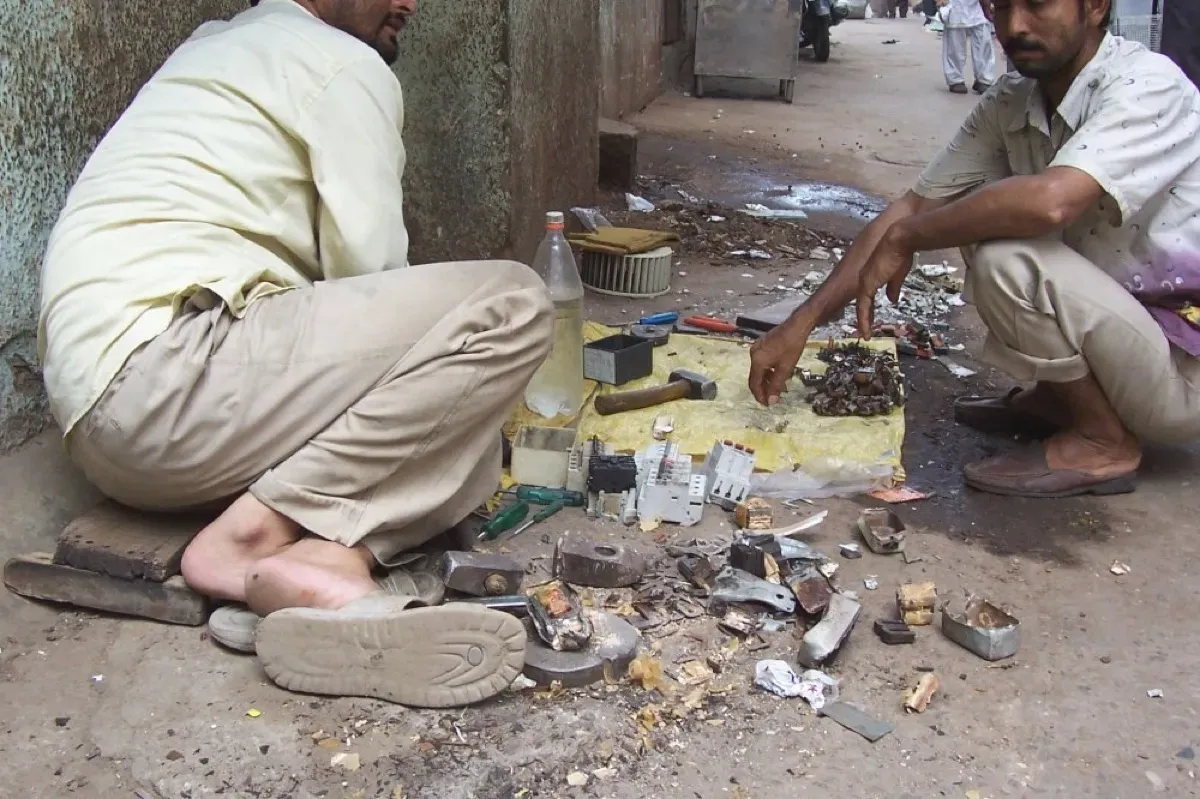
India is one of the world’s largest producers of electronic waste. According to the Central Pollution Control Board, the country generated 13.98 lakh tonnes of e-waste in FY 2024 to 25, up from 12.54 lakh tonnes the year before (PIB). Much of it has long been handled by informal workers who burn cables and use acids to recover copper and gold, with serious harm to their health and the environment.
At the same time, India imports almost all of its lithium, cobalt, nickel and rare earths. The country’s electric vehicle, phone and energy storage industries depend on these materials, and China dominates their refining. China’s restrictions on exports of rare-earth magnets in 2025 showed how exposed India’s manufacturers are. Recovering these metals from old devices and batteries could cut both waste and import dependence.
The product
Attero runs a large e-waste recycling plant at Roorkee in Uttarakhand, with 144,000 tonnes a year of capacity. All its lithium-ion battery recycling is also based there. CEO Nitin Gupta says Attero does not sell or export black mass, the powder of cathode and anode materials left after batteries are shredded, as many recyclers do. Instead it refines the black mass in-house into battery-grade cobalt, lithium carbonate, graphite and nickel, which it sells to battery and electric vehicle makers (EVreporter).
The company says it uses a combined mechanical and hydrometallurgical process backed by more than 45 granted global patents, with an extraction rate above 98%, compared with under 75% for typical competitors. It claims its process cuts greenhouse gas emissions by about 98% for lithium carbonate compared with producing it from virgin materials, and that its capital cost for lithium carbonate extraction is just USD 3,200 per tonne.
How it works
- Collection: spent batteries come from battery and vehicle makers, consumer electronics, and backup batteries from mobile phone towers; e-waste arrives from producers meeting their legal recycling targets.
- Dismantling: automated lines and battery cutters discharge and open batteries and take apart devices, separating plastics, metals and circuit boards.
- Black mass: battery cells are shredded and separated by density into metal foils, casings and black mass.
- Refining: a hydrometallurgical process dissolves the black mass and separates lithium, cobalt, nickel and graphite into battery-grade materials.
- Certificates: recycled tonnes earn extended producer responsibility (EPR) certificates on the CPCB portal, which electronics and battery producers buy to meet their obligations.
Timeline
| Date | Milestone |
|---|---|
| 2008 | Attero founded |
| Aug 2022 | Battery Waste Management Rules notified, with EPR targets and a landfill ban |
| Apr 2023 | E-Waste (Management) Rules 2022 take effect |
| Apr 2024 | 15,000 t/yr lithium-ion recycling at Roorkee |
| Apr 2025 | Samsung, LG, Daikin and others challenge minimum recycling prices in court |
| Dec 2025 | About Rs 150 crore announced for new plants in Pune, Bengaluru, Faridabad and Reengus |
| Jan 2026 | FY26 revenue run rate of Rs 2,000 crore |
| Feb 2026 | Rs 7,000 crore critical minerals refining plan |
Impact and numbers
- Scale-up: lithium-ion recycling capacity is planned to grow from 17,000 tonnes to about 300,000 tonnes over five years, and e-waste capacity by another 100,000 tonnes towards a target of about 500,000 tonnes. Magnet recycling, linked to rare-earth recovery, is set to rise from 1 tonne to 100 tonnes a day within two years (Business Standard).
- Critical minerals: Attero plans to invest around Rs 7,000 crore over five years in refining facilities for rare earths, lithium carbonate, cobalt, nickel and graphite, and is evaluating Tamil Nadu and Andhra Pradesh as locations under the government’s proposed rare-earth corridors. It targets about 22 of India’s 30 critical minerals and now cites more than 47 granted patents.
- Revenue: Attero posted revenue of around Rs 1,000 crore in FY25 and expected to double it to about Rs 2,000 crore in FY26, which the CEO described as profitable and cash-flow-positive growth (Outlook Business).
- New plants: new e-waste plants in Pune, Bengaluru and Faridabad and a 25,000 tonne copper recycling unit at Reengus in Rajasthan will take planned additions to 100,000 tonnes a year.
Honest caveats. The 98% extraction rate, 98% emissions cut and lowest-capex claims come from Attero’s own internal studies and have not been independently verified in public. Attero’s business also depends heavily on India’s EPR system. When the government set minimum prices for EPR certificates, such as Rs 22 per kg for consumer electronics, companies including Samsung, LG, Daikin, Havells and Voltas went to the Delhi High Court, arguing the rates would roughly triple their costs and mainly benefit recyclers (Reuters). The government has defended the rules as necessary for environmentally sound recycling and called the petitions “purely driven by commercial considerations” (Economic Times); a ruling against them would hurt recyclers’ income. Attero’s plans are also very large compared with its current size, and India does not yet produce enough spent EV batteries to fill 300,000 tonnes of capacity. The CEO himself warns that land acquisition and clearances could delay the refining corridor.
What’s next
Attero’s next steps are commissioning its new plants, scaling battery and magnet recycling, and choosing a southern state for its critical minerals refinery. It has also said it wants to build recycling capacity in the US and Europe.
Why it matters for Europe / green buyers
The EU Battery Regulation sets targets for recovering lithium, cobalt and nickel from waste batteries and for recycled content in new batteries, so Europe will need refiners that can turn black mass into battery-grade materials, not just shredders. Attero’s model of in-house refining is the kind of capacity European battery makers and recyclers are trying to build, and it could become a partner or competitor in Europe. For European electronics brands selling in India, Attero is one of the large formal recyclers they rely on for EPR compliance.
For India, Attero shows how the circular economy can support industrial policy: recycled lithium, cobalt and rare earths can reduce imports from China, while formal recycling can replace dangerous informal work in cities such as Delhi.
Sources & image credits
- EVreporter, “We don’t sell black mass; we refine it with 98% efficiency to extract battery-grade materials: Nitin Gupta, Attero Recycling”, 26 April 2024: https://evreporter.com/we-do-not-engage-in-supplying-black-mass-to-other-companies-nitin-gupta-attero-recycling/
- Business Standard, “Attero to invest Rs 7K crore over 5 years in proposed rare-earth corridor”, 13 February 2026: https://www.business-standard.com/companies/news/attero-to-invest-rs-7-000-crore-in-rare-earth-corridor-126021301517_1.html
- Outlook Business (PTI), “Attero Expects to Double Revenue to Rs 2,000 Cr This Fiscal”, 19 January 2026: https://www.outlookbusiness.com/corporate/attero-expects-to-double-revenue-to-2000-cr-this-fiscal
- Press Information Bureau, “Parliamentary Question: Electronic Waste Management”, 11 August 2025: https://www.pib.gov.in/PressReleseDetailm.aspx?PRID=2155124
- Reuters, “From Daikin to Samsung, companies fight Modi over e-waste policy”, 11 April 2025: https://www.reuters.com/world/india/daikin-samsung-companies-fight-modi-over-e-waste-policy-2025-04-11/
- The Economic Times, “Govt asks Delhi HC to dismiss Havells, LG, Samsung, Voltas pleas against e-waste rules”, 9 July 2025: https://economictimes.indiatimes.com/industry/cons-products/electronics/govt-asks-delhi-hc-to-dismiss-firms-pleas-against-e-waste-payout-rules/articleshow/122324524.cms
- EUR-Lex, Regulation (EU) 2023/1542 concerning batteries and waste batteries: https://eur-lex.europa.eu/eli/reg/2023/1542/oj/eng
Images:
- “Ewaste-delhi” by Matthias Feilhauer (Thousandways), 2007, licensed under CC BY-SA 2.0 DE (https://creativecommons.org/licenses/by-sa/2.0/de/deed.en), via Wikimedia Commons: https://commons.wikimedia.org/wiki/File:Ewaste-delhi.jpg