
The problem
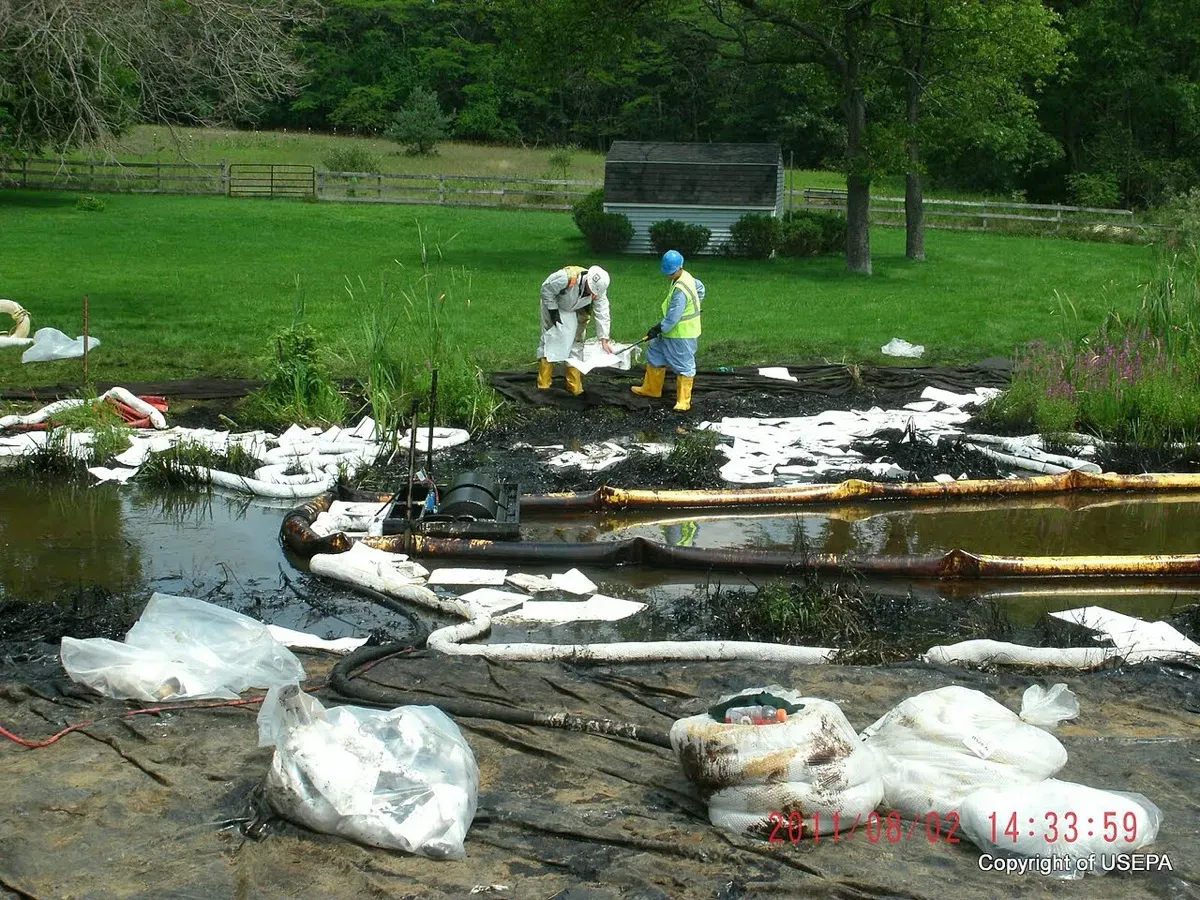
Europe has a huge legacy of polluted ground. The European Environment Agency estimates the EU has 2.8 million potentially contaminated sites, and mineral oil is one of the most common contaminants found in soil and groundwater at investigated sites. In 2016 only 115,000 sites had been remediated, about 8.3% of those registered (EEA).
India faces the same problem in a sharper form. TERI counts more than 50 oil refineries and oil exploration and production assets in the country, all producing oily sludge, oil-contaminated soil and drill cuttings, which are classed as hazardous waste (TERI). Pipelines in Rajasthan, Gujarat and Assam have burst, spilling crude onto farmland. Because most big oil companies are state owned, the government had to compensate farmers for ruined land.
The usual fix was to store the waste in pits. TERI says a single polymer-lined pit could cost about 10 million rupees and fill up in three to four years, after which another had to be built. The pits take up scarce refinery land and can leak (TERI).
The product
Oilzapper is a “cocktail” of naturally occurring bacteria, grown in bioreactors, immobilised and mixed with powdered corncob as a biodegradable carrier. The bacteria feed on hydrocarbons in crude oil and oily sludge. Key points:
- Each strain has a job: in TERI’s account, after screening more than 1,000 strains, researchers picked one that degrades the aliphatic (alkane) fraction, one for aromatics, one for nitrogen, oxygen and sulphur compounds and one for asphaltenes, the heaviest part of crude (TERI).
- Harmless end products: the bacteria break hydrocarbons down into carbon dioxide, water and fatty acids, TERI says.
- Simple to apply: it comes in bags, for example of 5 kg, and is spread like farmers spread urea, together with a dissolved nutrient mix.
- Shelf life: packed in sterile polythene bags, it keeps for three months at room temperature (TERI).
- Made at scale: at TERI’s fermentation centre in Gurugram, in bioreactors of up to 15,000 litres.
TERI says 20,000 tonnes of oily waste, which once needed several costly pits, can be treated with 100 tonnes of Oilzapper. OTBL sells Oilzapper treatment alongside two other microbial services for oil fields, enhanced oil recovery and wax deposition prevention, and claims more than 100 successful projects (OTBL).
How it works
- Test: the soil or sludge is analysed for total petroleum hydrocarbons (TPH) and their fractions, which sets the dose of nutrients.
- Contain: for ex situ treatment, the sludge is moved to a specially designed bioremediation pit or sludge bin; for in situ treatment, the spill site is treated where it lies.
- Apply: Oilzapper and the nutrient solution are sprayed or broadcast over the waste.
- Aerate: every 15 days or so, machines till the material to give the bacteria oxygen, until black sludge turns brown like ordinary soil.
- Finish: samples are taken regularly, and TERI treats remediation as complete once TPH falls to 1%. In an oil field this generally takes up to six months (TERI).
Timeline
| Date | Milestone |
|---|---|
| 1991 | India’s Department of Biotechnology launches a Petroleum Biotechnology programme led by TERI |
| 1997 | After six years of research led by Dr Banwari Lal, field trials succeed at oil company sites; the product is named Oilzapper |
| 26 Mar 2007 | ONGC TERI Biotech Ltd is formed to commercialise the technology |
| 2014 | Peer-reviewed paper reports 65 case studies across ONGC installations |
| Mar 2025 | TERI reports over 1.3 million tonnes of contaminated soil treated worldwide |
| 26 Nov 2025 | EU Soil Monitoring Law published, with registers of contaminated sites to follow |
Impact and numbers
- ONGC sites: a 2014 paper by TERI and ONGC scientists in Environmental Research, Engineering and Management describes in situ and ex situ treatment at ONGC’s Ankleshwar, Mehsana, Assam and Cauvery assets. In 65 case studies, 30,706 tonnes of oily waste were treated; TPH fell from between 69.2 and 662.7 g/kg to between 5.3 and 16.9 g/kg over 2 to 33 months. The treated soil was non-toxic, native plants grew back, and a 26,000 m2 effluent pit was restored and used to raise local fish (EREM).
- Assam and Arunachal Pradesh: for Oil India Limited, TERI completed in situ treatment of 20,671 m3 of oily sludge and contaminated soil, bringing TPH below 5,000 mg/kg in four to six months (TERI).
- Chennai: TERI began treating about 2,000 tonnes of oily sludge at Chennai Petroleum Corporation, aiming for TPH below 0.5%.
- Abroad: for Kuwait Oil Company, TERI treated 217,000 m3 of oil-contaminated soil and restored a former oil lake. In Nigeria, a field trial at Nkeleoken in Eleme was visited by officials from the Hydrocarbon Pollution Remediation Project (HYPREP).
- Users: TERI lists ONGC, IOCL, BPCL, Oil India, Reliance Industries, Kuwait Oil Company and ADNOC; OTBL’s client list adds HPCL and Numaligarh Refinery.
Honest caveats. Almost all the numbers come from TERI, OTBL or papers co-written with ONGC, the joint venture partner, rather than from independent audits. TERI’s own pages also disagree on the recipe: its technology page describes five bacterial strains, while its 2018 article and the 2014 paper describe four. Bioremediation is slow, taking months to years depending on climate and waste type, and the 2014 paper found degradation rates varied about five-fold. The 1% TPH end point TERI uses still leaves some oil in the soil, and whether that is clean enough depends on local rules and land use. Oilzapper works best on biodegradable petroleum hydrocarbons; it is not a fix for heavy metals or chemicals such as PFAS. Its customers are oil companies, and OTBL also sells microbial methods to raise oil output, so it cleans up after fossil fuel production rather than reducing it. OTBL is a small company and does not publish detailed accounts.
What’s next
TERI has a sister product, Oilivorous-S, developed for sludge with a high sulphur content, and it continues to work with oil companies in India, the Gulf and Africa (TERI). The Nigeria trial with HYPREP could open a large new market.
Why it matters for Europe / green buyers
The EU Soil Monitoring Law, Directive (EU) 2025/2360, was published on 26 November 2025 and entered into force on 16 December 2025 (Mission Soil). It requires each member state to set up a public register of potentially contaminated and contaminated sites by December 2029, and to identify and investigate those sites and manage the risks they pose (EUR-Lex). With mineral oil among the most common soil contaminants, low-energy biological treatment that can be done on site, like Oilzapper, will compete with digging up soil and trucking it to landfill or incinerators.
For India, Oilzapper shows that a homegrown, publicly funded technology can turn hazardous oily waste into usable land at the scale of an oil industry. It frees up refinery space and gives farmers their fields back after spills.
Sources & image credits
- TERI, “Oilzapper and Oilivorous-S” technology page: https://www.teriin.org/technology/oilzapper-and-oilivorous-s
- TERI, “Slick Solution: Get eco-friendly microbes to chew oil-spills” (3 Mar 2018): https://www.teriin.org/article/slick-solution-get-eco-friendly-microbes-chew-oil-spills
- Mandal, A. K. et al., “Large Scale Bioremediation of Petroleum Hydrocarbon Contaminated Waste at Various Installations of ONGC, India: Case Studies”, Environmental Research, Engineering and Management, Vol. 68 No. 2 (2014): https://doi.org/10.5755/j01.erem.68.2.5632
- ONGC TERI Biotech Ltd, company website: https://www.otbl.co.in/
- European Environment Agency, “Progress in the management of contaminated sites in Europe” (indicator): https://www.eea.europa.eu/en/analysis/indicators/progress-in-the-management-of
- European Commission, Mission Soil Platform, “The Soil Monitoring Law is published in the EU Official Journal” (Nov 2025): https://mission-soil-platform.ec.europa.eu/news-events/latest-news/soil-monitoring-law-published-eu-official-journal
- EUR-Lex, Directive (EU) 2025/2360 on soil monitoring and resilience (Soil Monitoring Law): https://eur-lex.europa.eu/eli/dir/2025/2360/oj/eng
Images:
- “Contaminated soil” by the US Environmental Protection Agency, public domain, via Wikimedia Commons: https://commons.wikimedia.org/wiki/File:Contaminated_soil_(4888593988).jpg

.jpg)