
The problem
Vast areas of tropical forest have been cleared for cattle, crops and mining, and much of that land now lies degraded. Bringing back a diverse native forest is expensive. Traditional restoration grows seedlings in nurseries for months, then plants them by hand, often using a few common species and a uniform recipe across a whole site. On steep, burnt or former mining land, crews and vehicles struggle to reach the ground at all.
Funding is the other barrier. Investors and companies that want to pay for restoration face high uncertainty about whether trees will survive, and no easy way to price that risk. MORFO argues that when plantings fail and must be redone, the cost lands on the project, so degraded land stays degraded (MORFO).
The product
MORFO’s system combines hardware, biology and software:
- seed capsules, patented “pods” that contain native seeds together with the nutrients and microorganisms they need to germinate and establish, so no nursery stage is required (MORFO);
- seeding drones that, the company says, can each cover up to 50 hectares a day and plant 180 capsules a minute on steep, hard-to-reach terrain, about 50 times faster than traditional reforestation;
- mapping and monitoring, with drone and satellite images used to analyse soil and biodiversity before planting and to track biomass and plant growth afterwards;
- MORFO Ri, a land analysis platform that reads more than 15 data layers to predict what to restore, which method to use and at what cost (MORFO FAQ).
MORFO now sells this as a full service: it picks more than 20 native species per project from a catalogue of 490 across the Amazon, Cerrado and Atlantic Forest, and writes ecological targets into the contract, fixing any shortfall at its own cost.
How it works
- Read: MORFO Ri stratifies the land plot by plot and returns a go or no-go with a costed scope within a few working days.
- Design: species and methods are chosen for each zone, leaving areas that can regenerate naturally untouched.
- Sow: drones drop seed capsules where they make sense; elsewhere MORFO uses mechanical planting, direct seeding, assisted natural regeneration or seedlings.
- Maintain: for about three years, crews control invasive plants, with high-resolution drone flights to spot problems early.
- Verify: growth is monitored against contract targets at 12, 24 and 36 months.
Timeline
| Date | Milestone |
|---|---|
| 2021 | MORFO founded in France |
| 7 Dec 2022 | EUR 4 million seed round co-led by Demeter and RAISE Ventures |
| 2023 | Operations start in Brazil |
| 18 Jun 2024 | R$ 23 million seed extension led by TeamPact Ventures; round totals R$ 64 million; new lab in Rio de Janeiro |
| 8 Oct 2025 | Desafio Amazônia 500 launched to restore 500 hectares near Belém ahead of COP30 |
Impact and numbers
- Projects: by June 2024 MORFO had 20 active projects in the Atlantic Forest and Amazon in Brazil, the Amazon in French Guiana and equatorial forest in Gabon, including restoration of mining areas in Pará and farmland in Bahia and Rio de Janeiro. Each project reintroduces 10 to 30 native plant species (PEGN).
- Mine land: on a former gold-mining site in French Guiana, MORFO says bare ground reached continuous vegetation cover, confirmed by satellite NDVI, in about three years (MORFO).
- Amazon: Desafio Amazônia 500 aims to raise R$ 30 million through crowdfunding to restore 400 hectares of fire-damaged forest, mainly on Mosqueiro, and 100 hectares of agroforestry benefiting 75 farming families in Belém, Santa Bárbara do Pará and Irituia (Um Só Planeta).
- Science partners: MORFO works with Embrapa, the Federal University of São Carlos and the Federal University of Viçosa. At COP30 in Belém it planned a one-hectare demonstration plot at Embrapa Amazônia Oriental’s AgriZone.
- Backers: the 2022 round also included TeamPact Ventures, founded by former rugby player Benjamin Kayser, and AFI Ventures, plus business angels such as BetClic founder Nicolas Béraud.
- Ambition: the company’s long-term goal is to restore 100 million hectares by 2050.
Honest caveats. The 50 hectares a day, 180 capsules a minute and “50 times faster” figures are MORFO’s own and describe sowing speed, not trees that survive. Independent restoration scientists have warned that forest restoration is “more than firing seeds from a drone” (Restoration Ecology) and that scattered seeds are easily blown away, eaten or dried out, so most never become plants (The Conversation). MORFO itself now says drones bring speed and access but do not replace field teams, and uses them alongside conventional methods. Its French Guiana result is a single, company-reported case, and its performance guarantee covers only the work MORFO itself coordinates, on the cases it accepts. The 100 million hectare goal is far beyond its current scale, and the Amazon project depends on crowdfunding that may not be fully raised.
What’s next
MORFO is building its Rio de Janeiro research lab; co-founder Pascal Asselin said the aim was to analyse 10,000 hectares within two years with the same efficiency as 1,000 hectares in 2024 (PEGN). It is also pitching guaranteed, investable restoration projects to companies, carbon buyers and governments in Brazil’s three main forest biomes.
Why it matters for Europe / green buyers
The EU Nature Restoration Regulation, in force since August 2024, requires restoration measures on at least 20% of the EU’s land and sea by 2030 (European Commission). MORFO, French-founded and backed by French funds such as Demeter and RAISE, offers European companies that pay for restoration abroad native, biodiverse restoration with targets written into contracts, a model worth testing on Europe’s own steep, burnt or abandoned land.
India has pledged to restore 26 million hectares of degraded land by 2030 and reported 21.76 million hectares under restoration in June 2026 (IUCN). Much of that land is hilly, burnt or hard to reach. MORFO’s approach of zone-by-zone mapping, native species mixes and paid-for results shows how such efforts could be held to measurable outcomes rather than counts of seeds dropped.
Sources & image credits
- MORFO, “MORFO raises 4 million euros to reforest millions of hectares” (7 Dec 2022): https://www.morfo.rest/articles/morfo-raises-4-million-euros-reforest-millions-hectares
- Pequenas Empresas & Grandes Negócios (Globo), “Morfo, startup de reflorestamento, capta R$ 23 milhões em extensão de rodada seed” (18 Jun 2024): https://revistapegn.globo.com/startups/noticia/2024/06/morfo-startup-de-reflorestamento-capta-r-23-milhoes-em-extensao-de-rodada-seed.ghtml
- Um Só Planeta (Globo), “COP30: startup lança projeto coletivo para restaurar 500 hectares de floresta amazônica na região de Belém” (Oct 2025): https://umsoplaneta.globo.com/opiniao/colunas-e-blogs/empresas-na-cop30/post/2025/10/cop30-startup-lanca-projeto-coletivo-para-restaurar-500-hectares-de-floresta-amazonica-na-regiao-de-belem.ghtml
- MORFO, home page “Native forest restoration, investable and guaranteed”: https://www.morfo.rest/
- MORFO, FAQ (French): https://www.morfo.rest/fr/faq
- Restoration Ecology, “Forest restoration is more than firing seeds from a drone” (2022): https://onlinelibrary.wiley.com/doi/10.1111/rec.13736
- The Conversation, “Drone seeding and E-seeds sound exciting, but ecosystem restoration needs practical solutions” (2023): https://theconversation.com/drone-seeding-and-e-seeds-sound-exciting-but-ecosystem-restoration-needs-practical-solutions-204274
- European Commission, DG Environment, “Nature Restoration Law enters into force” (15 Aug 2024): https://environment.ec.europa.eu/news/nature-restoration-law-enters-force-2024-08-15_en
- IUCN, “India brings over 21 million hectares of land under restoration under the Bonn Challenge” (Jun 2026): https://iucn.org/news/202606/india-brings-over-21-million-hectares-land-under-restoration-under-bonn-challenge
Images:
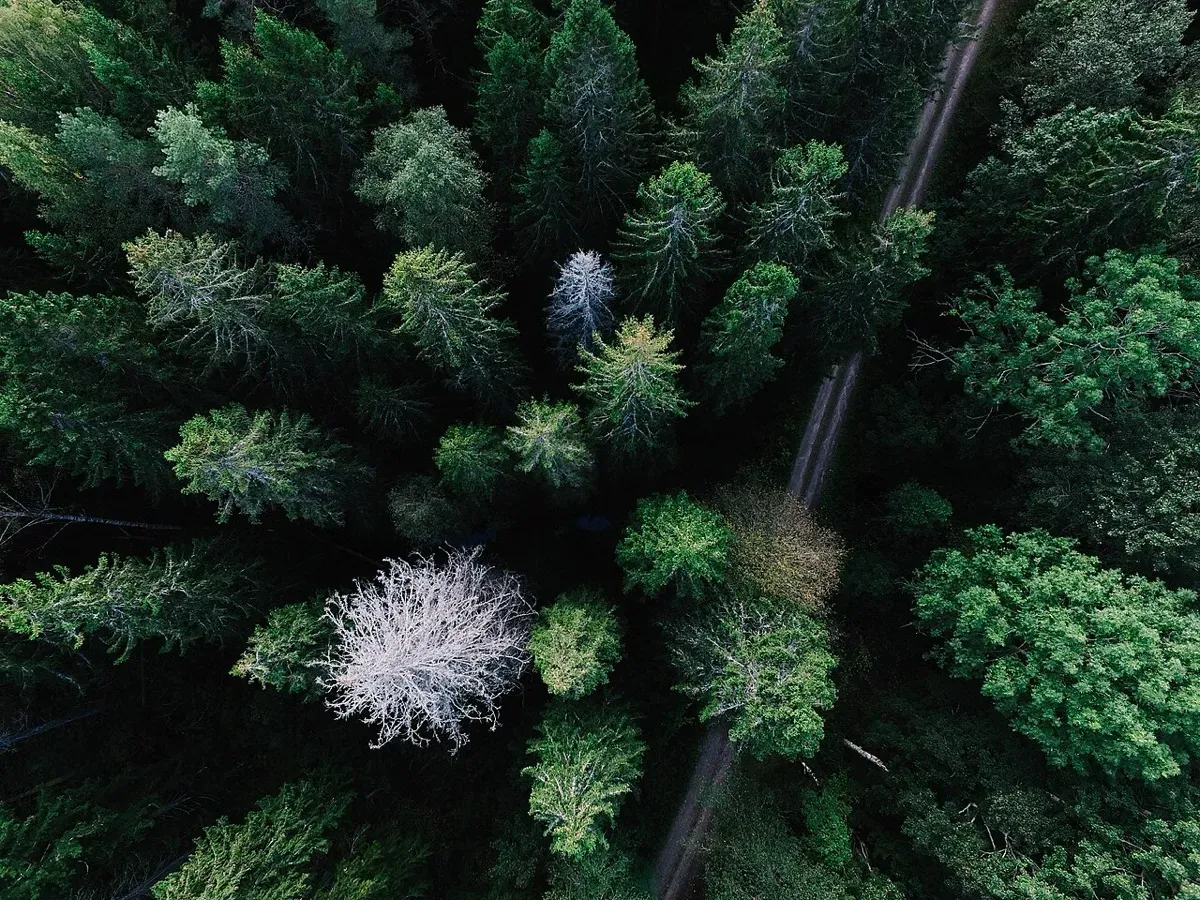
- “Drone Forest (Unsplash)” by Geran de Klerk, released under CC0 (http://creativecommons.org/publicdomain/zero/1.0/deed.en), via Unsplash and Wikimedia Commons: https://commons.wikimedia.org/wiki/File:Drone_Forest_(Unsplash).jpg
.jpg)