The problem
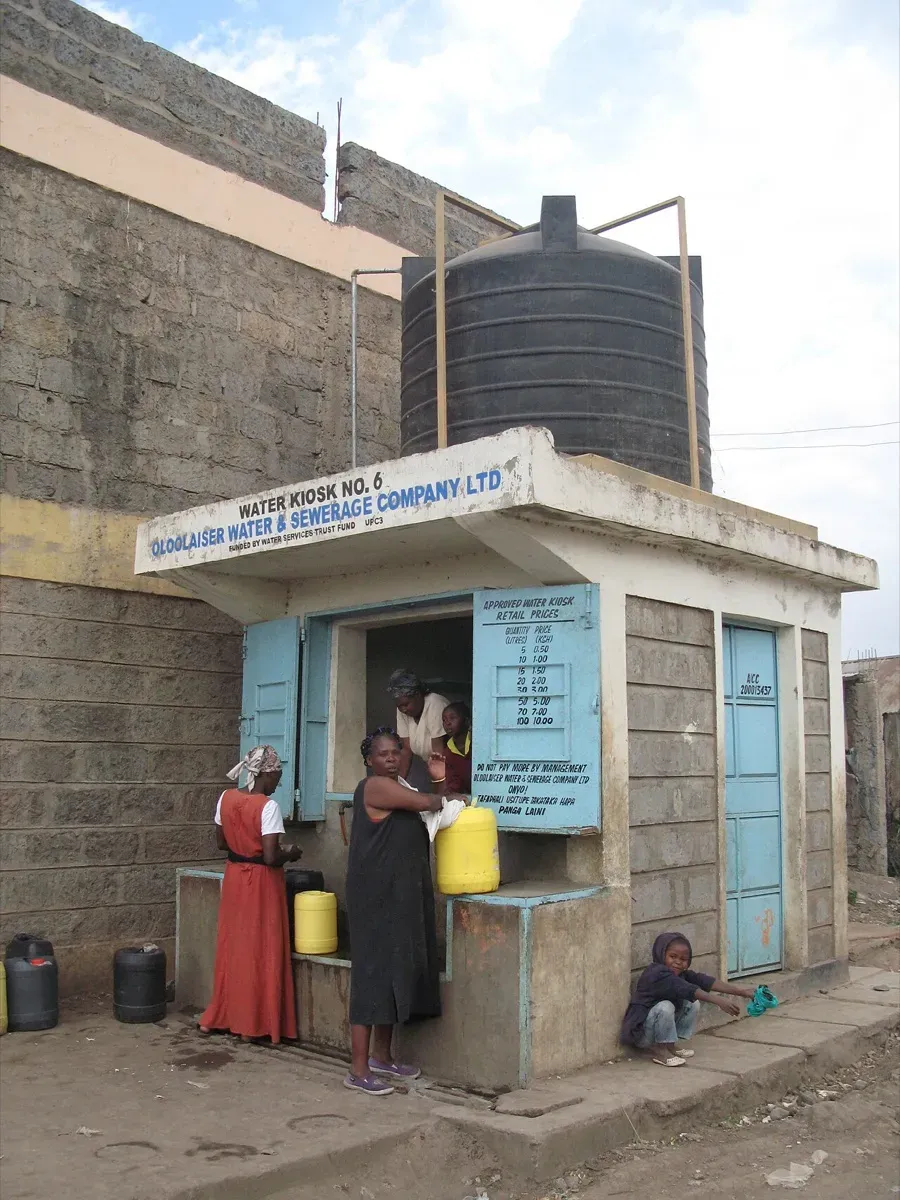
Europe is no longer a water-rich continent everywhere. When the European Commission launched its Water Resilience Strategy on 4 June 2025, it noted that water scarcity affects 30% of EU territory every year, and that leakage losses from distribution networks range from 8% to 57% between member states (European Commission, 4 June 2025). The strategy calls for water efficiency to improve by at least 10% by 2030, and the European Investment Bank has pledged more than €15 billion for water projects.
Households are part of the picture. A large share of domestic water goes to uses that do not need drinking quality, above all toilet flushing, laundry and garden watering. At the same time, the “greywater” from showers, baths and washing machines is only lightly soiled. Treating it at a central plant and then supplying fresh drinking water for the toilet is a wasteful loop, both in water and in the energy used to pump and treat it.
The product
Hydraloop’s H600 closes that loop inside the building. It is a free-standing unit about the size of a tall fridge, 800 x 695 x 2,000 mm, with a footprint of about 1.12 m². It collects greywater from showers, baths, bathroom hand basins and condensate drains, treats up to 720 litres a day, enough for up to eight people, and returns clean water for flushing toilets, running the washing machine and irrigating the garden (Hydraloop H600). Several units can be linked in a “cascade” for apartment blocks and commercial buildings, and the company targets boutique hotels, gyms, salons and offices as well as homes. According to the product data sheet, the unit uses about 450 kWh of electricity a year and runs at 29 to 50 dB, roughly as quiet as a refrigerator (H600 data sheet).
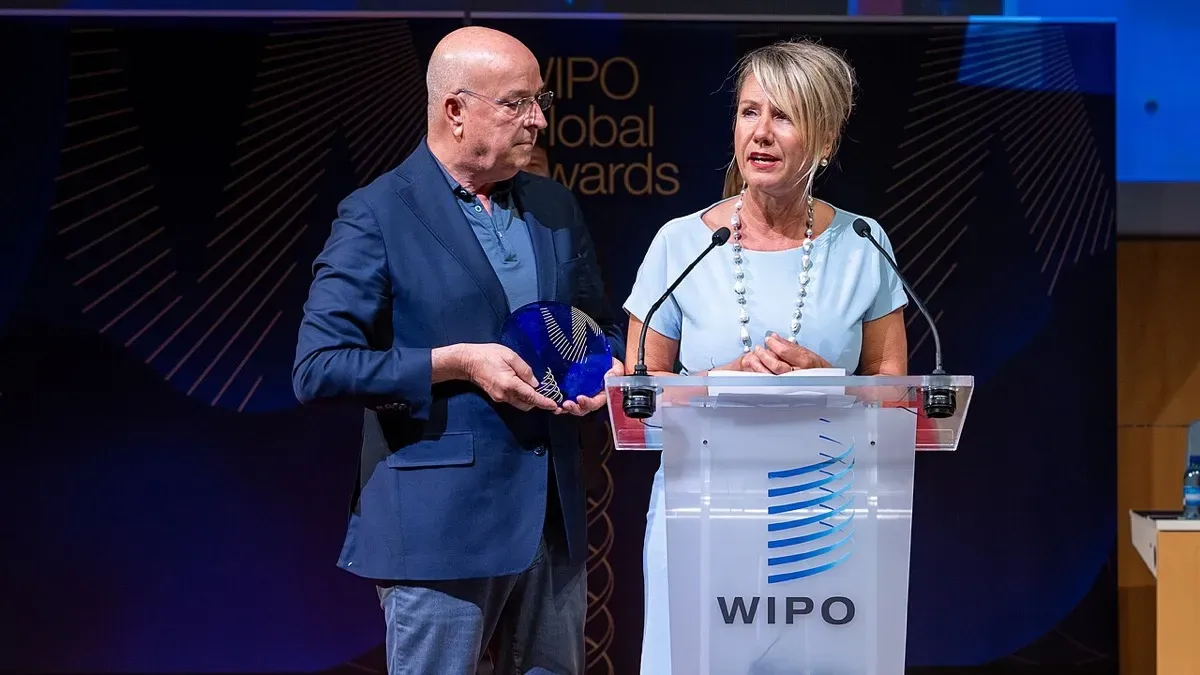
The company was founded in 2015 and showed its first system at Aquatech Amsterdam in November 2017. Its international breakthrough came at CES 2020 in Las Vegas, where it won four awards, including Best of Innovation and “Best of the Best” (Electrek, 7 January 2020). In 2022 it received a WIPO Global Award for its use of intellectual property in building a sustainable business (WIPO Magazine).
How it works
Most greywater systems use filters or membranes, which clog with hair, lint and soap residue and need regular replacement. Hydraloop avoids them by combining six physical and biological processes in one tank:
- Sedimentation: heavy particles settle to the bottom.
- Flotation: lighter material, such as hair and lint, rises to the top.
- Dissolved air flotation: fine air bubbles lift small particles to the surface.
- Foam fractionation: soap and dirt collect in foam, which is skimmed off.
- Aerobic bioreactor: bacteria break down dissolved organic matter.
- UV disinfection: ultraviolet light kills remaining pathogens.
Waste from each stage goes to the sewer automatically. The system cleans itself and connects to a smartphone app that tracks water use and system performance. Because there are no filters or chemicals, routine maintenance comes down to a periodic check. Independent certification to NSF/ANSI 350R, an international standard for greywater reuse, gives building authorities an independent benchmark for water quality.
Timeline
| Date | Milestone |
|---|---|
| 2015 | Hydraloop founded in the Netherlands |
| Nov 2017 | First system presented at Aquatech Amsterdam |
| Jan 2020 | Four CES 2020 awards, including Best of Innovation |
| 2022 | WIPO Global Award |
| Mar 2024 | €10.5 million raised from Invest-NL, NOM and Amavi as part of a €13.5 million Series B |
| 2024 | 130 partners selling and installing in 35 countries |
| 4 Jun 2025 | EU Water Resilience Strategy sets a 10% water efficiency goal for 2030 |
Impact and numbers
- Household savings: up to 45% less fresh water and wastewater, according to the company.
- Hamilton, New Zealand: a housing development installed 12 H600 units in cascade. Projected wastewater flows fell from 28,080 litres a day to about 16,286 litres, a 42% cut, which allowed the developer to build 52 homes instead of 33 within the same wastewater capacity (WaterSmart NZ).
- Investment: the 2024 Series B included €10.5 million from the Dutch national promotional institution Invest-NL, the northern Netherlands development agency NOM and investor Amavi (Impact Investor).
- Reach: 130 partners in 35 countries by 2024.
Honest caveats. Greywater recycling needs a second pipe network to deliver recycled water to toilets and washing machines, which is simple in new buildings but costly to retrofit. The unit uses electricity, about 450 kWh a year, so in places where water is cheap and plentiful the carbon and financial payback can be weak. Rules on greywater reuse vary widely across EU member states, and some still restrict indoor use. The 45% savings figure is a maximum that assumes the house sends most suitable greywater through the system and uses recycled water for several purposes. Hydraloop, like many hardware start-ups, depends on continued investment to scale.
What’s next
The Hamilton project points to the biggest opportunity: not only saving water in individual homes, but freeing up sewer and water network capacity so that more homes can be built without new infrastructure. Developers, social housing providers and hotels are natural customers. Cascade configurations, where several H600 units share one plant room, let a single installation serve a whole apartment block, which keeps per-home cost and maintenance down compared with one unit per flat. That is the set-up used in Hamilton. EU water efficiency targets and drought restrictions in southern Europe should make building-level reuse more attractive, especially if national rules converge.
Why it matters for Europe / green buyers
For property developers, housing associations, hotels and facility managers, the H600 is a tangible product that turns water efficiency targets into measured savings, without the maintenance burden of membranes or chemicals. It also lowers sewage volumes, which matters where networks are overloaded. Buyers should check local reuse regulations, plan the second pipe network early in design, and ask for monitored savings data from comparable buildings.
The same logic applies in fast-growing cities from Bengaluru to Cape Town, where new apartment blocks often outrun municipal water and sewage supply. A building that recycles its own greywater needs less from stretched networks and is more resilient when supply is cut.
Sources & image credits
- Hydraloop, “Hydraloop H600” product page: https://www.hydraloop.com/h600
- Hydraloop, “Product data sheet Hydraloop H600 (metric)”: https://info.hydraloop.com/docs/product-data-sheet-hydraloop-h600-metric/
- Electrek, “Water recycling system Hydraloop wins CES 2020 innovation award”, 7 January 2020: https://electrek.co/2020/01/07/water-recycling-system-hydraloop-ces-2020-innovation-award/
- WIPO Magazine, “Everyone can tackle water scarcity with Hydraloop”: https://www.wipo.int/en/web/wipo-magazine/articles/everyone-can-tackle-water-scarcity-with-hydraloop-42722
- Impact Investor, “Dutch greywater recycling firm raises €10.5m from Invest-NL, NOM”, March 2024: https://impact-investor.com/dutch-greywater-recycling-firm-raises-e10-5m-from-invest-nl-nom/
- WaterSmart NZ, “How greywater recycling unlocked greater housing yield in Hamilton”: https://www.watersmart.co.nz/news/how-greywater-recycling-unlocked-greater-housing-yield-in-hamilton
- European Commission, “Commission launches strategy to enhance water security for people, economy and environment”, 4 June 2025: https://cyprus.representation.ec.europa.eu/news/commission-launches-strategy-enhance-water-security-people-economy-and-environment-2025-06-04_en
Images:
- “2022 WIPO Global Awards Ceremony” by WIPO, photo Emmanuel Berrod, licensed CC BY 2.0 (https://creativecommons.org/licenses/by/2.0), via Wikimedia Commons: https://commons.wikimedia.org/wiki/File:2022_WIPO_Global_Awards_Ceremony_(52225892892).jpg
.jpg)