The problem
Clinker is the heart of ordinary Portland cement and the source of most of its emissions: limestone is heated to about 1,450 degrees Celsius, releasing CO2 both from the rock and from the fuel. Even “low-carbon” blended cements usually keep a large share of clinker. Hoffmann Green says its process uses 10 to 15 times less energy than Portland cement and that its cements have a carbon footprint five times lower than traditional cement (Hoffmann Green).
At the same time, France’s concrete market is shrinking: the volume of concrete delivered fell by 21.2% between 2021 and 2025, according to industry data cited by the company, making it hard for any new cement to grow.
The product
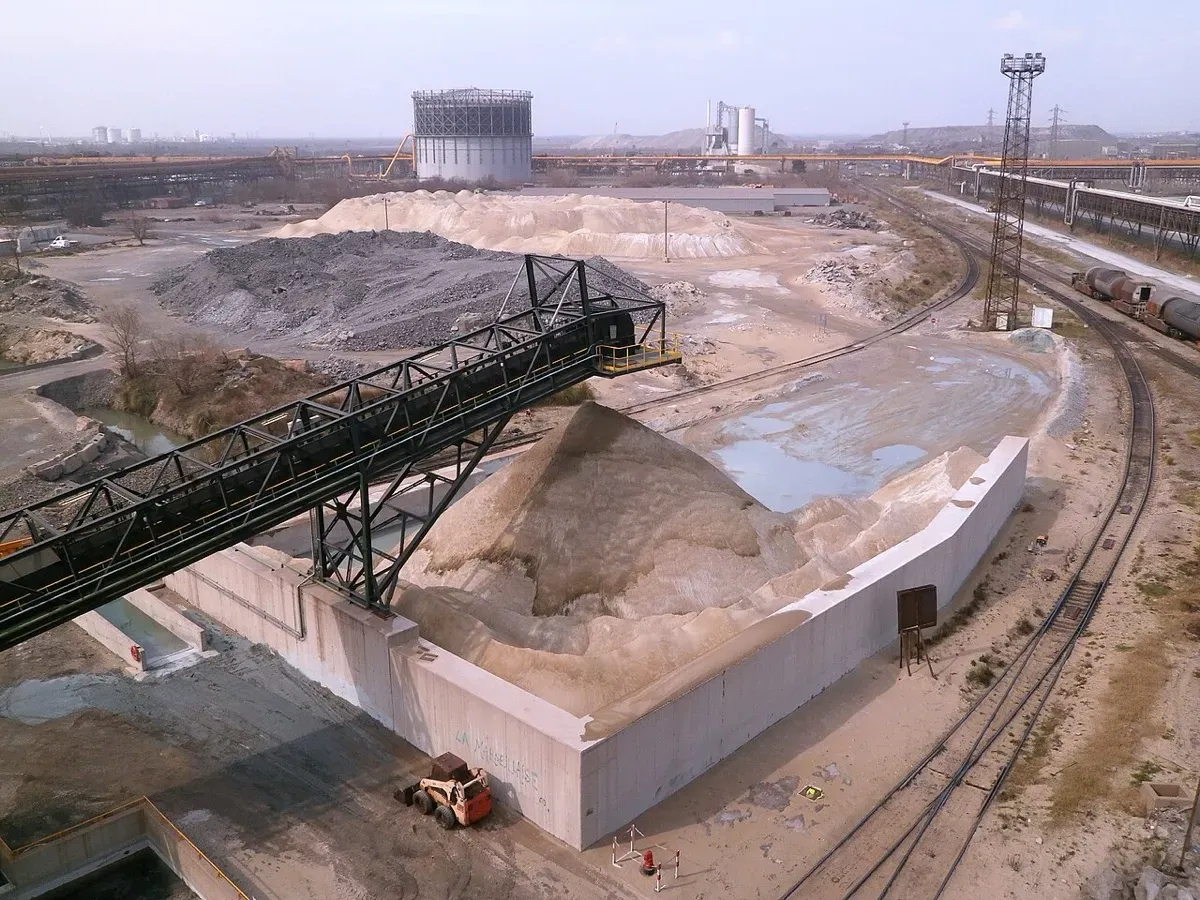
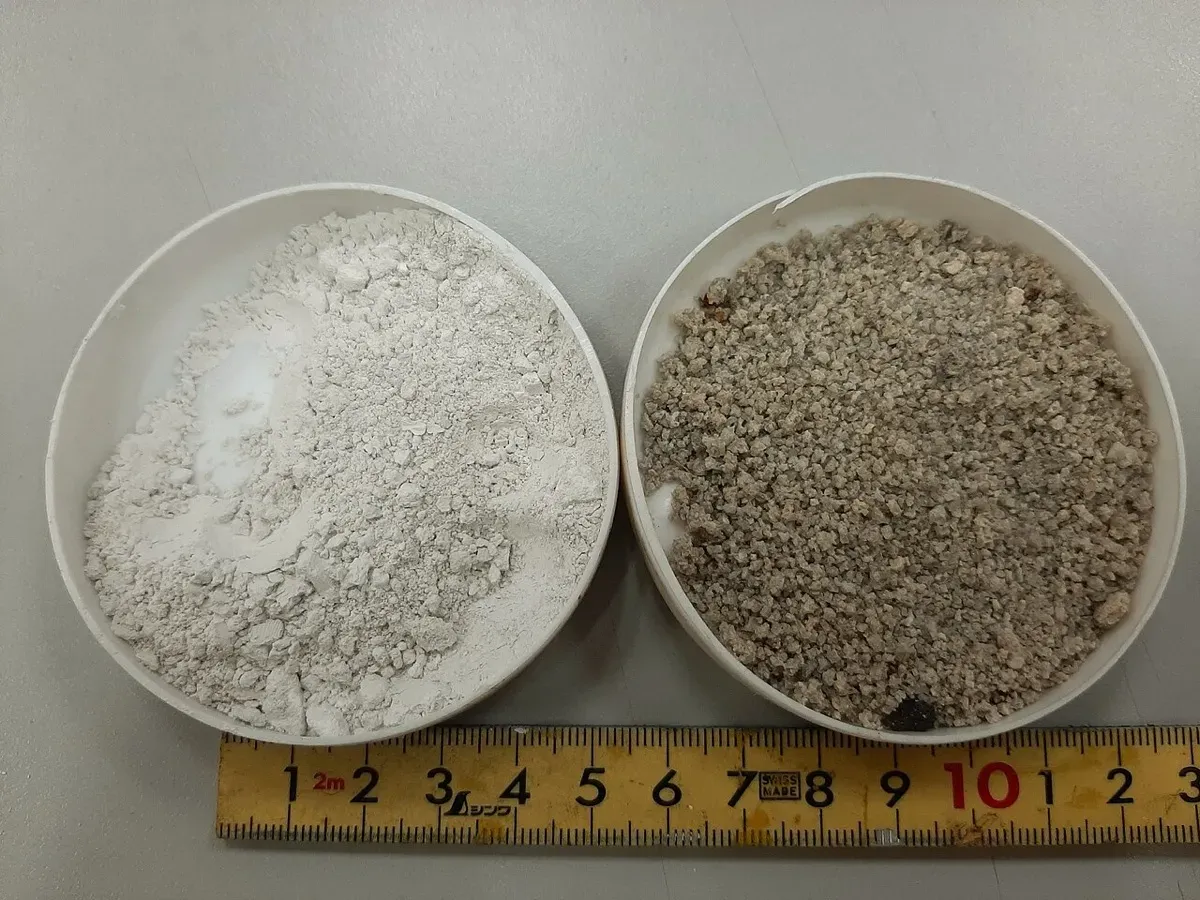
H-UKR is Hoffmann Green’s flagship cement. It contains no clinker at all. Instead it is based on blast furnace slag, a by-product of steelmaking, activated chemically by alkaline activators and mixed at room temperature. The company says that at an equal dose, and with no change to the concrete production process, it performs better than traditional cement. H-UKR is covered by a technical assessment from France’s building science centre CSTB (ETPM-18/0056, sixth edition November 2024) (Hoffmann Green).
Its verified footprint has fallen as production has grown. An Environmental Product Declaration published on 18 February 2025 for European markets outside France shows 141 kg CO2e per tonne, down 25% from 188 kg in 2019. A life cycle inventory for France published in October 2025, where rules require the carbon impact of slag to be counted, shows 198 kg CO2e per tonne, down from 252 kg (ACPresse).
Hoffmann Green produces at two units in Bournezeau, Vendée, powered partly by a field of solar trackers: a “4.0” factory and H2, inaugurated in May 2023 and described as the world’s first vertical cement plant, which uses gravity to move materials. The company now has six approved 0% clinker cements based on different industrial co-products.
How it works
- By-products, not limestone: the main raw material is slag from blast furnaces. New partners supply other co-products, such as crushed scallop shells from CSBT Environnement.
- Cold process: there is no kiln and no clinker. Raw materials are ground and blended at ambient temperature.
- Alkaline activation: activators trigger the chemical reaction that makes the slag set and harden like cement.
- Gravity plant: in H2, materials flow downwards through the tower, cutting energy for conveying.
- Licensing: outside France, Hoffmann Green licenses its technology to local partners rather than building all plants itself.
Timeline
| Date | Milestone |
|---|---|
| 2014 | Hoffmann Green founded in Vendée |
| 2019 | First EPD (188 kg CO2e/t) |
| 2022 | Selected for the French Tech Green20 |
| May 2023 | H2 vertical cement plant inaugurated |
| 18 Feb 2025 | European EPD: 141 kg CO2e/t |
| 6 Oct 2025 | French LCI: 198 kg CO2e/t |
| H1 2026 | Almost 40,000 t sold; first US site for Marquis Inc.; exclusive agreement with Bruil (Netherlands) |
| 10 Sep 2026 | H1 2026 results; 100,000 t target for 2026 confirmed |
| 2027-28 | Planned construction of H3 plant in Rhône-Alpes |
| End 2027 | Target operating break-even |
Impact and numbers
- Volumes: almost 40,000 tonnes of 0% clinker cement sold and delivered in H1 2026, up 104% and nearly five times H1 2024, equal to more than 110,000 cubic metres of concrete (Hoffmann Green).
- Revenue: EUR 6.6 million in H1 2026, up 86.7%; EBITDA of minus EUR 5.96 million against minus EUR 5.65 million a year earlier, nearly stable despite the growth; raw material savings of EUR 2.9 million in the half, projected at EUR 7.5 million for 2026 (CemNet).
- Partners: nine new partnerships in H1 2026 and 11 so far in 2026; licence agreements in the UK and Ireland, Saudi Arabia and the United States, plus an exclusive preliminary deal with Dutch ready-mix supplier Bruil.
- 2030 plan: about one million tonnes a year from three French plants and EUR 150 million revenue, with five more international licences.
Honest caveats. Hoffmann Green is still small and loss-making: its H1 2026 net loss was EUR 9.18 million, cash fell to EUR 5.06 million (excluding EUR 21 million of licence entry fees tied to international certifications), and break-even is targeted only for the end of 2027, “depending on volume growth” (Global Cement). Its 100,000 tonnes target is still a small fraction of France’s annual cement use, which is measured in millions of tonnes. H-UKR depends on blast furnace slag, which is becoming scarcer in Europe as steelmakers move to electric arc furnaces and hydrogen-based routes (CW Group); slag is also already used by other cement makers, so using it in one product may partly shift emissions rather than avoid them. The low footprint excludes most of the slag’s own burden under the European EPD; the French figure, which includes it, is 40% higher. Alkali-activated cements also need careful handling and specific know-how on site.
What’s next
Hoffmann Green is betting on scale: reaching 100,000 tonnes in 2026, building H3 in the Rhône-Alpes region in 2027 and 2028, and signing more licences abroad, starting with the Netherlands. It is also diversifying its raw materials beyond slag to reduce its dependence on a shrinking resource. The phase-out of free EU carbon allowances for cement from 2026, alongside the EU’s Carbon Border Adjustment Mechanism, should make clinker-free cement more competitive (EUR-Lex).
Why it matters for Europe / green buyers
For French and European builders, H-UKR is one of the few cements on the market with no clinker at all, a verified EPD and growing project references, so it can make a big difference to the carbon footprint of concrete in buildings, especially under France’s RE2020 building rules. It is also a European industrial story: small, cold, solar-powered plants in rural Vendée rather than giant kilns.
In India, where most steel is still made in blast furnaces, slag is plentiful, and the country introduced legally binding emission intensity targets for cement plants in 2025. Hoffmann Green does not work in India yet, but its licensing model shows how clinker-free slag cement could be rolled out where slag supply is secure.
Sources & image credits
- Hoffmann Green (Business Wire), “Hoffmann Green publie des résultats semestriels 2026”, 10 September 2026: https://fr.finance.yahoo.com/actualites/hoffmann-green-publie-r%C3%A9sultats-semestriels-060000575.html
- CemNet, “Hoffmann Green doubles cement volumes in 1H26”, 10 September 2026: https://www.cemnet.com/News/story/182055/hoffmann-green-doubles-cement-volumes-in-1h26.html
- Global Cement, “Hoffmann Green Technologies publishes 2026 first-half results”, 10 September 2026: https://globalcement.com/news/21227-hoffmann-green-technologies-publishes-2026-first-half-results
- Hoffmann Green, “Hoffmann Green publishes an Environmental Product Declaration reaffirming the unequalled performance of its H-UKR 0% clinker cement in Europe”, 18 February 2025: https://www.ciments-hoffmann.com/app/uploads/2025/03/PR_Hoffmann_Green_18022025_EPD_EN_vf.pdf
- ACPresse, “Hoffmann Green Cement annonce la publication de son nouvel ICV”, 6 October 2025: https://www.acpresse.fr/hoffman-green-cement-annonce-la-publication-de-son-nouvel-icv/
- CSTB, Evaluation Technique ETPM-18/0056-V6, “ciment pour béton H-UKR”, 4 November 2024: https://www.ciments-hoffmann.com/app/uploads/2024/12/ETPM-18_0056-E-H-UKR-N-et-R.pdf
- CW Group, “GGBFS supply shifts”: https://cwgrp.com/about/news/cw-group-ggbfs-supply-shifts
- EUR-Lex, Regulation (EU) 2023/956 establishing a carbon border adjustment mechanism: https://eur-lex.europa.eu/eli/reg/2023/956/oj
Images:
- “Samples of ‘ground granulated blast furnace slag’ and ‘granulated blast furnace slag’” by Giám Định, 2023, licensed under CC BY-SA 4.0 (https://creativecommons.org/licenses/by-sa/4.0), via Wikimedia Commons: https://commons.wikimedia.org/wiki/File:Samples_of_%22ground_granulated_blast_furnace_slag%22_and_%22granulated_blast_furnace_slag%22.jpg