The problem
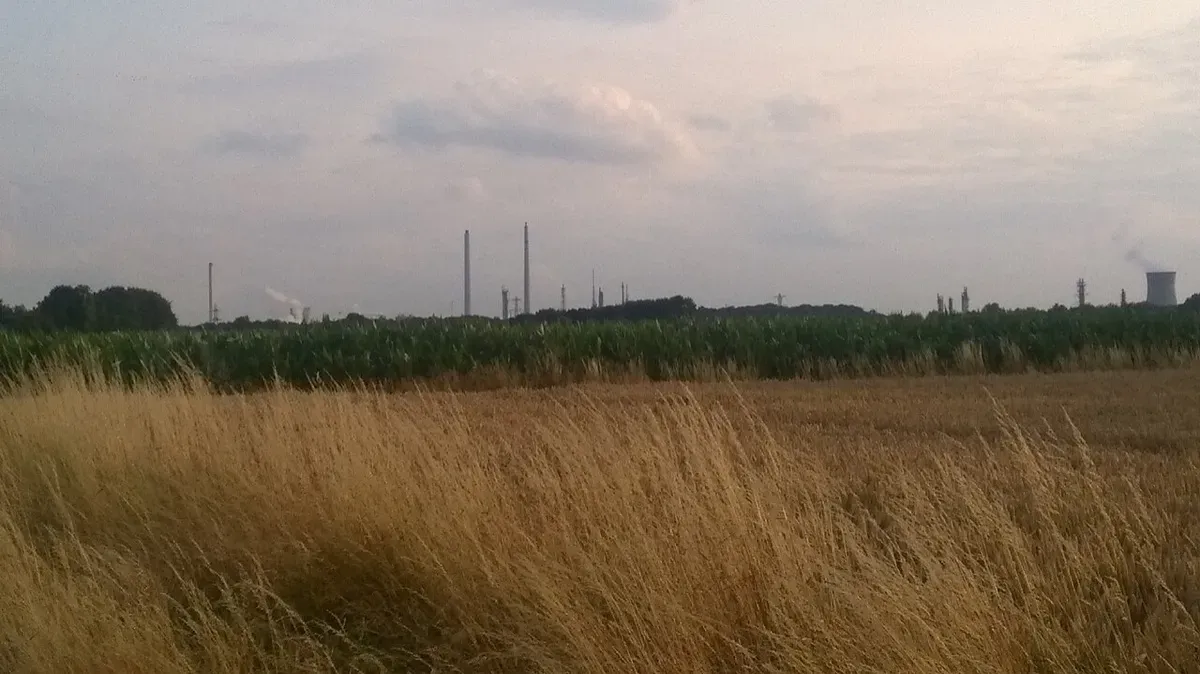
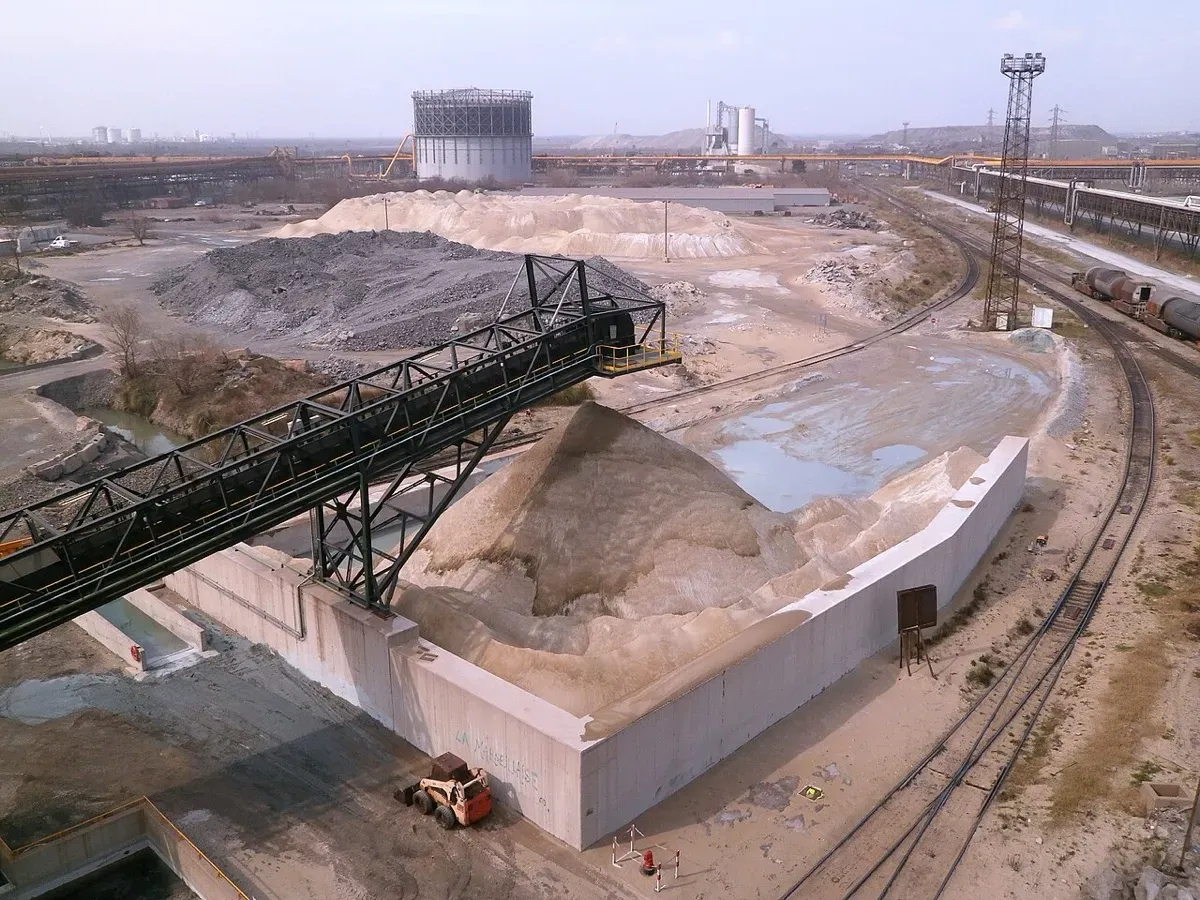
Heavy industries such as cement, steel, fertilisers and chemicals emit CO2 from processes that cannot easily be electrified. For some, such as cement kilns, capturing CO2 from the chimney is one of the few routes to deep cuts. But conventional amine capture plants are big, bespoke and expensive. Carbon Clean says more than 50% of industrial emitters lack the space needed for a conventional capture plant (Carbon Clean).
The pressure is rising in Europe, where carbon prices under the EU Emissions Trading System are joined by the Carbon Border Adjustment Mechanism, which from 2026 charges importers for the embedded emissions of products such as cement, steel, fertilisers and hydrogen (EUR-Lex). That affects exporters in India and the Gulf as much as European producers.
The product
CycloneCC is Carbon Clean’s modular capture technology. Instead of tall packed columns, it uses rotating packed beds (RPBs) that spin to create centrifugal force, which greatly speeds up the transfer of CO2 into the solvent. Combined with the company’s proprietary amine-promoted buffer salt solvent, APBS-CDRMax, this “process intensification” reduces the size of the largest equipment by a factor of ten.
The C1 series, launched in October 2024, is fully columnless. Each unit is prefabricated, skid-mounted and delivered in truckable modules, and captures up to 100,000 tonnes of CO2 a year from flue gases containing 3% to 20% CO2. Compared with conventional plants, Carbon Clean claims 70% lower height, 35% less steel, an up to 50% smaller footprint and up to 50% lower total installed cost. The idea is repeatability: like solar panels or battery packs, identical units can be stacked to match each site.
The company’s older, semi-modular CaptureX technology is already running in India. At NTPC’s Vindhyachal power station, a 20 tonnes per day plant has operated for two years, and in October 2025 its captured CO2 was used with green hydrogen to make the first methanol (Carbon Clean).
How it works
- Flue gas in: exhaust from a kiln, furnace, reformer or boiler is cooled and fed to the unit.
- Spinning absorber: in the rotating packed bed, the solvent is flung outward through a packing while gas flows inward, so CO2 is absorbed in a much smaller space.
- Spinning regenerator: the CO2-rich solvent is heated to release a high-purity CO2 stream, and the lean solvent is recycled.
- AI operation: at Fertiglobe, Carbon Clean’s AI suggested settings that operators applied to improve reliability and solvent performance.
- Use or storage: the CO2 can go to urea, methanol or ethanol production, or be compressed for storage.
Timeline
| Date | Milestone |
|---|---|
| 3 Oct 2023 | ADNOC selects CycloneCC for a 10 tpd unit at Fertiglobe, Ruwais, Abu Dhabi |
| 10 Oct 2024 | BHP, JSW Steel and Carbon Clean sign joint study agreement for CycloneCC at a steelworks |
| 29 Oct 2024 | CycloneCC C1 series launched |
| 3 Apr 2025 | Fertiglobe unit completes about 4,000 hours over six months, reaching TRL 7 |
| 15 May 2025 | 285 tpd rotating packed bed passes factory test at Thomas Broadbent, Huddersfield |
| Jul 2025 | Global Innovation Centre opens in Navi Mumbai |
| 9 Oct 2025 | First methanol from captured CO2 at NTPC Vindhyachal |
| 5 Nov 2025 | Alliance with Samsung E&A for modular projects |
| 12 Jun 2026 | India growth to support about 250 UK jobs |
| 31 Aug 2026 | Carbon Clean contracted for FEED of Uniper’s NorthStarH2 e-methanol project, Sweden |
Impact and numbers
- Industrial proof: the Fertiglobe unit was installed in under a week, ran for about 4,000 hours and produced CO2 meeting Fertiglobe’s purity requirements, which was then used to make urea (Carbon Clean).
- Scale-up: the Huddersfield RPB can capture up to 285 tonnes of CO2 a day, a more than 20-fold scale-up from the 10 tonnes per day Fertiglobe unit (Carbon Clean).
- UK manufacturing: key components will be made in the North of England, supporting around 250 UK jobs, including up to 150 at Thomas Broadbent, and around GBP 83 million in UK economic value over five years (Carbon Clean).
- Europe: Carbon Clean is one of four suppliers, alongside AFRY, Siemens Energy and Topsoe, in a FEED contract worth over SEK 100 million for Uniper’s planned 115,000 tonnes a year e-methanol plant in Östersund, Sweden; Uniper plans its investment decision in 2028 (Uniper via Carbon Clean).
- India steel: a joint study with BHP and JSW Steel is evaluating a CycloneCC plant at JSW’s Vijayanagar steelworks in Karnataka that could capture up to 100,000 tonnes of CO2 a year (Carbon Capture USA).
Honest caveats. CycloneCC has been proven at 10 tonnes per day in the field and at 285 tonnes per day in a factory test, but no full-size commercial C1 unit is yet capturing CO2 at an industrial site; the BHP and JSW project and the Uniper project are both still at study or design stage. The cost and size savings are company claims against conventional plants and have not yet been independently confirmed at commercial scale. Carbon capture also uses significant energy to regenerate the solvent, does not capture every molecule, and only cuts emissions permanently if the CO2 is stored; when it is used for urea or methanol, much of it is released again later. Critics also warn that capture can extend the life of coal and gas assets, and Carbon Clean’s own Indian reference is a coal power plant.
What’s next
Carbon Clean aims to turn its first C1 orders into operating units, using Samsung E&A’s modular construction model and UK-made RPBs. It is also exploring carbon capture for clean, dispatchable power for data centres through the Net Zero Innovation Hub, with an incubation programme from January to June 2027.
Why it matters for Europe and India
For European cement, lime, waste-to-energy and e-fuel producers, a compact, truckable capture unit could make carbon capture possible on crowded sites where a conventional plant would never fit, and the key components are made in England. For India, where blast furnaces and coal will remain in use for years, Carbon Clean is effectively an Indian-British company, with a large research centre in Navi Mumbai and projects at NTPC and JSW. As CBAM starts to bite on steel and fertiliser exports to Europe, capture at existing plants is one way for Indian exporters to cut their emissions.
Sources & image credits
- Carbon Clean, “ADNOC selects Carbon Clean’s modular CycloneCC carbon capture technology for industrial project in the UAE”, 3 October 2023: https://www.carbonclean.com/en/press-releases/adnoc-pr
- Carbon Clean, “Carbon Clean announces successful completion of world’s first industrial deployment of CycloneCC”, 3 April 2025: https://www.carbonclean.com/en/press-releases/operational-hours-milestone
- Carbon Clean, “Carbon Clean announces fully columnless carbon capture, with launch of CycloneCC C1 series”, 29 October 2024: https://www.carbonclean.com/en/press-releases/c1-launch
- Carbon Clean, “Carbon Clean announces successful factory test of revolutionary CycloneCC C1 technology at commercial scale in the UK”, 15 May 2025: https://www.carbonclean.com/en/press-releases/successful-factory-test
- Carbon Clean, “Carbon Clean’s growth in India boosts UK manufacturing”, 12 June 2026: https://www.carbonclean.com/en/press-releases/uk-manufacturing
- Carbon Clean, “NTPC carbon capture project achieves key milestone with production of first drop of methanol using captured CO2”, 9 October 2025: https://www.carbonclean.com/en/press-releases/ntpc-project-milestone
- Uniper (reproduced by Carbon Clean), “Uniper advances NorthStarH2 into basic engineering”, 31 August 2026: https://www.carbonclean.com/en/press-releases/uniper-carbon-clean
- Carbon Capture USA, “BHP, JSW Steel Chase Cleaner Steel in India”, 17 August 2026: https://www.usa.carbon-capture-conference.com/news/bhp-jsw-steel-chase-cleaner-steel-in-india
- Carbon Clean, “Carbon Clean and SAMSUNG E&A form innovative alliance to accelerate global deployment of carbon capture solutions”, 5 November 2025: https://www.carbonclean.com/en/press-releases/samsung-ea
- EUR-Lex, Regulation (EU) 2023/956 establishing a carbon border adjustment mechanism: https://eur-lex.europa.eu/eli/reg/2023/956/oj
Images:
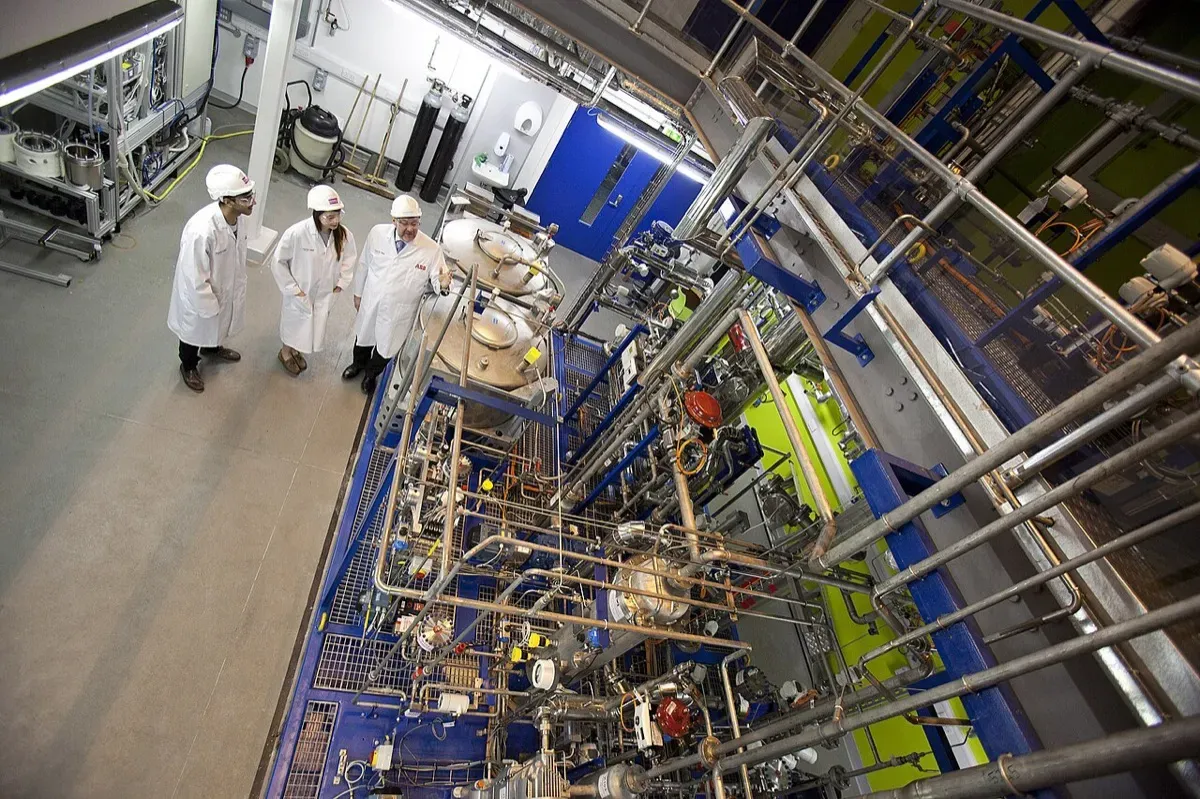
- “Carbon capture 32” (Carbon Capture Pilot Plant in 2012) by Mm907, licensed under CC BY-SA 4.0 (https://creativecommons.org/licenses/by-sa/4.0), via Wikimedia Commons: https://commons.wikimedia.org/wiki/File:Carbon_capture_32.jpg