The problem
Methanol is one of the chemical industry’s building blocks. It is used to make plastics, resins and solvents, and increasingly as a shipping fuel. Today more than 100 million tonnes a year are produced from natural gas and coal (European Energy). Sectors such as shipping, chemicals and aviation cannot simply plug into the grid, so they need low-carbon molecules.
Europe is now creating that demand by law. The revised Renewable Energy Directive (RED III) sets binding targets for renewable fuels of non-biological origin (RFNBOs), meaning fuels made from renewable electricity, in industry and transport (EUR-Lex). But until recently, almost nobody produced such fuels at commercial scale.
The product
Kassø e-methanol is chemically identical to conventional methanol, so it can go into existing tanks, ships and chemical plants. The difference is how it is made: from green hydrogen and biogenic CO2. European Energy says it has up to a 97% lower carbon footprint than fossil-based products (European Energy). It is certified as an RFNBO under EU rules, which gives buyers traceability for the electricity and carbon used. That matters because renewable and fossil methanol are chemically identical once made. Methanol also has a logistical advantage over hydrogen: it is a liquid that can be stored and moved with existing industrial equipment, rather than needing compression, liquefaction or dedicated pipelines (Industrial News).
The customers show the range of uses. Maersk used it to fuel Laura Maersk, the world’s first container ship able to run on methanol. The LEGO Group uses it to make rigid elements such as cross axles and connectors. Novo Nordisk uses it as a step towards lower-carbon plastics for medical devices such as insulin pens. And OMV signed the fourth multi-year contract for Kassø in August 2026, for transport fuels (European Energy H1 2026).
How it works
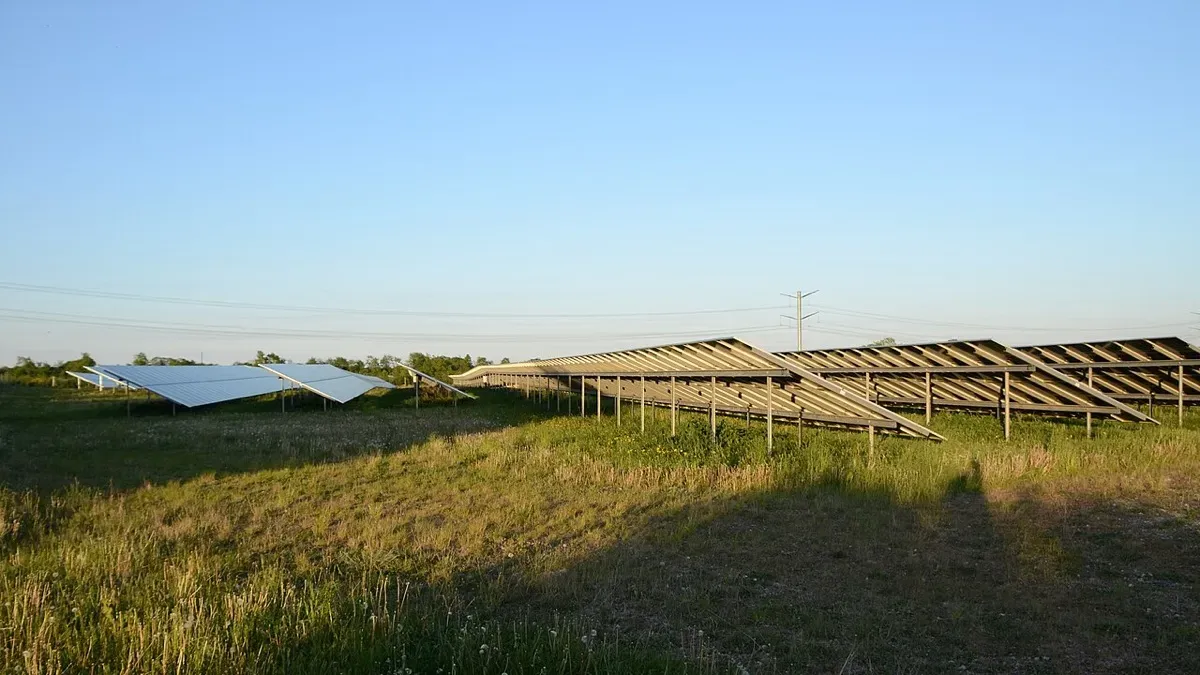
- Renewable power: about 50% of the electricity comes from the neighbouring 304 MW Kassø solar park, and the rest from the grid through a balancing agreement with Danske Commodities.
- Electrolysis: 52 MW of Siemens Energy electrolysers split water into hydrogen and oxygen.
- Biogenic CO2: CO2 is captured at a biogas plant in Tønder, so the carbon comes from organic waste rather than fossil sources.
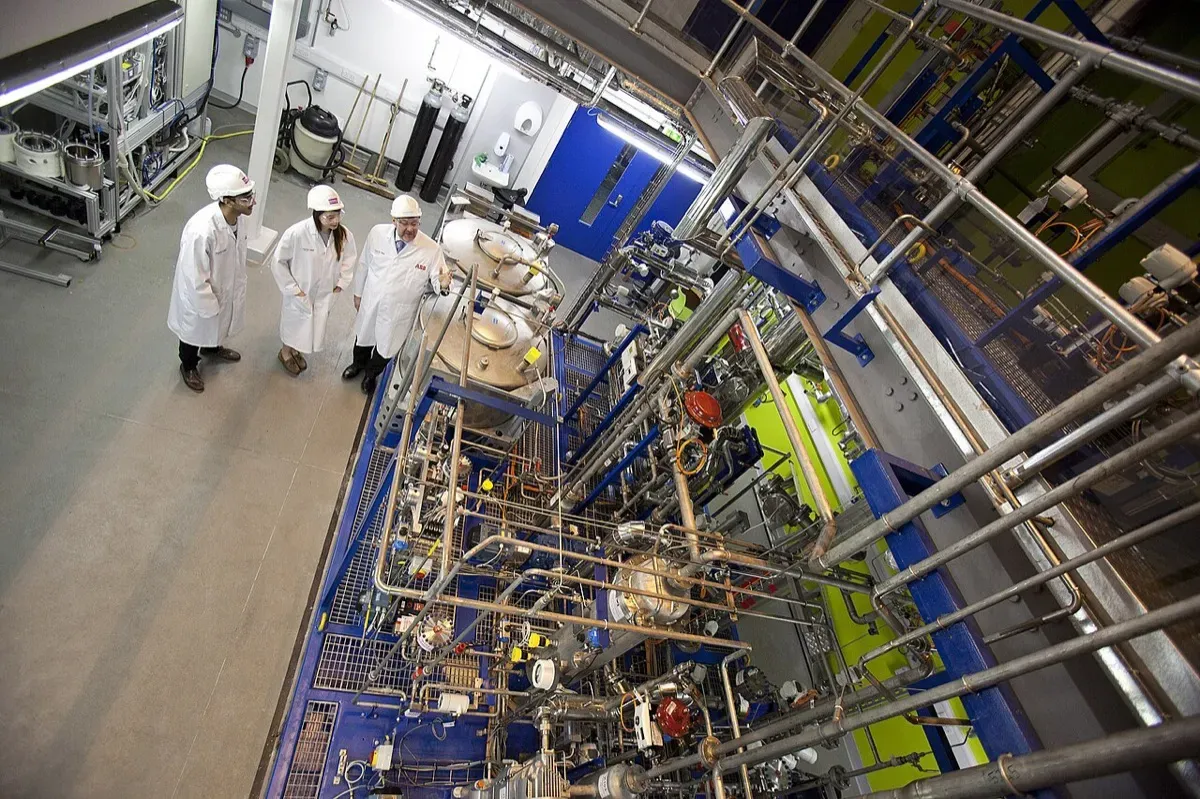
- Synthesis: hydrogen and CO2 react over a catalyst in two methanol lines, and the raw product is purified to industrial or high-purity grades.
- Heat recovery: excess heat is designed to supply district heating for around 3,300 local households.
Timeline
| Date | Milestone |
|---|---|
| Jan 2025 | First green hydrogen from the electrolysers |
| 12 Mar 2025 | First raw e-methanol |
| 13 May 2025 | Official inauguration; first bunkering of Laura Maersk |
| Q1 2026 | Full operating capability; Q1 exports exceed all of 2025; high-purity batch delivered for plastics production |
| 12 May 2026 | 86 tonnes converted into gasoline in the German DeCarTrans project |
| Jun to Jul 2026 | Germany approves RED III for transport; first thousands of tonnes delivered to German refineries |
| Aug 2026 | Multi-year contract with OMV, the fourth for Kassø |
Impact and numbers
- Ramp-up: production rose from 372 tonnes in H1 2025 to 2,543 tonnes in Q1 2026 and 4,974 tonnes in H1 2026 (European Energy H1 2026).
- Capacity: marketed at about 42,000 tonnes a year; the H1 2026 report says capacity was planned at 32,000 tonnes and is being expanded to over 40,000 tonnes to meet expected bookings. European Energy has also won the Danish Power-to-X tender, including plans to expand the electrolysers to 60 MW.
- New markets: in the DeCarTrans project, 86 tonnes were turned into RON95 E10, RON98 E10 and RON102 gasoline at TU Bergakademie Freiberg, which estimates a 90% CO2 reduction compared with conventional fuels (European Energy).
- Pipeline: European Energy was awarded over EUR 200 million in Germany’s hydrogen tender to support further Power-to-X development in Denmark.
Honest caveats. Kassø is still far from full output: 4,974 tonnes in six months is roughly a quarter of the plant’s annual capacity rate. The “42,000 tonnes” figure on the company website differs from the planned 32,000 tonnes in its own interim report. E-methanol costs much more than fossil methanol, and as Industrial News notes, the economics depend on electricity prices, electrolyser use, CO2 supply, financing and whether customers are willing or obliged to pay a premium (Industrial News). Each conversion step, from electricity to hydrogen to methanol and then perhaps to gasoline, loses energy, so e-fuels make most sense where direct electrification is impractical. Half the power comes from the grid, which relies on RFNBO certification rules to count as renewable. Biogenic CO2 supply is also limited, and burning e-methanol as fuel releases the CO2 again; the climate benefit comes from replacing fossil carbon.
What’s next
The priority is to run Kassø close to capacity, expand it to over 40,000 tonnes, and turn RED III quotas in Germany, Belgium and Spain into more long-term contracts. Kassø is also becoming a reference for much larger Power-to-X plants that European Energy and others hope to build.
Why it matters for Europe and India
For European chemical and consumer brands, Kassø is one of the first places where renewable methanol can actually be bought by the thousand tonnes, with certification that counts under EU law. It shows that “green chemicals” can be a physical product, from a LEGO axle to an insulin pen. It also shows that a renewables developer, not only a chemical major, can take such a plant from idea to production in under four years, as European Energy says it did.
India’s National Green Hydrogen Mission targets at least 5 million tonnes of green hydrogen production a year by 2030, with the aim of producing and exporting derivatives (PIB). Methanol is one of the easiest derivatives to ship, and NTPC has already produced methanol from captured CO2 at Vindhyachal (Carbon Clean). Kassø’s ramp-up, problems included, is a useful guide for Indian e-methanol projects.
Sources & image credits
- European Energy, “Kassø E-methanol Facility”: https://europeanenergy.com/kasso/
- European Energy, “Kassø e-methanol facility officially inaugurated”, 13 May 2025: https://europeanenergy.com/2025/05/13/kasso-e-methanol-facility-officially-inaugurated/
- European Energy, Interim Report H1 2026, August 2026: https://europeanenergy.com/wp-content/uploads/2026/08/interim-report-h1-2026.pdf
- European Energy, “E-methanol from Kassø converted into gasoline”, 12 May 2026: https://europeanenergy.com/2026/05/12/e-methanol-from-kasso-converted-into-gasoline/
- Industrial News, “Kassø e-methanol enters European fuel supply chains”, 21 August 2026: https://industrialnews.co.uk/kasso-e-methanol-enters-european-fuel-supply-chains/
- EUR-Lex, Directive (EU) 2023/2413 (RED III): https://eur-lex.europa.eu/eli/dir/2023/2413/oj
- Press Information Bureau, “Cabinet approves National Green Hydrogen Mission”, 4 January 2023: https://pib.gov.in/PressReleasePage.aspx?PRID=1888547
- Carbon Clean, “NTPC carbon capture project achieves key milestone with production of first drop of methanol using captured CO2”, 9 October 2025: https://www.carbonclean.com/en/press-releases/ntpc-project-milestone
Images:
- “Solar Park Kassø 2025” by Hjart, 16 May 2025, licensed under CC BY-SA 4.0 (https://creativecommons.org/licenses/by-sa/4.0), via Wikimedia Commons: https://commons.wikimedia.org/wiki/File:Solar_Park_Kass%C3%B8_2025.jpg