The problem
Ordinary Portland cement is made mostly of clinker, produced by heating limestone and clay to about 1,450 degrees Celsius. The chemical reaction releases CO2 from the limestone itself, and the kiln burns large amounts of fuel. That makes cement responsible for around 8% of global CO2 emissions, and about 50% of the embodied carbon of new buildings, according to Ecocem (Ecocem).
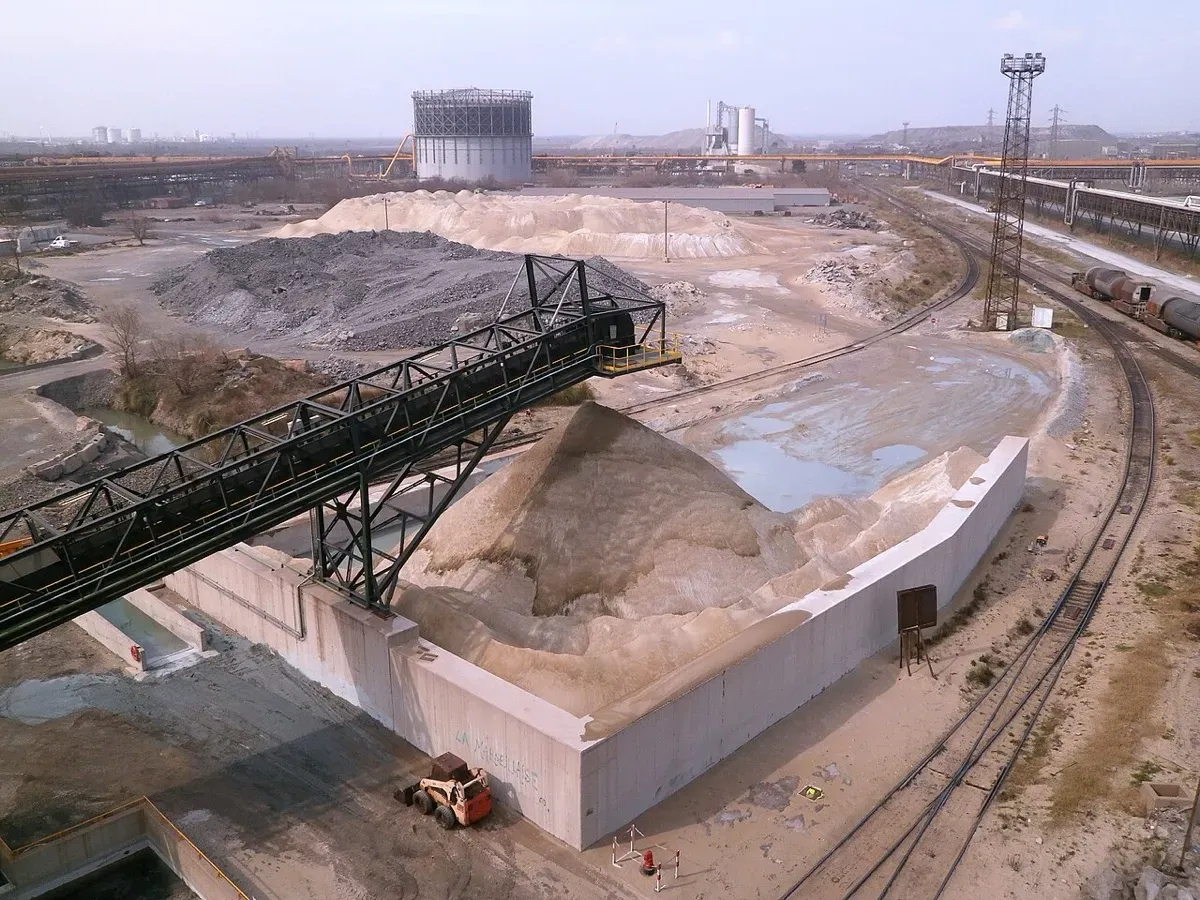
Carbon capture at cement plants, such as Heidelberg Materials’ Brevik project, is one answer, but it is expensive and slow to build. Another is simply to use less clinker. The traditional low-clinker route relies on blast furnace slag, a by-product of steelmaking, but Europe’s slag supply is shrinking as steelmakers switch to electric arc furnaces and hydrogen (CW Group).
The product
ACT (Advanced Cement Technology) was developed by Ecocem over more than ten years of research. It replaces up to 70% of clinker with an engineered blend of abundant lower-carbon materials, including limestone filler and other supplementary cementitious materials, combined with additives and an optimised particle size distribution. Ecocem says it cuts cement-related CO2 by up to 70% compared with the European average (Ecocem).
Its key selling point is that it is a “drop-in” technology: it can be produced at almost any existing cement plant without major modifications, and concrete made with it needs no change in batching or construction practice. ACT has a European Technical Assessment and, by January 2025, was going through certification with France’s building science centre CSTB.
The flagship test is the Parker & Baker development in Chessy, near Paris: 147 apartments and four houses built by developers Legendre Immobilier and Plurial Novilia using about 9,000 cubic metres of ACT concrete for every concrete element, from an on-site mobile batching plant. Compared with the original concrete specification, embodied carbon fell by about 55%. Structural works were due to finish in September 2026 and the project in Q2 2027.
How it works
- Less clinker: ACT keeps a small share of clinker as the reactive core of the cement.
- Engineered fillers: finely ground limestone and other supplementary materials fill the gaps between clinker particles.
- Particle packing and additives: carefully controlled particle sizes and admixtures let the cement reach the strength, workability and durability of normal cement despite using less clinker.
- Existing kit: at Dunkirk, a new ball mill grinds the limestone filler supplied by partner CB Green (Groupe CB), and new silos and blending equipment mix and store ACT.
Timeline
| Date | Milestone |
|---|---|
| 2000 | Ecocem founded in Ireland |
| May 2021 | Breakthrough Energy Ventures completes equity investment |
| 28 Jan 2025 | First dedicated ACT unit announced at Dunkirk (EUR 50 million, France 2030 grant of EUR 3.6 million) |
| 2 Apr 2025 | Co-development and technology transfer deal with TITAN Group, starting in Greece |
| Q3 2025 | Construction of Parker & Baker, Chessy, begins with ACT concrete |
| 15 Apr 2026 | EU Climate Commissioner Wopke Hoekstra visits Dunkirk |
| 8 Jul 2026 | First full-scale residential deployment announced |
| Late Jul 2026 | Four silos and ball mill installed at Dunkirk |
| End 2026 | Dunkirk ACT unit due to start, over 300,000 t a year |
Impact and numbers
- Capacity: the Dunkirk ACT line will add more than 300,000 tonnes a year on top of 700,000 tonnes of other low-carbon products already made on site, taking the site past one million tonnes (Ecocem).
- Track record: Ecocem says its low-carbon cements have avoided about 18 million tonnes of CO2 to date, on projects including Grand Paris Express, Dublin’s Aviva Stadium, the Paris 2024 Athletes’ Village and HS2.
- Investment: the Dunkirk plant is part of a EUR 220 million programme to expand Ecocem’s European capacity by 2030; it is a joint venture with CB Green and is funded by a green loan, with grants from France 2030, the Hauts-de-France region and the Dunkirk Urban Community.
- Licensing: the TITAN agreement is Ecocem’s first technology transfer deal with a major cement producer and the first commercial ACT project using materials beyond slag.
- Backers: investors include Saint-Gobain and Breakthrough Energy Ventures, and ArcelorMittal is a major shareholder in Ecocem France.
Honest caveats. ACT’s dedicated factory is still under construction, and its start at the end of 2026 is a target; until then ACT volumes come from pilots and project-specific batching. The “up to 70%” figure is a maximum compared with the European average cement, and Batinfo notes that the actual saving depends on the scope of the calculation, the composition and the raw materials; Chessy achieved 55% at project level. ACT reduces clinker but does not remove it, so it is not zero-carbon. Low-clinker cements can gain strength more slowly, which matters for fast construction schedules, and standards and building codes in many countries still limit their use. Europe’s slag supply is falling, which is why limestone-based blends like ACT matter, but local availability of suitable materials will vary.
What’s next
The priority is to commission Dunkirk at the end of 2026 and start selling ACT at volume in northern France, the Paris area and export markets. Ecocem is also pushing for “lead markets” for low-carbon cement, such as Ireland’s public procurement rule requiring at least 30% less clinker. As the EU’s Carbon Border Adjustment Mechanism enters its definitive phase from 2026 and free carbon allowances for cement are phased out, low-clinker cement becomes more competitive (EUR-Lex).
Why it matters for Europe and India
For European contractors, developers and public buyers, ACT is a way to cut the embodied carbon of concrete by around half today, with existing plants and site practices, while carbon capture is still scaling up. It also reduces exposure to rising EU carbon prices.
India is the world’s second-largest cement producer, and in October 2025 it notified its first legally binding greenhouse gas intensity targets for cement plants under the Carbon Credit Trading Scheme (The Hindu). Ecocem does not yet operate in India, although its first licensee, TITAN, has a joint venture there. A licensed, drop-in low-clinker cement that relies on limestone rather than scarce slag could help Indian producers meet these targets.
Sources & image credits
-
Ecocem, “Ecocem Announces the First Commercial Low-Carbon Cement Production Unit for ACT Technology at Dunkirk Manufacturing Facility”, 28 January 2025: https://www.ecocemglobal.com/ecocem-announces-the-first-commercial-low-carbon-cement-production-unit-for-act-technology-at-its-dunkirk-manufacturing-facility/
-
Ecocem, “Ecocem’s breakthrough ACT cement proves commercial readiness on world’s first full-scale residential deployment”, 8 July 2026: https://www.ecocemglobal.com/ecocems-breakthrough-act-cement-proves-commercial-readiness-on-worlds-first-full-scale-residential-deployment
-
Batinfo, “Ecocem is installing the main equipment for its future ACT cement plant in Dunkirk”, 29 July 2026: https://batinfo.com/en/actuality/Ecocem-installs-the-main-equipment-for-its-future-cement-plant-in-Dunkirk_35975
-
Ecocem, “Commissioner Hoekstra visits Ecocem’s Dunkirk facility”, 15 April 2026: https://www.ecocemglobal.com/en-ie/commissioner-hoekstra-visits-ecocems-dunkirk-facility-to-highlight-decisive-role-in-europes-industrial-decarbonisation/
-
Ecocem, “Ecocem Signs Agreement with TITAN Group to Accelerate the Deployment of Low-Carbon Cement”, 2 April 2025: https://www.ecocemglobal.com/en-us/ecocem-signs-low-carbon-cement-agreement-with-titan-group/
-
CW Group, “GGBFS supply shifts”: https://cwgrp.com/about/news/cw-group-ggbfs-supply-shifts
-
EUR-Lex, Regulation (EU) 2023/956 establishing a carbon border adjustment mechanism: https://eur-lex.europa.eu/eli/reg/2023/956/oj
-
The Hindu, “India notifies first emission intensity targets for carbon-intensive sectors”, October 2025: https://www.thehindu.com/sci-tech/energy-and-environment/india-notifies-first-emission-intensity-targets-for-carbon-intensive-sectors/article70147013.ece
-
World Cement, “Ecocem announces completion of equity investment by Breakthrough Energy Ventures”, 7 May 2021: https://www.worldcement.com/europe-cis/07052021/ecocem-announces-completion-of-equity-investment-by-breakthrough-energy-ventures-and-breakthrough-energy-ventures-europe/
Images:
- “Laitier de haut fourneau à Fos-sur-Mer” by Borvan53, 2015, licensed under CC BY-SA 4.0 (https://creativecommons.org/licenses/by-sa/4.0), via Wikimedia Commons: https://commons.wikimedia.org/wiki/File:Laitier_de_haut_fourneau_%C3%A0_Fos-sur-Mer.jpg