The problem
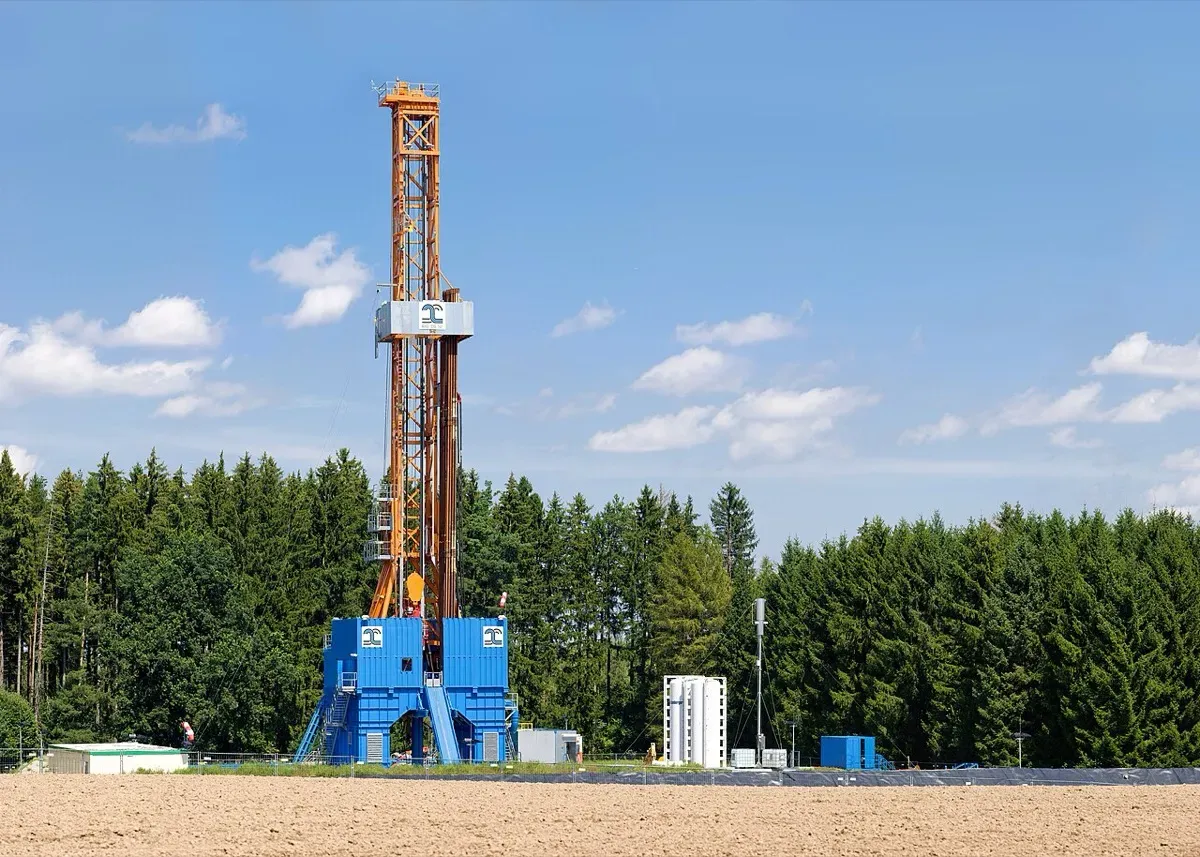
The IEA estimates that geothermal energy currently meets less than 1% of global energy demand, but that next-generation technologies could cut costs by 80% by 2035, to about US$50/MWh, and supply up to 15% of electricity demand growth to 2050 (IEA). Most of that potential lies in medium-temperature resources: aquifers under Bavaria, the Upper Rhine and the Pannonian basin, and the engineered reservoirs of enhanced geothermal systems.
Steam turbines work best with dry steam or very hot brine. At 120°C to 180°C, a conventional flash plant wastes much of the heat, and the minerals in brine can scale up equipment. Plants also have to return all the fluid underground to keep reservoirs pressurised and avoid surface pollution.
The product
Turboden’s geothermal plants are binary systems: the geothermal brine never touches the turbine. Instead, it passes through heat exchangers that boil a separate organic working fluid, such as a hydrocarbon or refrigerant, which drives the turbine in a closed loop (Turboden).
Turboden designs each plant for its resource. According to the company, its geothermal units work with sources from 100°C to over 300°C, reach up to 40 MWe on a single shaft, achieve binary-cycle efficiency of up to 25% at the high end of that range and offer availability of up to 99%. Because the brine stays in a closed circuit, it can be fully reinjected, with no scaling in the turbine itself. Plants can also be combined with district heating, so a well can supply both electricity and heat to a town.
The product range covers small units for low-temperature district heating wells and large single-shaft machines for utility-scale fields. Turboden also supplies “bottoming” units that recover extra power from the leftover brine of existing steam plants, such as the 29 MW gross plant at Palayan in the Philippines, completed in early 2024. The history is long: Turboden’s first geothermal ORC was a 0.2 MW unit in Zambia, followed by plants at Larderello in Tuscany, Altheim in Austria and Soultz-sous-Forêts in France, and later by the 14 MW Lightning Dock plant in New Mexico.
How it works
- Extract: a production well brings hot brine to the surface.
- Transfer heat: in a pre-heater and evaporator, the brine boils an organic fluid that has a much lower boiling point than water.
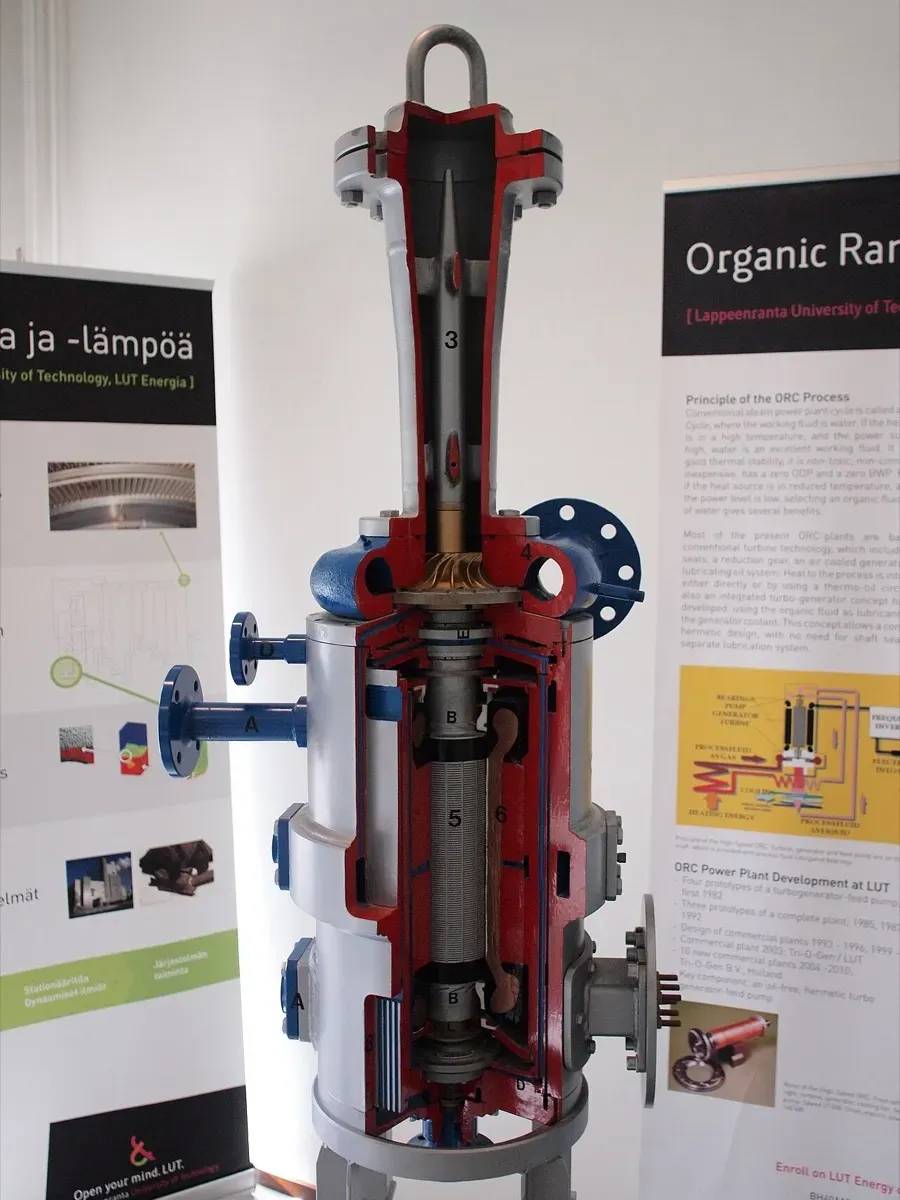
- Expand: the vapour drives a slow-speed axial turbine connected to a generator. Organic fluids allow efficient turbines at low temperature with few stages and little blade erosion.
- Condense: the vapour is cooled by air or water, condenses and is pumped back to the evaporator.
- Reinject: the cooled brine goes back underground, or first passes through a district heating exchanger.
Timeline
| Date | Milestone |
|---|---|
| 1980 | Turboden founded in Milan by Mario Gaia |
| 1991 | 1.3 MW geothermal ORC at Larderello, Italy |
| 2007 | 1.7 MW plant at Soultz-sous-Forêts, France, Europe’s pioneering EGS site; move to Brescia |
| 2013 | Mitsubishi Heavy Industries becomes majority owner; Kirchstockach, Bavaria, 5.6 MWe |
| 2016 | First 16 MW geothermal turbine; Traunreut, Bavaria, 4.1 MWe |
| Jul 2019 | Holzkirchen, Bavaria, 3.4 MWe plus district heating |
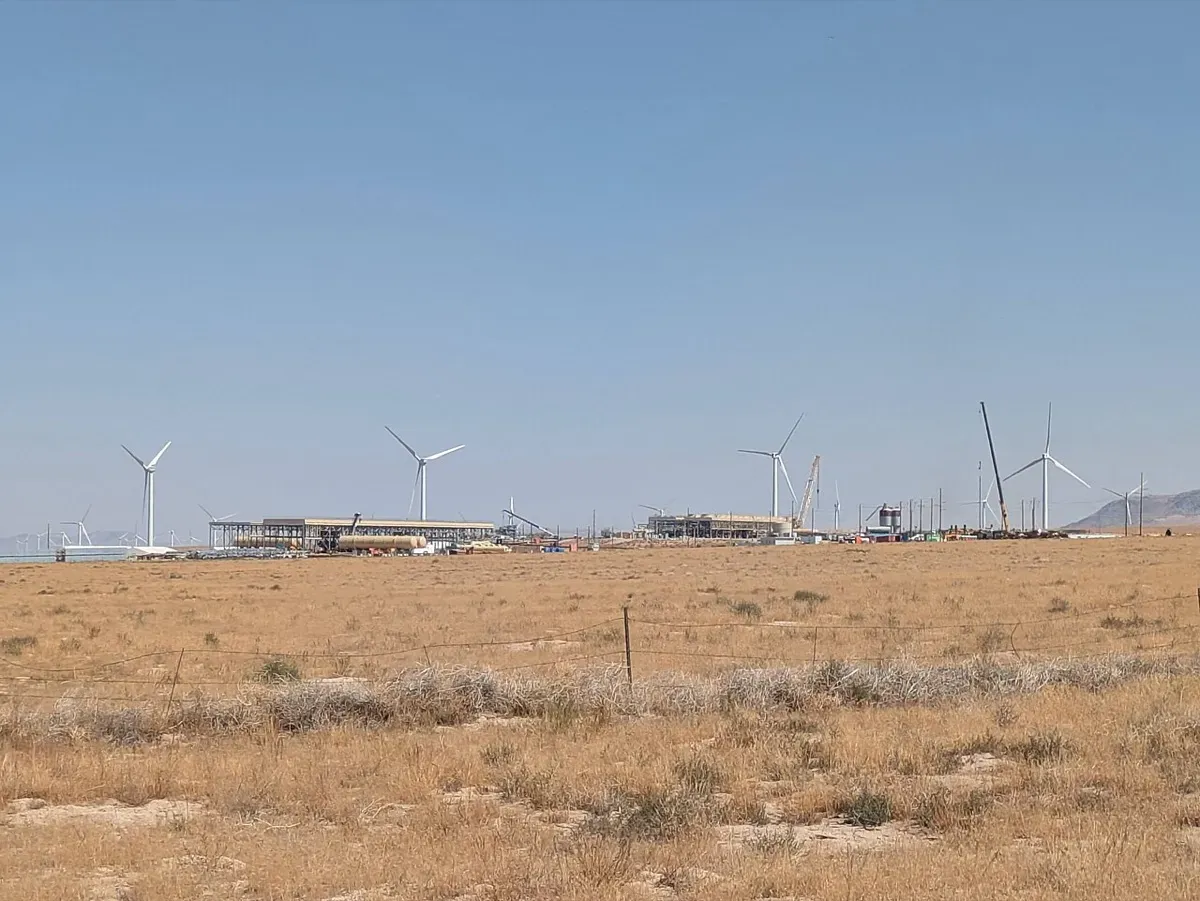
| Oct 2025 | Selected to deliver three 60 MWe Gen 2 units for Fervo Cape Station Phase II |
| Apr 2026 | Framework with Fervo for up to 35 GeoBlocks, about 1.75 GW |
Impact and numbers
- Fleet: more than 470 ORC plants in over 50 countries, which Turboden estimates have avoided about 63 Mt of CO2 by the end of 2023 (Turboden references).
- Holzkirchen: the plant near Munich uses 152°C water to produce 3.4 MWe and also heats the town through district heating (Turboden case history).
- Velika Ciglena: a 17.5 MWe plant in Croatia, one of the largest geothermal ORC units in Europe.
- Fervo: 120 MWe of Gen 1 equipment for Cape Station Phase I, three 60 MWe Gen 2 units for Phase II with commissioning by 2028 (Turboden, October 2025), and a framework for up to 1.75 GW (Turboden, April 2026).
- Eavor: Turboden supplied the ORC at Eavor’s Geretsried closed-loop project in Bavaria, which first exported power in December 2025 (Eavor).
Honest caveats. ORC plants make electricity from moderate heat, but physics limits their efficiency: at 100°C to 150°C, typical conversion efficiencies are in the single digits to low teens, and the 25% figure applies only to the hottest resources. At Geretsried, ORC efficiency was about 4.3% because the closed loop delivered modest temperatures. The 1.75 GW Fervo framework is not a firm order, and depends on Fervo’s own growth. Air-cooled ORC plants also lose output on hot days. The CO2 savings estimate is Turboden’s own and covers all its plants, including biomass and waste heat.
What’s next
The surge in enhanced geothermal in the United States has turned Turboden from a niche European supplier into a key part of a supply chain that now needs factory-scale production. Its Gen 2 60 MWe units for Fervo are larger and more standardised than earlier one-off plants. In Europe, Turboden is supplying projects in the Upper Rhine valley, including Vulcan Energy’s Lionheart project, which combines geothermal heat and power with lithium extraction from brine.
Why it matters for Europe / green buyers
Turboden shows that Europe still has world-leading clean energy manufacturing. Every new geothermal district heating well in Bavaria, the Paris basin or the Netherlands is a potential customer, and an ORC turns a heat-only well into one that also earns electricity revenue. For municipal utilities, the key questions are brine temperature, flow rate and cooling options; Turboden offers plants designed around each site rather than a single catalogue model.
India’s geothermal resources, such as Puga in Ladakh and sites in Gujarat and Chhattisgarh, are mostly medium temperature. The 135°C measured at Puga is exactly the range where binary ORC plants are the standard technology, and ONGC’s planned 1 MWe pilot will need a machine of this kind.
Sources & image credits
- Turboden, “Since 1980” (company history): https://www.turboden.com/company/1058/since-1980
- Turboden, “Geothermal” solutions page: https://www.turboden.com/solutions/1052/geothermal
- Turboden, “Holzkirchen” case history: https://www.turboden.com/case-histories/1986/holzkirchen
- Turboden, “References”: https://www.turboden.com/references
- Turboden, “Turboden selected to deliver 180 MW of Fervo’s Gen 2 ORC power plants at Cape Station in Utah”, 2 October 2025: https://www.turboden.com/company/media/press/press-releases/4881/turboden-selected-to-deliver-180-mw-of-fervos-gen-2-orc-power-plants-at-cape-station-in-utah
- Turboden, “Fervo Energy and Turboden announce new 1.7 GW turbine supply framework agreement”, 7 April 2026: https://www.turboden.com/company/media/press/press-releases/5004/fervo-energy-and-turboden-announce-new-17-gw-turbine-supply-framework-agreement
- Eavor Technologies, “Technical update from Geretsried: what we built, what we learned and what comes next”, May 2026: https://eavor.com/blog/technical-update-from-geretsried-what-we-built-what-we-learned-and-what-comes-next/
- International Energy Agency, “The Future of Geothermal Energy: Executive summary”, December 2024: https://www.iea.org/reports/the-future-of-geothermal-energy/executive-summary
Images:
- “ORC power plant” by Tommi Nummelin, licensed CC BY-SA 3.0 (https://creativecommons.org/licenses/by-sa/3.0), via Wikimedia Commons: https://commons.wikimedia.org/wiki/File:ORC_power_plant.JPG