The problem
Grids with lots of wind and solar still need firm power, available at any hour. Today, that usually comes from gas, nuclear or hydro. Data centres for artificial intelligence have added urgency, because they need large amounts of round-the-clock electricity and their owners have promised to buy clean energy.
Geothermal plants run at capacity factors above 75%, according to the IEA, but conventional geothermal is limited to rare sites where hot water already flows through permeable rock (IEA). Enhanced geothermal systems (EGS) create that permeability by pumping water at high pressure to open fractures in hot rock. Early EGS projects in Europe and the US were small, costly and sometimes caused earthquakes that stopped them, such as Basel in Switzerland in 2006.
The product
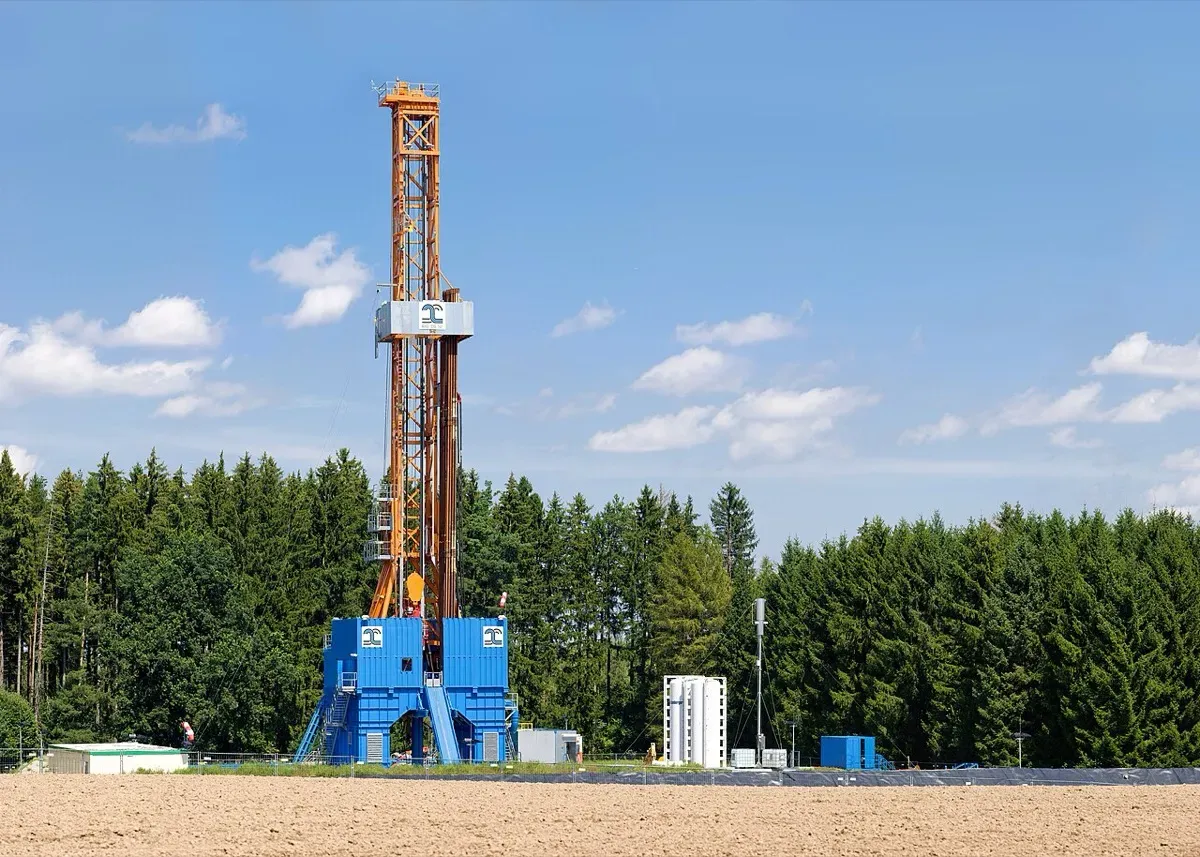
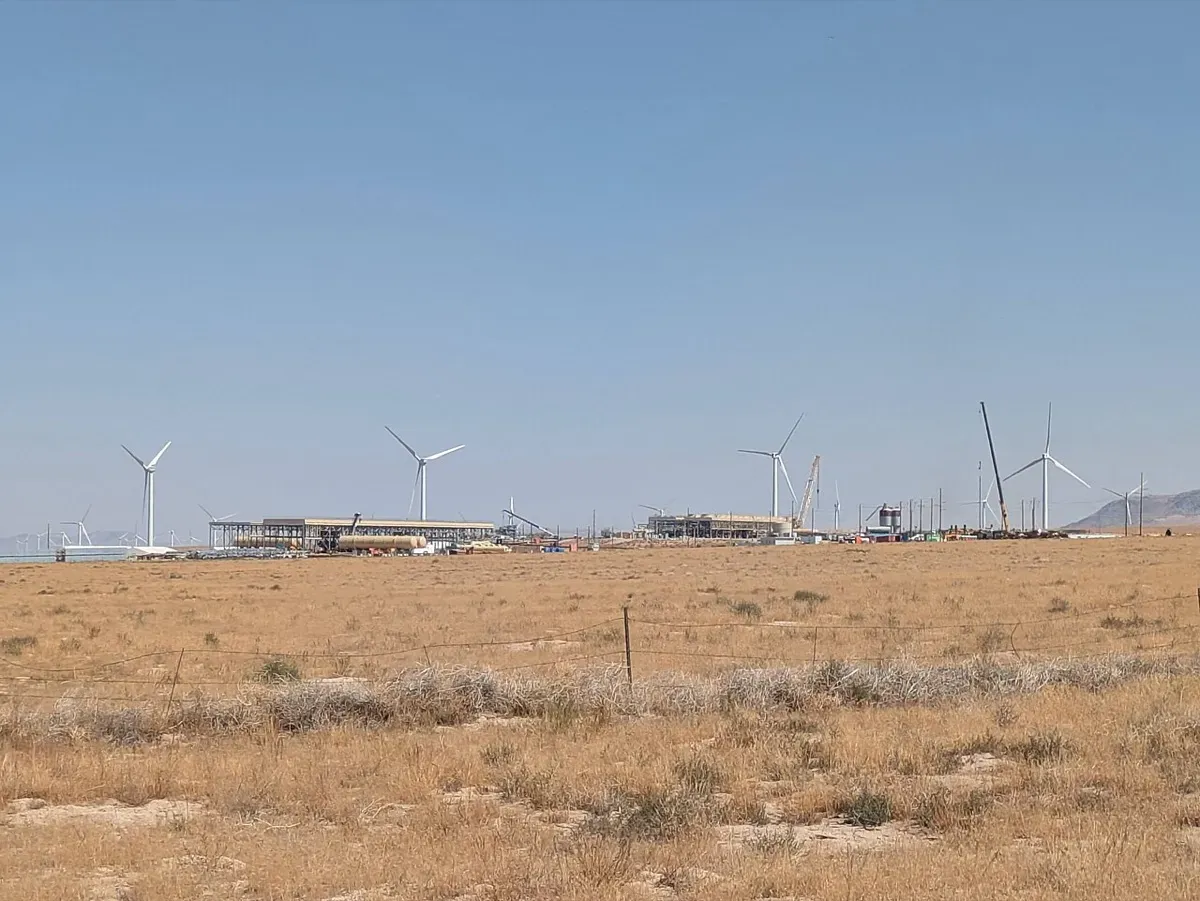
Cape Station applies the tools of the US shale industry to geothermal: long horizontal wells, multi-stage stimulation and fibre-optic monitoring. Fervo drills pairs of horizontal wells into hot granite, stimulates fractures between them, and circulates water from one well to the other. The hot water returns to the surface and drives binary organic Rankine cycle turbines before being reinjected (Fervo, first power).
Fervo packages capacity into GeoBlocks of 33 MW net. The first GeoBlock reached first power on 24 September 2026, and Fervo declared commercial operation on 30 September, ahead of the schedule in its contracts (Fervo, commercial operation). The block took 23 months to build against an original 18-month target (mgrid).
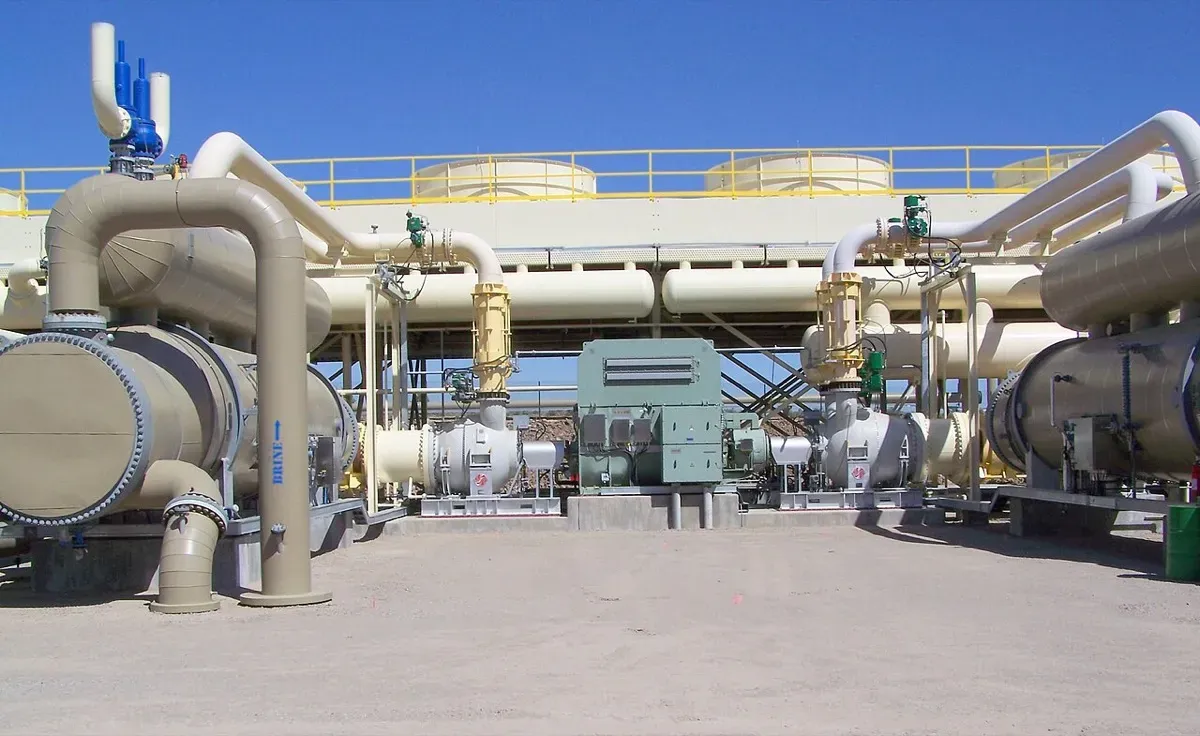
The surface plants come from Italy: Turboden supplied 120 MW of Gen 1 ORC equipment for Phase I and will deliver three 60 MW Gen 2 units for Phase II (Turboden).
How it works
- Drill: wells go down into hot granite, then turn horizontal for thousands of metres, using shale drilling rigs and bits adapted for hard rock.
- Stimulate: water is pumped at high pressure in stages along the horizontal section, opening a network of fractures.
- Connect: a parallel production well is drilled through the fractured zone.
- Circulate: cool water is injected, flows through the fractures, heats up and is pumped out of the production well.
- Generate: in the ORC plant, the hot water boils a working fluid that spins the turbine. The cooled water is reinjected in a closed cycle.
- Monitor: fibre-optic cables and seismometers track pressure, temperature and microseismic activity, and a traffic light system adjusts operations if seismicity rises (Cape Station).
Timeline
| Date | Milestone |
|---|---|
| 2017 | Fervo Energy founded |
| Jul 2023 | Project Red in Nevada: 3.5 MW in a 30-day test, with Google as partner |
| 2023 | Cape Station drilling begins in Beaver County, Utah |
| Oct 2025 | Turboden selected for 180 MW of Gen 2 ORC units for Phase II |
| May 2026 | Fervo lists on Nasdaq under FRVO |
| 24 Sep 2026 | First power from the first 33 MW GeoBlock |
| 30 Sep 2026 | Commercial operation declared |
| By 1 Jan 2027 | Remaining two Phase I GeoBlocks due |
| 2028 | Phase II, about 400 MW, due |
Impact and numbers
- Project Red: the 2023 pilot in Nevada produced 3.5 MW with flows of 63 litres per second over a 30-day test, the first proof of commercial-scale EGS flow rates (Fervo, 2023).
- Scale: Phase I of about 100 MW and Phase II of about 400 MW, with over 1 GW of binding power purchase agreements across Fervo’s portfolio and more than 4 GW of potential at Cape.
- Google: a deal for 396 MW, with an option to grow to about 1 GW by June 2030 (mgrid).
- Costs: estimates reported by mgrid put Phase I at about US$7,000 per kW and target Phase II at about US$5,500 per kW, compared with about US$2,157 per kW for a gas plant. The total cost of the project is about US$2 billion.
Honest caveats. Enhanced geothermal is still more expensive to build than gas, wind or solar, and the cost estimates above are reported, not audited. The first GeoBlock took five months longer than planned. Stimulation can induce earthquakes; Fervo publishes seismic data and uses a traffic light system, but public acceptance will depend on a clean safety record over years. Reservoir performance can decline as rock cools, and long-term data at Cape are only beginning. Cape Station uses water for stimulation and makeup in a dry region. Finally, the “first” claims apply to utility-scale EGS; smaller EGS plants, such as Soultz-sous-Forêts in France, have produced power for years.
What’s next
Fervo’s next steps are to finish the two remaining Phase I blocks by the start of 2027 and then build the 400 MW Phase II with standardised Gen 2 turbines by 2028. With Turboden, it has agreed a framework for up to 35 GeoBlocks of 50 MW each, about 1.75 GW. As drilling gets faster and wells cheaper, Fervo aims to move EGS from niche to mainstream firm power, especially for data centres and utilities with clean energy goals.
Why it matters for Europe / green buyers
Europe invented EGS: the research site at Soultz-sous-Forêts in Alsace pioneered the technique in the 1980s and 1990s. But high costs and seismic incidents in Basel and elsewhere slowed progress. Cape Station shows that shale-style drilling can make EGS work at scale, and much of the hard rock beneath Germany, France, Hungary and Poland is suitable. The IEA estimates that up to 80% of the investment in a geothermal project draws on skills that overlap with oil and gas, giving European drilling firms a path into clean energy. Utilities and data centre developers in Europe should watch Cape’s cost and reliability data closely.
India has medium-temperature hydrothermal sites such as Puga in Ladakh, where ONGC is preparing a 1 MWe pilot, but the IEA counts China, the US and India together as holding three-quarters of the market potential for next-generation geothermal. EGS could open that potential beyond the Himalaya.
Sources & image credits
- Fervo Energy, “Fervo Energy achieves first power at Cape Station, a landmark moment for the future of enhanced geothermal systems”, 24 September 2026: https://fervoenergy.com/fervo-energy-achieves-first-power-at-cape-station-a-landmark-moment-for-the-future-of-enhanced-geothermal-systems/
- Fervo Energy, “Fervo Energy declares commercial operation at Cape Station ahead of schedule”, 30 September 2026: https://fervoenergy.com/fervo-energy-declares-commercial-operation-at-cape-station-ahead-of-schedule-leading-the-race-for-next-generation-geothermal-energy/
- Fervo Energy, “Fervo Energy announces technology breakthrough in next-generation geothermal”, July 2023: https://fervoenergy.com/fervo-energy-announces-technology-breakthrough-in-next-generation-geothermal/
- mgrid, “Fervo first power at Cape Station: 33 MW GeoBlock, Phase I”, 27 September 2026: https://mgrid.org/2026/09/27/fervo-first-power-cape-station-33-mw-geoblock-phase-i/
- Cape Station, “Insights on seismic behavior at Cape Station”: https://capestation.com/insights-on-seismic-behavior-at-cape-station/
- Turboden, “Turboden selected to deliver 180 MW of Fervo’s Gen 2 ORC power plants at Cape Station in Utah”, 2 October 2025: https://www.turboden.com/company/media/press/press-releases/4881/turboden-selected-to-deliver-180-mw-of-fervos-gen-2-orc-power-plants-at-cape-station-in-utah
- International Energy Agency, “The Future of Geothermal Energy: Executive summary”, December 2024: https://www.iea.org/reports/the-future-of-geothermal-energy/executive-summary
Images:
- “Fervo Cape Station” by Braddah n8, released under CC0 1.0 (https://creativecommons.org/publicdomain/zero/1.0/), via Wikimedia Commons: https://commons.wikimedia.org/wiki/File:Fervo_Cape_Station.jpg