The problem
India has around 5,000 large dams, many of them decades old (Planys). The Dam Safety Act 2021, in force since 30 December 2021, now requires regular safety inspections, and the government reports more than 6,500 pre-monsoon and post-monsoon inspections in 2025 alone (PIB, 30 March 2026). Yet the parts of a dam most at risk, such as the upstream face, intake gates and spillway foundations, sit under water.
The traditional options are poor. Draining a reservoir means losing stored water and power generation. Divers work in low visibility, strong currents and limited time, and can only offer visual impressions. Ports and shipping face a similar problem: inspecting a hull or jetty piles often means dry-docking a ship or sending divers into busy harbours. Imported ROVs exist, but in 2016 the capable ones cost more than ₹1 crore each.
The product
Beluga was unveiled at IIT Madras on 19 November 2016. Built by a team that had worked on underwater robotics at the institute since 2012, it was designed to go to 200 m and to carry not just cameras but sonar and ultrasonic equipment, at four to five times lower cost than imports (The New Indian Express, 19 November 2016). It followed Mike, a smaller visual inspection ROV that had already logged more than 1,000 hours in ports and dams, including Sathanur.
A 2018 technical paper gives Beluga’s specifications: about 730 x 820 x 600 mm, 53 kg in air, a payload of 10 to 15 kg, maximum power of 3,000 W through a tether, and unlimited endurance. It can operate in waves of 2 to 4 m and currents of about 1 m/s, with 1080p cameras at 60 frames per second (NDE India 2018).
How it works
Beluga is a tethered ROV: an operator on a boat, jetty or dam crest pilots it in real time, with power and data running through the cable. Thrusters hold it steady against current while it carries up to eight sensors, according to Planys. HD cameras and lights capture visual detail, imaging sonar sees through murky water, and ultrasonic probes measure the remaining thickness of steel plate or piles. For concrete, Planys and IIT Madras’s Centre for Non-Destructive Evaluation adapted ultrasonic pulse velocimetry for underwater use and mounted it on Beluga. The method sends an ultrasonic pulse through the concrete and measures its speed; deviations from the expected velocity reveal internal cracks, voids or weak material that divers’ visual checks cannot see. The team presented in-house and field results at the NDT-CE 2022 symposium in Zurich (NDT-CE 2022).
Findings are compiled into inspection reports that asset owners and engineers can use to plan maintenance. A key application is underwater inspection in lieu of dry-docking (UWILD). In one documented case, Beluga inspected a 125 m roll-on/roll-off vessel in Chennai port, without dry-docking. The survey documented chain chafing on the bow, damage to the bilge keel, coating loss on the rudder, severe biofouling on the stern and the state of the propeller anodes, while ultrasonic thickness readings confirmed healthy plating and anode depletion within permissible limits. The observations were made live in front of a class surveyor and the ship manager, an action plan was drafted to repair the bilge keel and clean the intake gratings, and the authors concluded the vessel did not need to dry-dock for these repairs (NDE India 2018). The paper notes that about 98% of hull inspections are still done in dry-dock, and that divers struggle to clean fouling well enough for accurate thickness readings.
Timeline
| Date | Milestone |
|---|---|
| 2012 | Underwater robotics research begins at IIT Madras |
| 2015 | Planys Technologies founded and incubated at IIT Madras |
| 19 November 2016 | Beluga launched at IIT Madras |
| December 2018 | UWILD case study of a 125 m ro-ro vessel presented at NDE 2018 in Mumbai |
| 2020 | National Startup Award |
| 30 December 2021 | India’s Dam Safety Act comes into force |
| December 2025 | ₹100 crore round led by Ashish Kacholia and Lashit Sanghvi; defence arm Planys Ark announced |
Impact and numbers
- Reach: about 500 sites inspected in more than 10 countries for more than 150 users, including Reliance, Indian Oil, Shell and Saudi Aramco (BusinessLine, December 2025).
- IP: 21 patents granted and 15 more filed.
- Product family: the original Mike (rated to 100 m), Beluga with more than twice the thrust and speeds up to 4 knots, and Mikros, a micro ROV rated to 120 m on a 600 m tether.
- Policy fit: India’s dam inspections now run at more than 13,000 a year under the National Dam Safety Authority, with 40 dams rehabilitated under the DRIP programme cited by the government.
Honest caveats. Planys does not publish independent data on cost savings, avoided drawdowns or defects found compared with diver surveys, so the benefits are mostly described by the company and its clients. Many figures, including patent counts and site numbers, come from funding announcements. An ROV only finds problems: repairs still require engineers, divers or drawdowns, and the value depends on whether owners act on the reports.
What’s next
The December 2025 funding is earmarked for global expansion, a dedicated unmanned underwater vehicle facility in south Chennai and Planys Ark, a defence arm building autonomous underwater systems. The company is also pushing from inspection toward condition monitoring and predictive maintenance, using repeat surveys and analytics to show how structures change over time.
Why it matters for Europe / green buyers
Europe faces the same issue on a different scale: ageing dams, quay walls, offshore wind foundations and subsea pipelines that all need regular underwater inspection. Planys already works in the Netherlands, and Indian-built ROVs offer a cost-competitive option for European ports and utilities.
For buyers, robotic inspection reduces dangerous diving, avoids reservoir drawdowns that waste water and hydropower, and lets ships skip unnecessary dry-docking, which saves fuel and steel. The right questions are data quality, certification acceptance by classification societies and insurers, and whether inspection reports feed a real maintenance plan.
Sources & image credits
- The New Indian Express, “Indigenous underwater ROV launched at IIT-M”, 19 November 2016: https://www.newindianexpress.com/cities/chennai/2016/Nov/19/indigenous-underwater-rov-launched-at-iit-m-1540227.html
- A. A. Jacob, M. Galipalli, V. Upadhyay, P. Rajagopal and K. Balasubramaniam, “Underwater Inspection in Lieu of Dry-Docking (UWILD) using Remotely Operated Vehicles (ROV)”, NDE 2018, Mumbai, December 2018: https://www.ndt.net/article/nde-india2018/papers/cp295.pdf
- Planys Technologies, “Dam inspection and maintenance programs: the need of the hour”, 30 March 2026: https://planystech.com/dam-inspection-and-maintenance-programs-the-need-of-the-hour/
- BusinessLine, “Deep-tech start-up Planys Technologies raises ₹100 crore for global expansion and launch of defence arm”, December 2025: https://www.thehindubusinessline.com/info-tech/deep-tech-start-up-planys-technologiesraises-100-crore-for-global-expansion-and-launch-of-defence-arm/article70357133.ece
- Planys Technologies, “About us”: https://planystech.com/about-us/
- Press Information Bureau, Ministry of Jal Shakti, dam safety parliament reply, 30 March 2026: https://www.pib.gov.in/PressReleasePage.aspx?PRID=2246889&lang=1®=3
- V. Venkatesh et al., “Quantitative Non-Destructive Testing (NDT) of Submerged Civil Concrete Structures Using Remotely Operated Robotic Drones”, NDT-CE 2022, Zurich: https://www.ndt.net/article/ndtce2022/paper/61013_manuscript.pdf
Images:
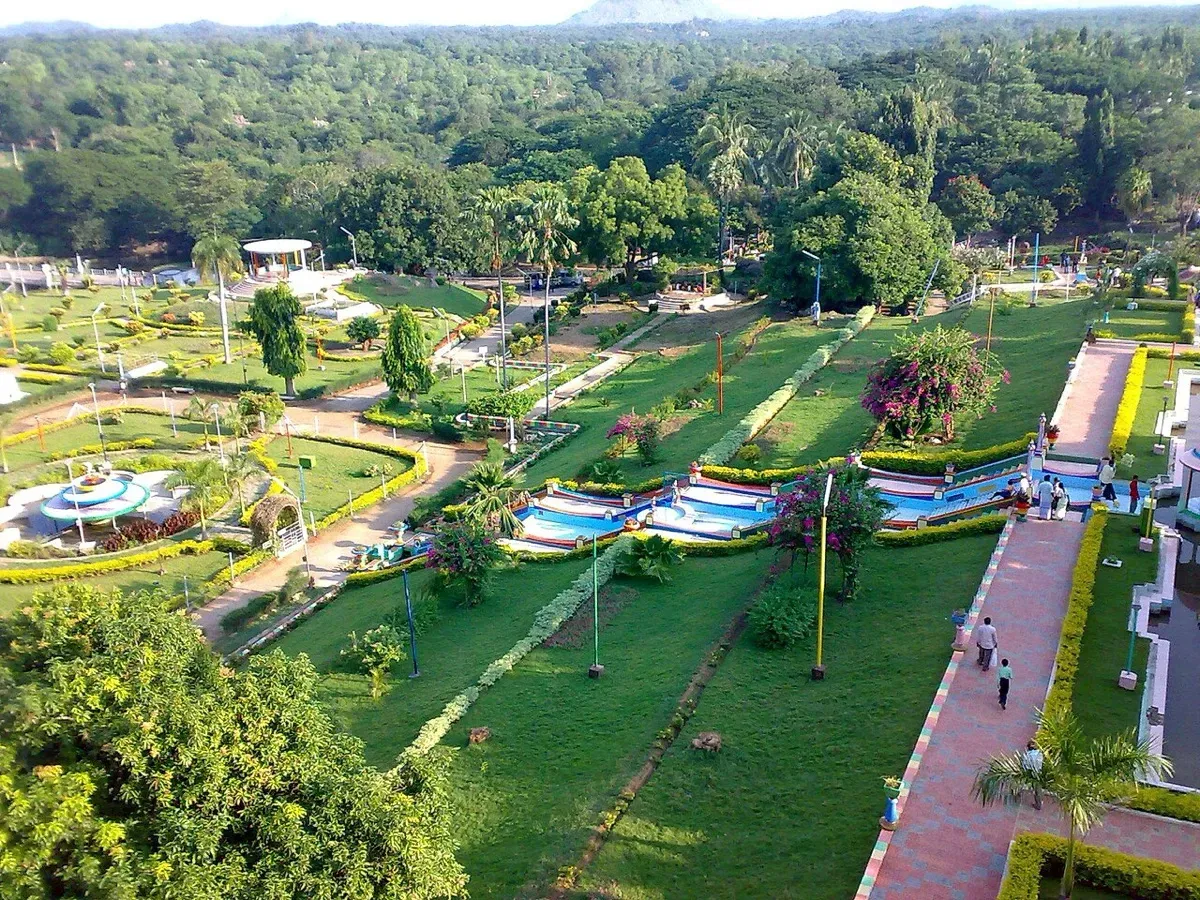
- “Sathanur Dam Park Area” by Jeganila, licensed CC BY 3.0 (https://creativecommons.org/licenses/by/3.0), via Wikimedia Commons: https://commons.wikimedia.org/wiki/File:Sathanur_Dam_Park_Area.jpg