The problem
Smelting aluminium is essentially an electricity business: splitting alumina in electrolytic pots takes around 14 to 15 megawatt-hours per tonne. Where that power comes from hydro, as in Norway or Canada, primary aluminium can be made at around 4 tonnes of CO2e per tonne or less. Where it comes from coal, the footprint can exceed 20 tonnes. The International Aluminium Institute puts the global average at about 15 tonnes (IAI).
NITI Aayog’s January 2026 roadmap for decarbonising aluminium estimates Indian primary aluminium at roughly 18 to 21 tCO2e per tonne, largely because smelters rely on captive coal plants for reliable round-the-clock power (NITI Aayog, 2026). Two policies now bite. Europe’s Carbon Border Adjustment Mechanism has been in its definitive phase since January 2026 for aluminium imports (European Commission). At home, on 8 October 2025 India notified its first legally binding greenhouse gas emission intensity targets under the Carbon Credit Trading Scheme, covering 282 units including 13 aluminium plants (Indian Express).
The product
Vedanta launched Restora on 24 February 2022 as India’s first low-carbon aluminium brand, with two lines (Vedanta, February 2022):
- Restora is primary aluminium made at Vedanta’s smelters using renewable energy. An independent global assurance firm verified its GHG intensity as well below 4 tCO2e per tonne, which Vedanta says is almost half the global low-carbon threshold.
- Restora Ultra is aluminium recovered from dross, the oxide-rich skim that forms on molten metal, using patented technology licensed from TAHA International and operated by the Indian start-up Runaya Refining at Vedanta’s plants.
Both can be made as billets, P1020 ingots, wire rods, slabs and primary foundry alloy for automotive, construction, electrical, packaging and renewable energy customers (Vedanta, Restora). At launch, Vedanta said it already had customer interest in the first 100,000 tonnes.
On 6 November 2025 Vedanta extended Restora production to BALCO in Korba, starting with ingots (Vedanta, November 2025).
How it works
- Renewable power sourcing: Vedanta contracts renewable electricity, including round-the-clock solar-wind-storage supply, for its smelters alongside existing coal-fired captive power.
- Allocation to volumes: the renewable electricity is matched to specific smelter output, and the carbon intensity of that metal is calculated and independently verified.
- Casting: the low-carbon metal is cast into the product form the customer needs.
- Dross recovery (Restora Ultra): dross from casthouses is processed with TAHA’s technology to recover metallic aluminium, avoiding both new smelting and the landfilling of hazardous waste.
- Certification: buyers receive documentation of the verified carbon intensity for their batch.
Timeline
| Date | Milestone |
|---|---|
| 24 Feb 2022 | Restora and Restora Ultra launched at Jharsuguda |
| FY2024-25 | Vedanta Aluminium intensity falls to 17.01 tCO2e per tonne, 8.96% below FY2021 |
| 8 Oct 2025 | India notifies binding GHG intensity targets for aluminium smelters |
| 6 Nov 2025 | Restora production launched at BALCO, Korba |
| Jan 2026 | EU CBAM definitive phase begins; NITI Aayog publishes aluminium decarbonisation roadmap |
| FY2025-26 and FY2026-27 | First compliance years under India’s targets |
Impact and numbers
- Company intensity: 17.01 tCO2e per tonne of aluminium in FY2024-25, an 8.96% reduction since FY2021 (Vedanta TCFD report FY2024-25).
- Scale: Vedanta Aluminium produced 2.42 million tonnes of aluminium in FY2024-25, more than half of India’s output, and holds Aluminium Stewardship Initiative Chain of Custody certification (Vedanta, November 2025).
- Renewables plan: Vedanta plans to source 1,500 MW of renewable power by 2030 through long-term power purchase agreements and direct use, and to raise renewables to 30% of its energy mix by 2030; its TCFD report lists round-the-clock renewable agreements of 218 MW at BALCO and 275 MW at Jharsuguda.
- Regulatory targets: under the 2025 target rules, Vedanta’s Jharsuguda Smelter II must cut its intensity from a 13.49 baseline to 13.226 in FY2025-26 and 12.826 in FY2026-27 (measured on the scheme’s own boundary).
- Gap to close: Restora at below 4 tCO2e per tonne compares with a company average above 17, showing how much of total output is still coal-based. Even a 30% renewable share by 2030 would leave most smelting power coming from coal unless storage-backed supply grows much faster.
Honest caveats. Restora is a small, allocated slice of Vedanta’s output. The smelters themselves remain largely powered by coal, and the low footprint depends on how renewable electricity is matched to specific tonnes, so buyers should ask for the verification method and boundary. Vedanta’s company-wide intensity of about 17 tCO2e per tonne is above the global average. The wider Vedanta group has faced criticism over environmental and community issues at some operations, which ESG-focused buyers may wish to review. Restora Ultra’s near-zero claim reflects recovered metal from waste, a valuable but limited stream. Finally, the 4-tonne threshold is a market convention used by producers and traders, not a legal standard, and footprints are usually reported for smelting only, so buyers comparing offers should check that scope and boundary match.
What’s next
Vedanta’s targets are to scale renewable power towards 1,500 MW and reach net zero by 2050. India’s binding intensity targets, CBAM costs on exports to Europe and growing demand from carmakers and electronics brands for low-carbon metal will test how quickly the share of Restora rises. NITI Aayog’s roadmap points to round-the-clock renewables, pumped hydro and storage, and more scrap recycling as the main levers for the whole sector. At BALCO, Vedanta has also adopted electric furnaces, which can be powered by renewable electricity, and it is working with GAIL Gas on cleaner fuel supply. Customers in sectors such as electric vehicles and solar frames are likely to be the first to pay a premium for the low-carbon grades, as their own buyers in Europe ask for product carbon footprints.
Why it matters for Europe / green buyers
For European importers, Restora is a way to source Indian aluminium with documented low-carbon credentials, which matters as CBAM certificates become payable from 2027. Buyers should compare it on the same basis as European options such as recycled or hydropower-based metal: ask for third-party verified, product-specific intensity and the method used to allocate renewable power.
For India, Restora shows that domestic producers can supply low-carbon metal, but also how far the sector has to go. Moving the average, not just a premium product line, is what will cut national emissions.
Sources & image credits
- Vedanta Aluminium, “Vedanta Aluminium launches Restora, India’s first low carbon green aluminium”, 24 February 2022: https://vedantaaluminium.com/media/press-releases/list/vedanta-aluminium-launches-restora-indias-first-low-carbon-green-aluminium/
- Vedanta Aluminium, “Restora low carbon aluminium” product page: https://vedantaaluminium.com/products/restora-low-carbon-aluminium/
- Vedanta Aluminium, “Vedanta Aluminium broadens low carbon portfolio with Restora production at BALCO”, 6 November 2025: https://vedantaaluminium.com/media/press-releases/list/vedanta-aluminium-broadens-low-carbon-portfolio-with-restora-production-at-balco/
- Vedanta Aluminium, Climate Action (TCFD) Report FY2024-25: https://vedantaaluminium.com/wp-content/uploads/2025/09/Vedanta-Aluminium-TCFD-Report-FY-2024-25.pdf
- Vedanta Aluminium, “Vedanta Aluminium powers India’s net-zero journey with 8.96% drop in GHG intensity, 1,500 MW renewable plan”: https://vedantaaluminium.com/media/press-releases/list/vedanta-aluminium-powers-indias-net-zero-journey-with-8-96-drop-in-ghg-intensity-1500-mw-renewable-plan-and-100-fly-ash-utilization/
- NITI Aayog, “Roadmap for Aluminium Sector Decarbonisation”, January 2026: https://www.niti.gov.in/sites/default/files/2026-01/Roadmap_for_Aluminium_Sector_Decarbonisation.pdf
- The Indian Express, “Govt notifies first legally binding emission cut targets for 4 sectors”, October 2025: https://indianexpress.com/article/india/centre-notifies-first-legally-binding-emission-targets-for-high-polluting-sectors-10299043/
- International Aluminium Institute, “Primary aluminium greenhouse gas emissions intensity”: https://international-aluminium.org/statistics/greenhouse-gas-emissions-primary-aluminium/
- European Commission, “CBAM definitive regime”: https://taxation-customs.ec.europa.eu/carbon-border-adjustment-mechanism/cbam-definitive-regime_en
Images:
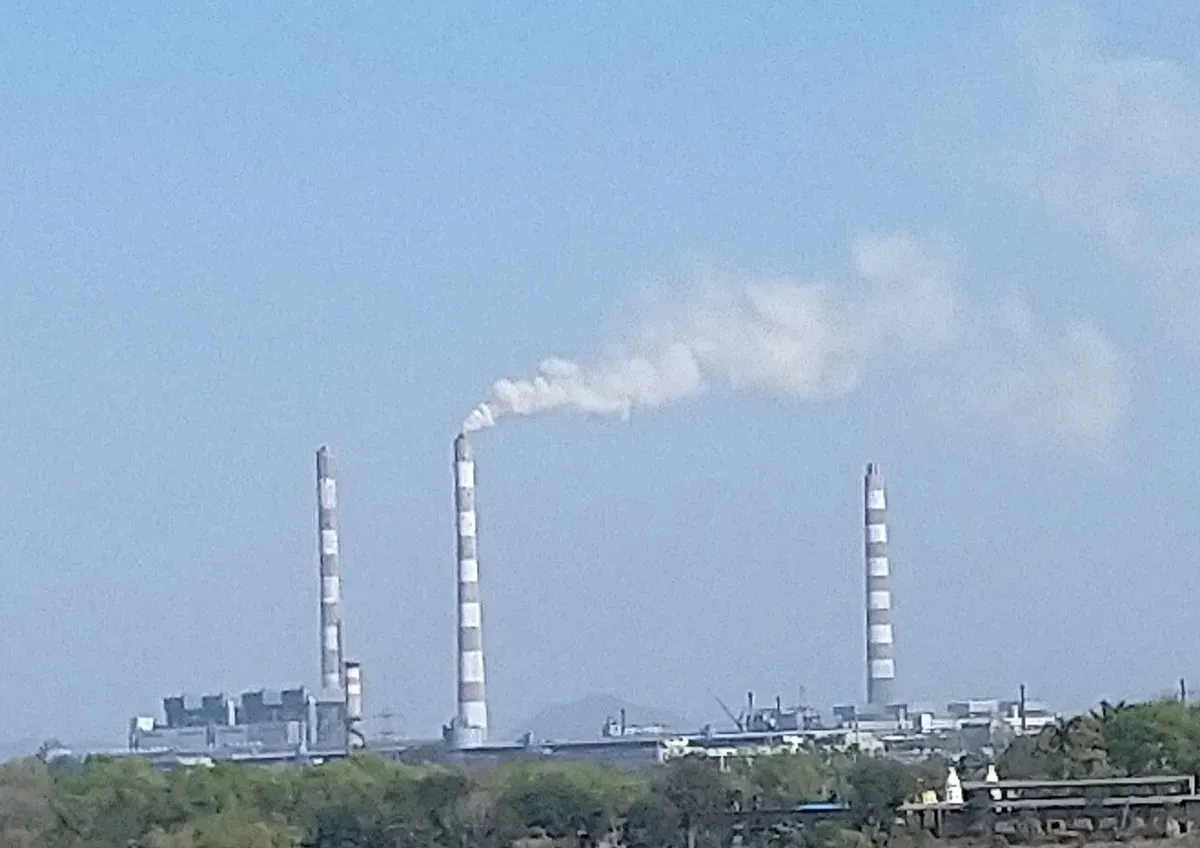
- “BALCO, Aluminium power plant, Korba, Chhattisgarh” by Mettle30, licensed CC BY-SA 4.0 (https://creativecommons.org/licenses/by-sa/4.0), via Wikimedia Commons: https://commons.wikimedia.org/wiki/File:BALCO,_Aluminium_power_plant,_Korba_,_Chhattisgarh.jpg