The problem
The World Health Organization estimates that more than 15 million people worldwide live with spinal cord injury, most of it caused by trauma such as falls and road crashes, and so largely preventable. Injury at neck level, tetraplegia, can take away hand and arm function, and with it independence in daily tasks. The WHO says unemployment among adults with spinal cord injury exceeds 60%, and that in-hospital mortality is nearly three times higher in low- and middle-income countries than in rich ones. It adds that many limits on daily life come not from the injury itself but from poor access to rehabilitation and assistive technology.
Rehabilitation alone soon stalls. In the Up-LIFT trial, participants’ arm and hand gains reached a plateau after about three weeks of intensive rehabilitation, before stimulation began.
The product
ARC-EX delivers programmed, transcutaneous electrical stimulation to the spinal cord. A stimulator sends pulses through electrodes placed on the skin at the back of the neck. No surgery is needed. The stimulation is used together with functional task practice in the clinic and take-home exercises.
Most spinal cord injuries leave some nerve fibres intact. The Nature Medicine authors say evidence suggests the improvements come from residual white matter tracts growing onto specific groups of neurons that the stimulation engages, and that reorganise in response to rehabilitation. In other words, stimulation and practice together help the spared wiring do more. During stimulation, participants had not reached a plateau, which suggests longer use might bring further gains.
Regulators have cleared it for a specific group. The FDA’s De Novo decision, granted on 19 December 2024, covers adults aged 18 to 75 with a chronic, non-progressive deficit from an incomplete spinal cord injury between C2 and C8, to improve hand sensation and strength, on prescription only. In September 2025 ARC-EX received a CE mark under the EU Medical Device Regulation for a similar indication, covering both clinic and home use, according to MassDevice.
How it works
- Place. Clinicians fix electrodes on the skin at the back of the neck.
- Program. The stimulator is set to target the cervical spinal cord.
- Stimulate. Pulses engage spinal pathways spared by the injury.
- Practise. The person works on gripping, pinching and arm tasks.
- Repeat. Sessions continue in the clinic and, increasingly, at home.
- Measure. Strength, sensation and function are tracked over time.
Timeline
| Date | Milestone |
|---|---|
| 2024 | Up-LIFT pivotal trial results published in Nature Medicine |
| 28 Mar 2024 | ONWARD files its De Novo request with the FDA |
| 19 Dec 2024 | FDA grants De Novo, the first US clearance for this kind of device |
| 8 Sep 2025 | CE mark under the EU MDR; phased European launch starts in Germany |
| Apr 2026 | ONWARD raises over €40.6 million, including €25 million from EQT Life Sciences |
| H1 2026 | 159 ARC-EX systems sold or supplied, up 430%; first home-use sales |
| 9 Sep 2026 | H1 results: €3.4 million ARC-EX revenue and €81.5 million cash |
Impact and numbers
Up-LIFT enrolled 65 people at 14 spinal cord injury centres in the US, Europe and Canada. Of the 60 included in the main analysis, 43 (72%) met or beat the minimally important difference in at least one strength outcome and one functional outcome, and 54 (90%) improved in at least one. No serious adverse events related to the therapy were reported, though 44 non-serious ones were. ONWARD says improvements were seen in participants up to 34 years after injury, and the paper links the gains to meaningful quality-of-life improvements.
Commercial uptake is growing. In the first half of 2026, ONWARD sold or supplied 159 systems, including the first for home use, some through the US Veterans Affairs system. Revenue from ARC-EX rose from €1.0 million to €3.4 million. Clinics in the Netherlands, Switzerland, Germany, the UK, France, Italy, Spain and Israel now offer it.
“The commercial launch of the ARC-EX System continues to be a resounding success,” chief executive Dave Marver said. The company still made an operating loss of €23.3 million in the half.
Honest caveats
Evidence status. Up-LIFT was single-arm and open-label, with no sham group. The authors argue that sham is impractical because patients feel the stimulation, but placebo and practice effects cannot be fully excluded.
Narrow approvals. Clearance covers hand sensation and strength in chronic incomplete cervical injury, not walking or complete injury.
Cost and access. ONWARD is loss-making, and reimbursement varies by country.
Data and ethics. ARC-EX reads no brain signals, but ONWARD’s implanted ARC-IM and ARC-BCI programmes do, which raises questions about neural data privacy, consent and long-term support for implants.
What’s next
ONWARD plans to expand home use, accelerate sales across key European countries and continue the Empower BP pivotal study of the implanted ARC-IM system for blood pressure instability, with 22 participants enrolled so far. In Switzerland, the EIGER feasibility study at the Swiss Paraplegic Centre in Nottwil and CHUV in Lausanne is testing ARC-IM for standing and walking. Seven people have now received ARC-BCI, which pairs a brain-computer interface with spinal stimulation.
Why it matters for Europe and green buyers
For Europe, ONWARD shows how research from Swiss centres such as EPFL and CHUV can become a regulated product with a European headquarters, EU funding through the European Innovation Council, and a CE mark under the tough MDR.
For India, where road injuries are common and specialist rehabilitation is scarce, a non-invasive device that can be used at home could widen access if prices and reimbursement allow. For the world, giving people with disabilities more independence supports the health and inclusion goals of the SDGs.
Sources & image credits
- ONWARD Medical, “ONWARD Medical Reports First Half 2026 Results”, 9 September 2026 (via FT.com). https://markets.ft.markitdigital.com/data/announce/detail?dockey=1330-9823262en-16BUNTC5V8MM9JEU80R2A0R388
- Moritz C. et al., “Non-invasive spinal cord electrical stimulation for arm and hand function in chronic tetraplegia: a safety and efficacy trial”, Nature Medicine, 2024. https://www.nature.com/articles/s41591-024-02940-9
- US FDA, De Novo database entry DEN240014, ARC-EX System, decision 19 December 2024. https://www.accessdata.fda.gov/scripts/cdrh/cfdocs/cfpmn/denovo.cfm?id=DEN240014
- US FDA, De Novo decision summary DEN240014. https://www.accessdata.fda.gov/cdrh_docs/reviews/DEN240014.pdf
- MassDevice, “Onward wins CE mark for ARC-EX spinal cord stimulation system”, September 2025. https://www.massdevice.com/onward-ce-mark-arc-ex-scs/
- ONWARD Medical, “ARC-EX”. https://www.onwd.com/therapy/arc-ex/
- World Health Organization, “Spinal cord injury” fact sheet. https://www.who.int/news-room/fact-sheets/detail/spinal-cord-injury
- Wikimedia Commons, “Functional Electrical Stimulation Therapy for improving walking in incomplete spinal cord injured individuals”. https://commons.wikimedia.org/wiki/File:Functional_Electrical_Stimulation_Therapy_for_improving_walking_in_incomplete_spinal_cord_injured_individuals_-30,31-.jpg
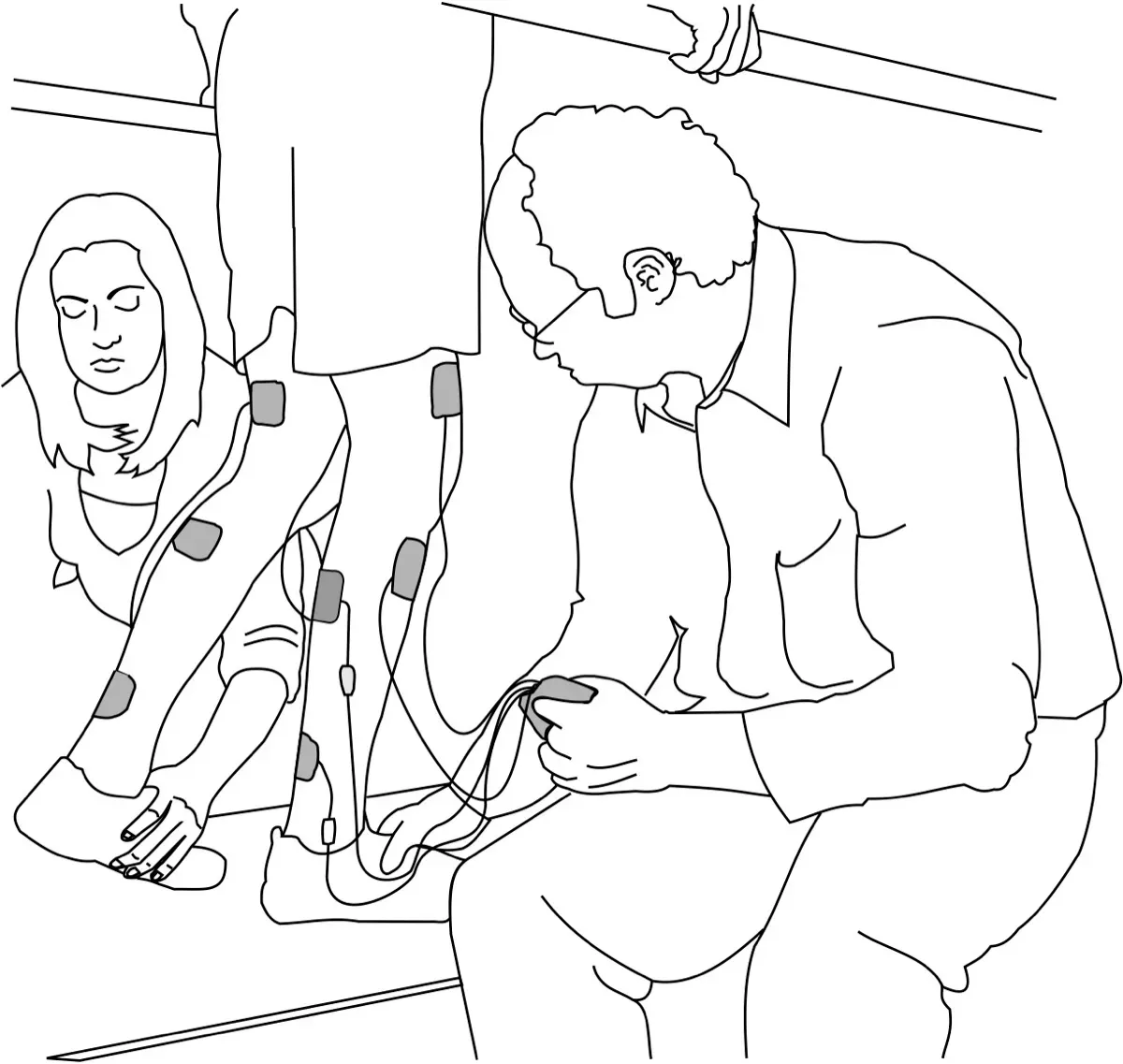
Images: “Functional Electrical Stimulation Therapy for improving walking in incomplete spinal cord injured individuals”, MilosRPopovic, 2016, CC BY-SA 4.0, via Wikimedia Commons. Illustrative; not the ARC-EX system.