The problem
Stroke is one of the world’s biggest causes of disability. The World Stroke Organization’s 2025 fact sheet counts 11.9 million new strokes in 2021 and 93.8 million people living after a stroke. Many survivors are left with weak or paralysed arms and legs.
Standard rehabilitation helps, but it relies on the patient trying to move a limb that barely responds. If the patient is tired, depressed or using compensating movements, the brain areas that control the limb may not be active when feedback arrives, and recovery is poor, g.tec explains. The company also notes that patients may misunderstand instructions, and that recoveriX PRO is designed to show in real time whether each motor imagination is correct.
The product
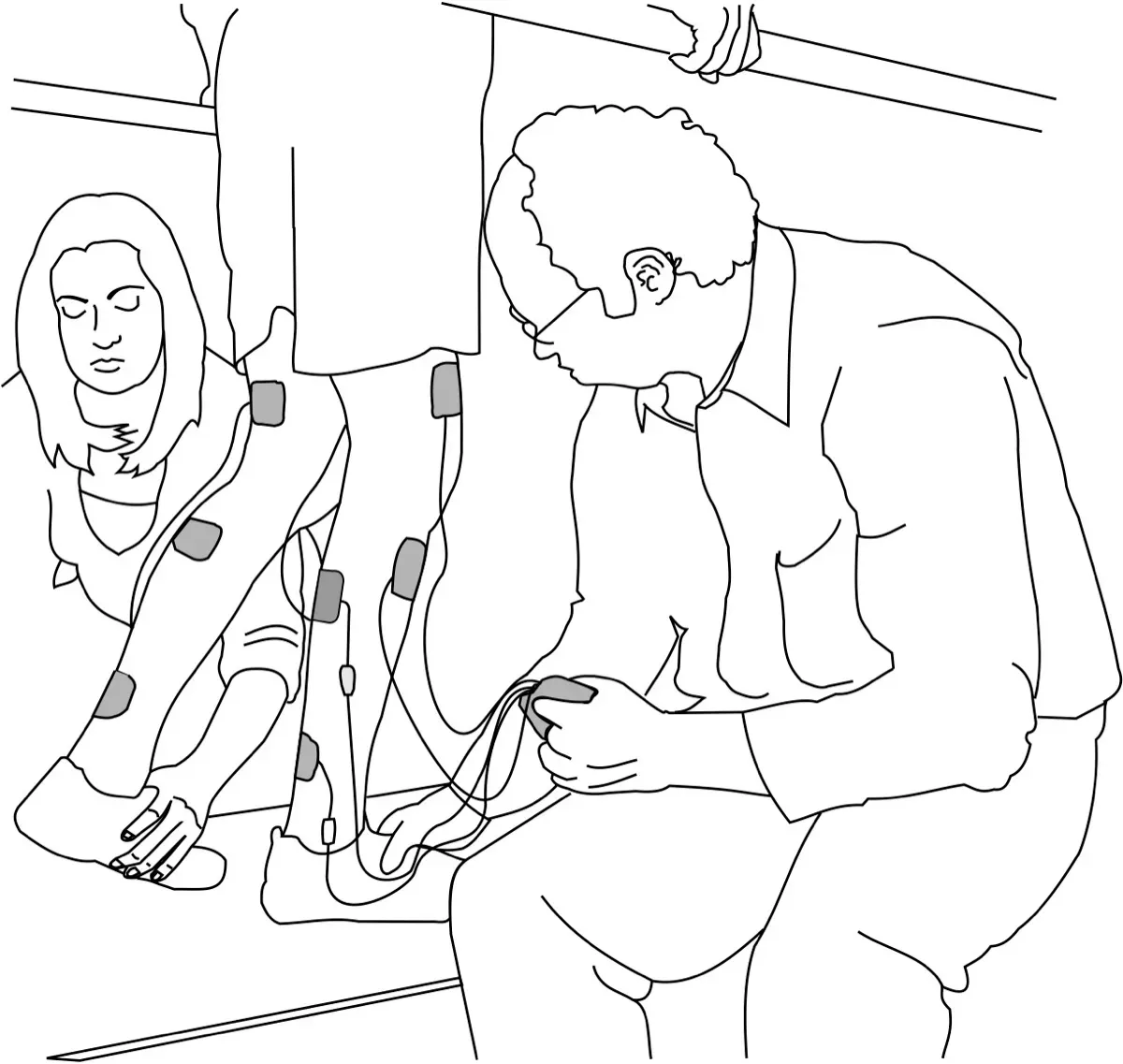
recoveriX is a closed-loop system. The patient wears a 16-channel EEG cap and sits in front of a monitor showing their own hands, from a first-person view, or feet in a mirror view. Two functional electrical stimulators sit on the arm or leg muscles. The patient is asked to imagine moving the left or right hand or foot.
The BCI decodes the EEG in real time. Only when it detects correct motor imagery does the avatar perform the movement and the stimulator move the real limb. This pairing of intention and feedback is the point: g.tec argues that activating sensory and motor functions at the same moment drives brain plasticity, helping the brain build new pathways.
g.tec calls it the first BCI rehabilitation system to pair imagined movement with visual and tactile feedback in real time. It combines established therapies recommended by bodies such as the American Stroke Association: functional electrical stimulation, motor imagery and mirror neuron therapy. It shows patients, session by session, whether their imagery is correct, which g.tec says raises motivation. A course runs to 25 to 30 sessions. Beyond stroke, recoveriX is used for multiple sclerosis and, the company says, Parkinson’s disease, in Austria, Spain and Canada.
How it works
- Wear. The patient puts on a wireless 16-channel EEG cap.
- Imagine. An avatar prompts the patient to imagine a hand or foot movement.
- Decode. Software checks the EEG for the right motor imagery.
- Reward. The avatar moves and electrical stimulation moves the limb.
- Repeat. Pairings repeat throughout each session to strengthen the link.
- Track. Accuracy and clinical scores are monitored across sessions.
Timeline
| Date | Milestone |
|---|---|
| 1999 | Christoph Guger and Günter Edlinger found g.tec and present a motor-imagery BCI the same year |
| 2019 | g.tec says recoveriX and cortiQ receive medical approvals |
| 2020 | Frontiers in Neuroscience publishes a recoveriX upper limb feasibility study in stroke |
| Jan 2020 | FDA 510(k) clearance for cortiQ PRO brain mapping (not recoveriX) |
| 2024 | Frontiers in Neuroscience publishes a 19-patient upper-then-lower limb study |
| 2 Apr 2026 | 30-patient randomised pilot gait study (NCT07537530) completed in Austria |
Impact and numbers
In the 2024 Frontiers in Neuroscience study, 19 stroke patients had 25 upper limb BCI sessions followed by 25 lower limb sessions. Their Fugl-Meyer upper extremity score improved by an average of 4.2 points after arm training, with gains in daily living activities and clinically relevant reductions in hand and finger spasticity. After leg training, walking speed rose by 0.15 m/s, which the authors call a substantial meaningful change, and ankle spasticity, balance and mobility also improved.
g.tec says recoveriX has worked for patients “years or even decades after a stroke or diagnosis.” Commercially, it uses a franchise model: g.tec supplies the technology, standard procedures and training, while partners run centres. Physiotherapist Gerlinde Percht has opened recoveriX centres in eight locations across Austria. A single system can treat up to 90 patients a year.
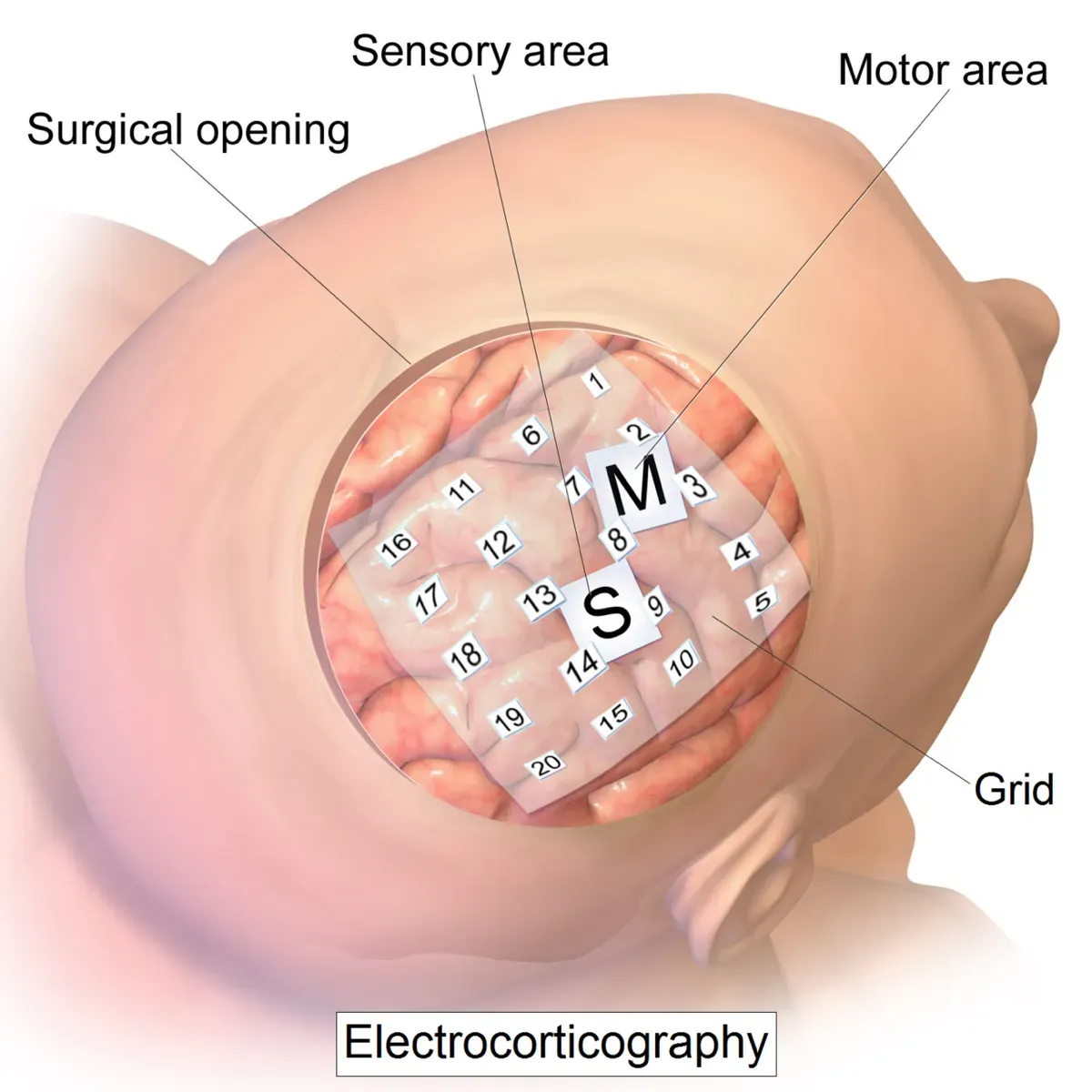
g.tec’s wider BCI systems are used in more than 100 countries by universities, hospitals and companies, Guger says, which gives the company a large research base. It also sells cortiQ, a brain-mapping system for surgeons that reads high-gamma activity from electrodes already placed on the cortex. cortiQ PRO has held FDA 510(k) clearance since January 2020, and BCI Briefing notes that three g.tec amplifiers and its cortical stimulator are cleared too. That regulatory track record matters, because recoveriX itself has not yet been through the FDA.
The independent BCI Briefing calls g.tec “the clearest case of a BCI company that an implant-centred view of the field overlooks”: it has sold working BCI systems for a quarter of a century, and recoveriX “already reaches patients,” a narrower but more immediate claim than restoring communication through an implant.
Honest caveats
Evidence status. The independent BCI Briefing notes that recoveriX evidence is “mostly the company’s own research.” The 2024 study had no control group. The 30-patient randomised gait trial, sponsored by g.tec, has completed but its results are not yet posted.
Approvals. recoveriX is CE certified according to the company, but BCI Briefing has not seen the certificate, and the FDA database lists no clearance for it. In the US, a rival non-invasive device, IpsiHand, was authorised in 2021.
Privacy and ethics. EEG data can reveal health information. Clinics need clear consent and secure data handling, especially in a franchise network.
Access. Prices are not published, and insurance coverage is not documented in the sources.
What’s next
g.tec is expanding through regional franchise partners and continues clinical studies at its own recoveriX centre, including in multiple sclerosis. Results from the randomised gait trial will show how much of the benefit comes from the brain-triggered feedback itself.
Why it matters for Europe and green buyers
For Europe, recoveriX shows an Austrian company turning decades of BCI research into a certified therapy available in local physiotherapy practices, not just research hospitals.
For India, where stroke rates are high and rehabilitation is scarce outside cities, a non-invasive system that one therapist can run for up to 90 patients a year could extend care if costs fall. For the world, helping stroke survivors regain movement supports health, independence and inclusion.
Sources & image credits
- g.tec medical engineering, “recoveriX Neurorehabilitation”. https://www.gtec.at/product/recoverix-neurorehabilitation/
- Frontiers in Neuroscience, “Upper extremity training followed by lower extremity training with a brain-computer interface rehabilitation system”, 2024. https://www.frontiersin.org/journals/neuroscience/articles/10.3389/fnins.2024.1346607/full
- ClinicalTrials.gov, NCT07537530, “A Randomized Controlled Pilot Study of Gait Rehabilitation in Stroke Patients Using Functional Electrical Stimulation and Visual Feedback”. https://clinicaltrials.gov/study/NCT07537530
- The BCI Briefing, “g.tec medical engineering”. https://bcibrief.com/companies/gtec/
- recoveriX, “Christoph Guger: Unveiling the Revolutionary recoveriX Franchise Model by g.tec”. https://recoverix.com/revolutionary-recoverix-franchise-model-by-g-tec/
- g.tec, “Christoph Guger revolutionizes Neurorehabilitation and BCI”, 10 April 2025. https://www.gtec.at/2025/04/10/christoph-guger-revolutionizing-bci/
- g.tec, “recoveriX: Neurorehabilitation for Stroke and Multiple Sclerosis” product folder, February 2024. https://www.gtec.at/wp-content/uploads/2021/07/web-recoverix-productfolder-single-pages-english-2024-02-05.pdf
- Feigin V. L. et al., “World Stroke Organization: Global Stroke Fact Sheet 2025”, International Journal of Stroke. https://pmc.ncbi.nlm.nih.gov/articles/PMC11786524/
- Wikimedia Commons, “RecoveriX”. https://commons.wikimedia.org/wiki/File:RecoveriX.jpg
Images: “RecoveriX”, Janalopez1998, 2019, CC BY-SA 4.0, via Wikimedia Commons.