The problem
Aviation uses around 100 billion gallons of jet fuel a year, LanzaJet says, and long-haul planes will not run on batteries or hydrogen for decades. Sustainable aviation fuel (SAF) that can be blended with fossil Jet A-1 is the main tool airlines have.
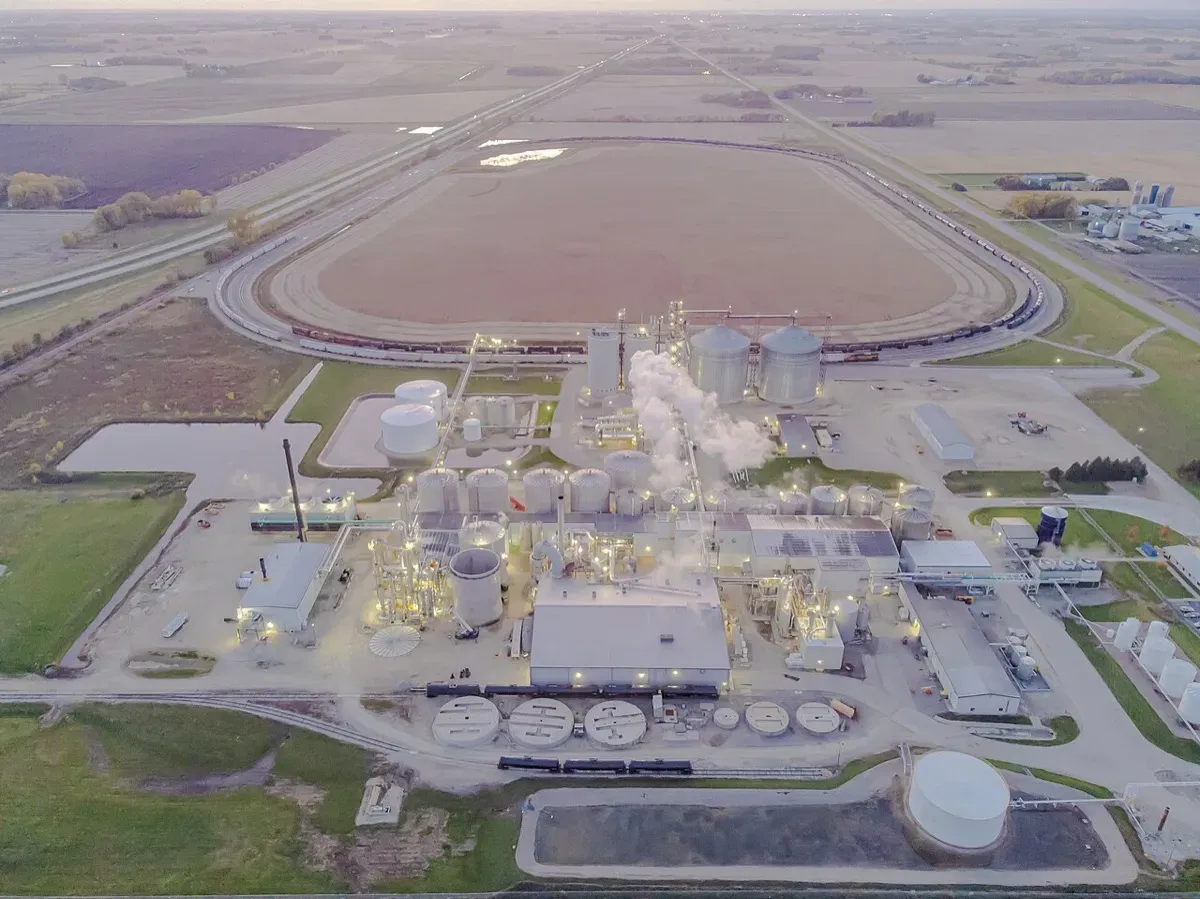
Almost all SAF today is HEFA, made by hydrotreating waste oils and fats. LanzaJet argues that this route is close to a plateau because qualified feedstocks are limited (LanzaJet). The same oils and fats are also wanted by renewable diesel makers for trucks, so SAF and road fuel compete for the same barrels. To grow, the industry needs a second pathway that starts from something more abundant. Ethanol is a candidate because the US, Brazil and India already make it at very large scale, and it can also be made from residues and waste.
The product
LanzaJet’s Alcohol-to-Jet (ATJ) technology converts ethanol into SAF and renewable diesel. Its first plant, LanzaJet Freedom Pines Fuels, is in Treutlen County near Soperton, Georgia, less than 100 miles from Savannah. LanzaJet invested over USD 300 million in the site, which employed more than 300 people during construction and supports more than 65 direct and indirect jobs in operation.
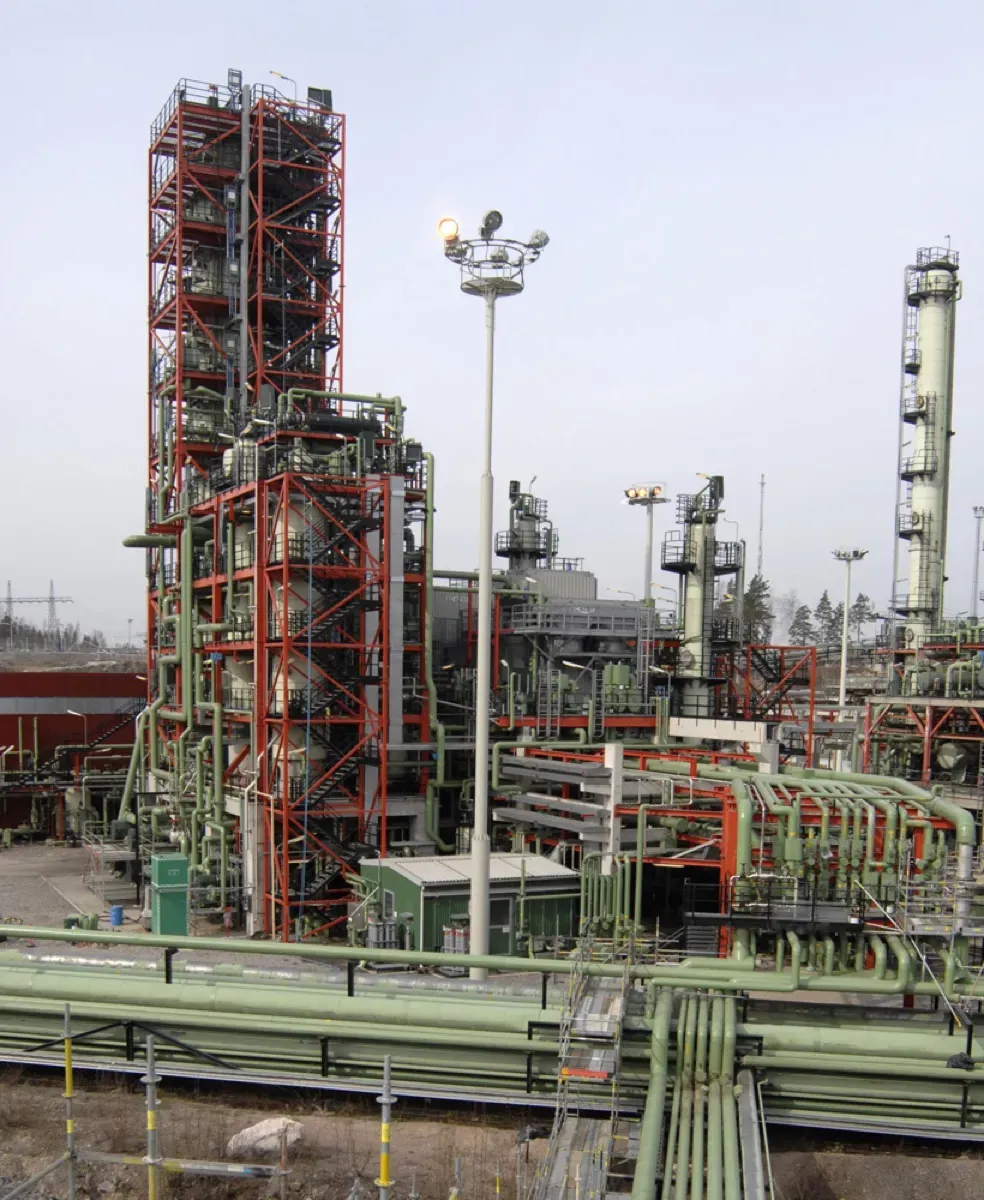
The plant combines first-of-a-kind technologies: Technip Energies’ Hummingbird process turns ethanol into ethylene, and an oligomerisation step jointly developed by the US Department of Energy and LanzaTech builds the ethylene into longer, jet-range molecules. Once blended with Jet A-1, the fuel is certified and compatible with existing aircraft and airport infrastructure.
Output can be shifted between SAF and renewable diesel. Trade press puts capacity at up to 10 million gallons a year (OGN).
How it works
- Source ethanol: low-carbon ethanol arrives by road or rail; under 2026 tolling deals it is waste-based US ethanol, with renewable natural gas from a regional plant for energy.
- Dehydrate: Hummingbird converts ethanol to ethylene and water.
- Oligomerise: ethylene molecules are joined into longer olefin chains.
- Hydrogenate: the olefins are saturated with hydrogen to give stable paraffins.
- Fractionate: products are separated into synthetic paraffinic kerosene (SAF) and renewable diesel.
- Blend and deliver: SAF is blended with fossil jet fuel to meet ASTM standards and shipped to airlines.
Timeline
| Date | Milestone |
|---|---|
| 2012 | LanzaTech starts developing ethanol-to-SAF with the Pacific Northwest National Laboratory |
| 2016 / 2018 | ASTM approval of the ethanol-to-jet pathway (LanzaJet says 2016, LanzaTech says 2018) |
| 2018 / 2019 | First commercial flights with Virgin Atlantic and ANA |
| 2020 | LanzaJet launched to commercialise the technology |
| 2024 | Freedom Pines site launched, followed by technical delays |
| 13 Nov 2025 | Full plant operation and ASTM on-spec fuel production announced |
| 19 Feb 2026 | First close of a USD 135m target equity round at USD 650m pre-money valuation |
Impact and numbers
- Capital: the February 2026 first close, co-led by IAG and Shell with Groupe ADP, LanzaTech and Mitsui, plus a UK Advanced Fuels Fund grant, gave LanzaJet USD 47 million (LanzaJet, Feb 2026).
- Offtake: a multi-year tolling structure provides secured feedstock and guaranteed offtake of all production at Freedom Pines.
- Next plant: Project Speedbird at Wilton International, Teesside, is designed for over 90,000 tonnes (30 million gallons) a year of SAF and renewable diesel, all SAF for British Airways, which LanzaJet says would cut net CO2 by about 230,000 tonnes a year. It has received GBP 9 million (2023) and GBP 10 million (2025) from the Advanced Fuels Fund (LanzaJet Speedbird).
- Feedstock range: LanzaJet says ATJ can work with ethanol from agricultural residues, energy crops, municipal solid waste and captured carbon.
Honest caveats. The plant opened in 2024 but took until late 2025 to run fully, which SAF Investor attributes to technical delays (SAF Investor). LanzaJet has not published a verified life-cycle carbon intensity for Freedom Pines fuel; the climate benefit depends on how the ethanol is made, and corn ethanol scores far worse than waste-based ethanol. Ten million gallons a year is about 0.01% of global jet fuel demand. Policy risk is real: a 2025 US law kept renewable diesel credits but cut the SAF credit under Section 45Z from USD 1.75 to USD 1 a gallon, which is one reason the plant can switch to diesel (OGN). Investors such as Shell and IAG are also customers, so commercial independence is limited. Sources even disagree on basic history, such as the year ASTM approved the pathway.
What’s next
LanzaJet calls Freedom Pines a blueprint for licensing ATJ worldwide and lists projects or partners in the US, UK, EU, Japan, Australia, Colombia, the Middle East, Kazakhstan and India (LanzaJet). Speedbird is in front-end engineering and will reuse the Hummingbird front end proven at Freedom Pines, working with Technip Energies and with Sembcorp, which owns and operates the Wilton International site. LanzaJet expects hundreds of construction jobs and over 30 permanent roles there (LanzaJet Speedbird). The rest of the USD 135 million equity round is still to close, and LanzaJet says it reorganised its ownership and governance alongside the first close to attract future investors.
Why it matters for Europe / green buyers
ReFuelEU Aviation (Regulation (EU) 2023/2405) requires fuel suppliers at EU airports to supply at least 2% SAF from 2025, 6% from 2030, 20% from 2035 and 70% from 2050, with a rising share of synthetic fuels (EUR-Lex). HEFA alone cannot meet the later targets, so ATJ plants like Speedbird are likely to matter for Europe. Corporate buyers of SAF certificates should check which pathway and which ethanol stand behind each tonne.
India has set indicative SAF blending targets of 1% in 2027 and 2% in 2028 for international flights (PIB). IndianOil plans an ATJ SAF plant at Panipat using LanzaJet technology, to be commissioned by 2027-28; Oil & Gas Journal gives its planned capacity as 860,000 tonnes a year, while other reports have cited about 85,000 tonnes (OGJ). With India’s large sugar-based ethanol industry, ATJ could link the country’s ethanol programme to aviation.
Sources & image credits
- LanzaJet, “LanzaJet makes history as the world’s first to produce jet fuel from ethanol at commercial-scale plant” (13 Nov 2025): https://www.lanzajet.com/news-insights/lanzajet-makes-history
- LanzaJet, “LanzaJet announces $47M in new capital and first close of equity round at $650M pre-money valuation” (19 Feb 2026): https://www.lanzajet.com/news-insights/lanzajet-announces-47m-in-new-capital-and-first-close-of-equity-round-at-650m-pre-money-valuation
- SAF Investor, “Freedom Pines site fully operational, says LanzaJet” (14 Nov 2025): https://www.safinvestor.com/news/148976/freedom-pines/
- LanzaTech, “World’s first commercial ethanol-to-jet fuel plant operational” (13 Nov 2025): https://ir.lanzatech.com/news-releases/news-release-details/worlds-first-commercial-ethanol-jet-fuel-plant-operational
- Oil & Gas News, “US SAF market faces policy uncertainty as new production technologies emerge” (2026): https://ognnews.com/ArticleTA/486852/us-saf-market-faces-policy-uncertainty-as-new-production-technologies-emerge
- LanzaJet, “Project Speedbird”: https://www.lanzajet.com/speedbird
- EUR-Lex, Regulation (EU) 2023/2405 (ReFuelEU Aviation): https://eur-lex.europa.eu/eli/reg/2023/2405/oj/eng
- Oil & Gas Journal, “Indian Oil’s Panipat refinery cleared for SAF commercial production” (Aug 2025): https://www.ogj.com/refining-processing/refining/optimization/news/55310900/indian-oils-panipat-refinery-cleared-for-saf-commercial-production
- Press Information Bureau, SAF indicative blending targets: https://www.pib.gov.in/PressReleaseIframePage.aspx?PRID=1979705
Images:
- “Ethanol plant in Minnesota” by Wikideas1, released under CC0 (http://creativecommons.org/publicdomain/zero/1.0/deed.en), via Wikimedia Commons: https://commons.wikimedia.org/wiki/File:Ethanol_plant_in_Minnesota.jpg