The problem
Insulating Europe’s buildings is essential to cut heating demand, but most insulation is made from fossil-based foams or energy-intensive mineral wool. As operating emissions fall, the upfront carbon in walls, floors and roofs becomes a larger share of a building’s footprint.
Straw is one of the most abundant by-products of European farming. Large volumes are ploughed back, burned in some regions or sold cheaply. It insulates well, and as it grows it takes in CO2 from the air. Straw bale building has a long history, but it has been held back by slow on-site work, worries about moisture and fire, and the lack of standard approvals that banks, insurers and planners expect.
The product
The EcoCocon straw panel is a prefabricated wall element that is both structure and insulation. Each panel has a twin-stud frame of C24 timber, filled with wheat straw compressed to about 110 kg/m³. The straw is sourced from farms within roughly 40 km of the factory. The company describes the panel as 98% natural and made of four materials (EcoCocon technical specification).
Main figures from the specification and certificates:
- Thermal: the 400 mm panel has a certified U-value of 0.152 W/m²K; with an added 60 mm wood fibre board, 0.129 W/m²K (Passive House Institute certificate).
- Straw conductivity: about 0.053 to 0.060 W/mK.
- Fire: base fire resistance REI 45 minutes, up to REI 120 with suitable linings.
- Heat delay: about 18 hours phase shift, which slows summer heat entering the building.
- Approval: European Technical Assessment ETA-26/0071, issued by TZÚS Prague on 13 April 2026, and CE marking through a Declaration of Performance (EcoCocon DoP).
- Warranty: 50 years on the structure and 25 years on the straw, according to the company.
How it works
- Harvest: wheat straw is baled after the grain harvest on nearby farms.
- Frame: robots assemble the timber twin-stud frame to the building’s digital model.
- Fill: straw is pressed into the frame in layers to a controlled density, with no glues or additives.
- Finish: the panels are trimmed and leave the factory ready to stand; airtightness and wind-tight layers are added on site.
- Assemble: a team of three can install up to 60 m² of wall a day; panels are clad outside, often with a wood fibre board and render or timber, and plastered with clay or lime inside.
Because the walls are vapour open, moisture can move out of the straw rather than being trapped, provided the right plasters and membranes are used.
Timeline
| Date | Milestone |
|---|---|
| 2008 | EcoCocon founded in Lithuania by Domantas Surkys |
| 2012 | Fourth place in a Cradle to Cradle product challenge |
| 2019 | Passive House Institute Component Award; headquarters moves to Slovakia |
| Sep 2024 | Automated factory at Voderady, Slovakia, completed |
| Oct 2025 | 50 kW solar plant installed at Lithuanian production site |
| 13 Apr 2026 | European Technical Assessment ETA-26/0071 issued |
Impact and numbers
- Factory: the Voderady plant uses five industrial robots, works to a tolerance of plus or minus 1 mm and has a capacity of 50,000 m² of wall a year, about 500 homes. The factory building itself is made of 623.6 m² of EcoCocon panels and reached an airtightness of 0.14 air changes per hour (EcoCocon, TASR).
- Stored carbon: the EPD reports biogenic carbon of 115.5 kg CO2 per m² of panel, equal to about 31.5 kg of carbon held in the wall (EPD International).
- Simplicity: four natural materials make dismantling and composting or reuse easier at end of life.
- ESG: the company publishes an ESG factsheet and an EU taxonomy alignment report for investors and developers (EcoCocon ESG factsheet).
Honest caveats. EcoCocon is still a small producer. A capacity of about 500 homes a year is tiny next to Europe’s market, and the figure is a nameplate, not reported output. Most numbers above come from the company, its certifier and its own EPD; independent long-term monitoring of moisture in finished buildings is limited. Straw walls perform well only if detailing and plastering are done correctly, and a leak left unrepaired can cause rot. The EPD covers production at the Lithuanian site in Kybartai, while the company’s FAQ says panels are made in Voderady, so buyers should check which plant and which EPD apply to their order. The EPD’s other headline climate figures did not extract cleanly from the published file, so we have not quoted them here. Fire performance depends on lining, and some markets still require extra approvals for multi-storey straw buildings. Storing carbon in straw is also only a benefit if the straw is not needed to protect soil health on the farms it comes from.
What’s next
With the ETA and CE marking in hand, EcoCocon can sell into more European markets without separate national approvals for each product. The company is targeting housing, schools and offices, and renovations where panels are added to existing walls. Watch for how much the Voderady factory actually produces in 2026 and 2027, whether developers order repeat projects, and whether the company opens new plants closer to other straw-rich regions.
Why it matters for Europe / green buyers
The recast Energy Performance of Buildings Directive, Directive (EU) 2024/1275, requires the life-cycle global warming potential of new buildings to be calculated and shown on energy certificates, from 2028 for buildings above 1,000 m² and from 2030 for all new buildings (EUR-Lex). Bio-based materials that store carbon, like straw and timber, are likely to look much better in these calculations than foam or concrete. For buyers, EcoCocon offers something rare in straw building: factory precision, a Passive House certificate and a European approval. Ask for project references in your climate, the plaster and membrane system to be used, and the EPD for the producing factory.
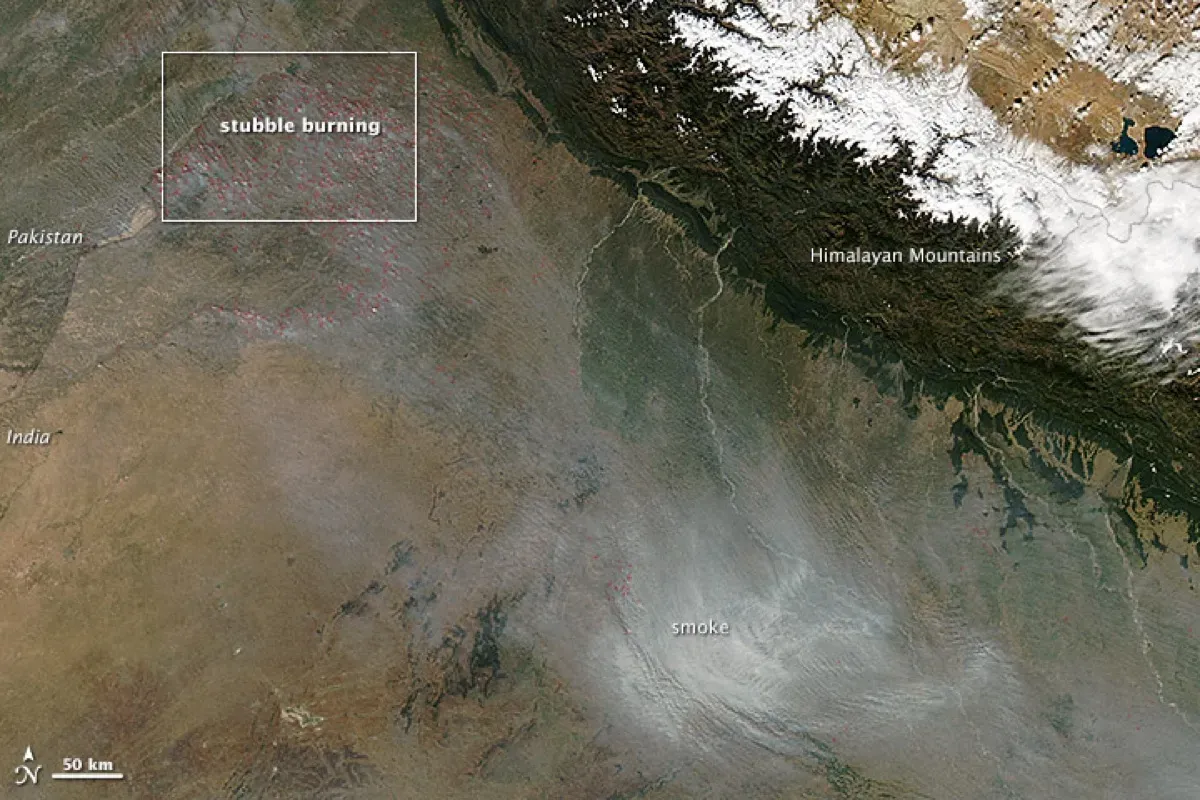
In India, millions of tonnes of rice and wheat straw are burned every autumn in Punjab and Haryana, worsening Delhi’s air. Indian start-ups are already pressing straw into boards and panels. EcoCocon’s model, simple frames, local straw and factory pressing, shows how agricultural residue could become a mainstream insulation and wall product, though India’s heat and monsoon humidity would need different detailing from Central Europe.
Sources & image credits
- EcoCocon, Technical specification (2026): https://ecococon.eu/assets/resources/ecococon_technical-specification.pdf
- EcoCocon, Declaration of Performance (ETA-26/0071): https://ecococon.eu/assets/resources/ecococon_declaration-of-performance.pdf
- Passive House Institute, Certified Passive House component certificate, EcoCocon straw panel: https://ecococon.eu/assets/resources/ecococon_passive-house-certified-component.pdf
- EPD International, EPD-IES-0033692, “Straw panel from EcoCocon”: https://www.environdec.com/library/epd33692
- EcoCocon, “EcoCocon Factory” (Voderady): https://ecococon.eu/projects/ecococon-factory
- TASR / Teraz.sk, “Vo Voderadoch otvoril investor fabriku na výrobu stavebných panelov”: https://www.teraz.sk/ekonomika/vo-voderadoch-otvoril-investor-fabriku-n/824616-clanok.html
- EcoCocon, ESG factsheet: https://ecococon.eu/assets/resources/ecococon_esg-factsheet.pdf
- EUR-Lex, Directive (EU) 2024/1275 on the energy performance of buildings (recast): https://eur-lex.europa.eu/eli/dir/2024/1275/oj/eng
Images:
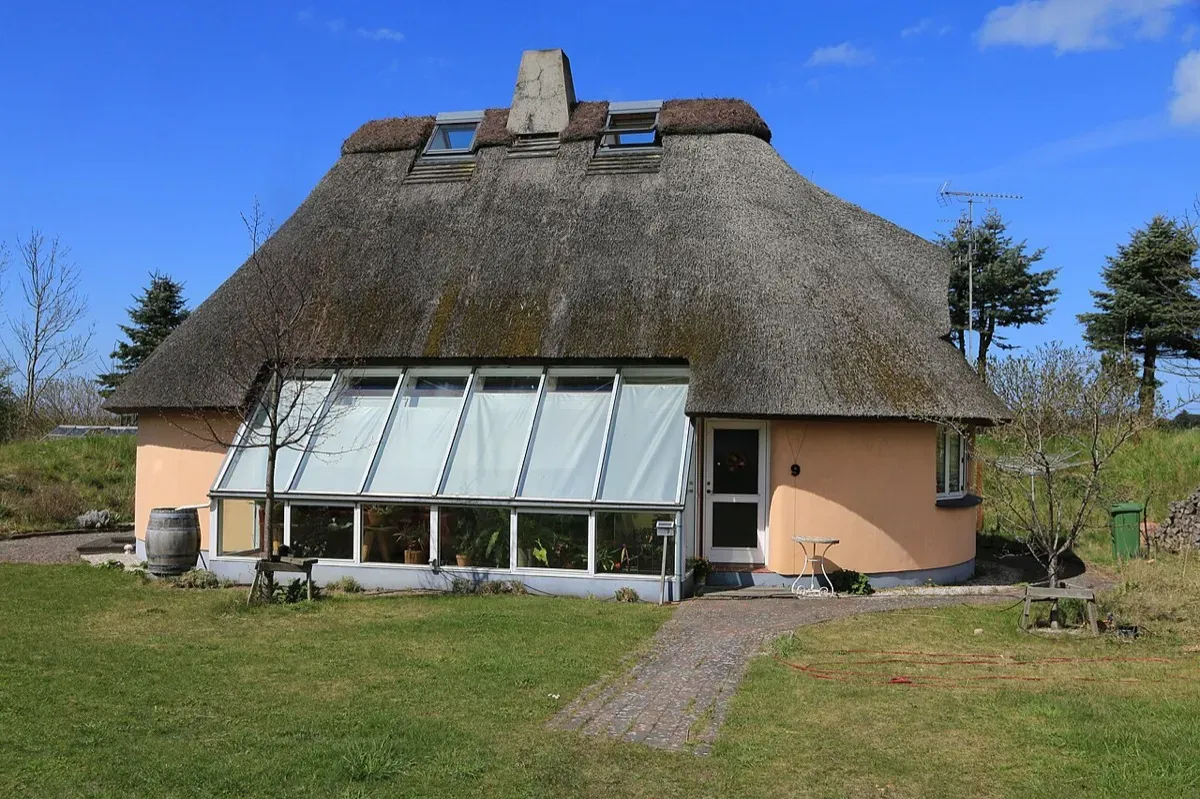
- “Straw bale house x - Dyssekilde økolandsby ecovillage Denmark” by Øyvind Holmstad, 2017, licensed under CC BY-SA 4.0 (https://creativecommons.org/licenses/by-sa/4.0), via Wikimedia Commons: https://commons.wikimedia.org/wiki/File:Straw_bale_house_x_-_Dyssekilde_%C3%B8kolandsby_ecovillage_Denmark.jpg