The problem
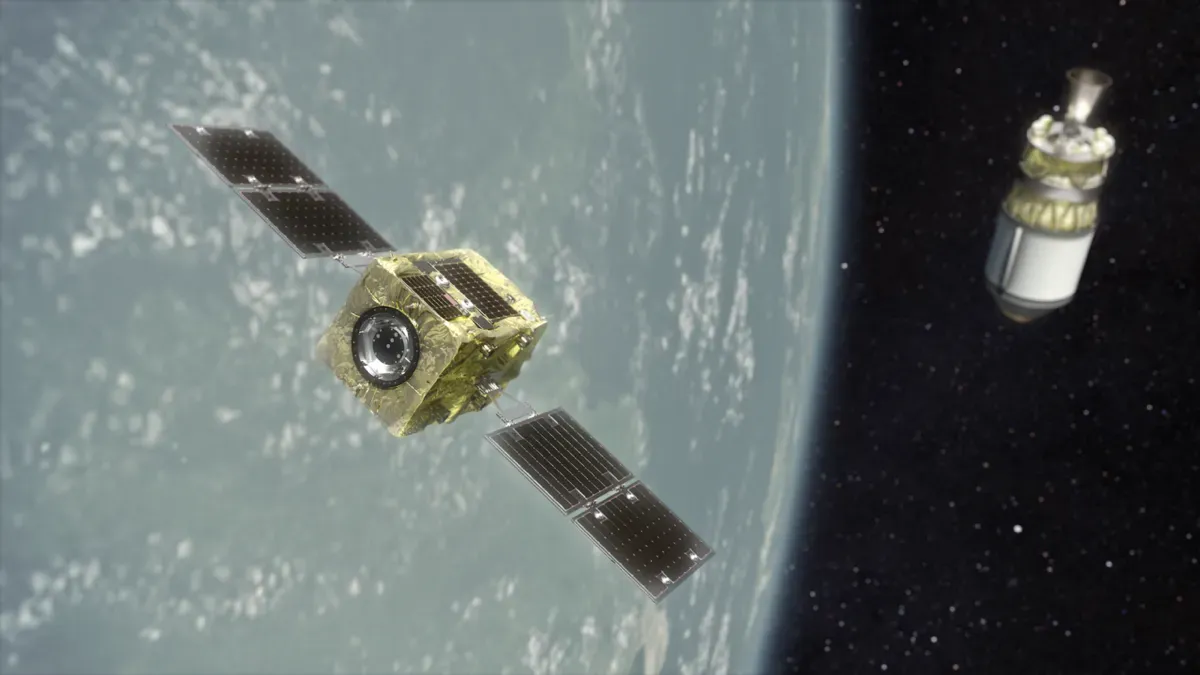
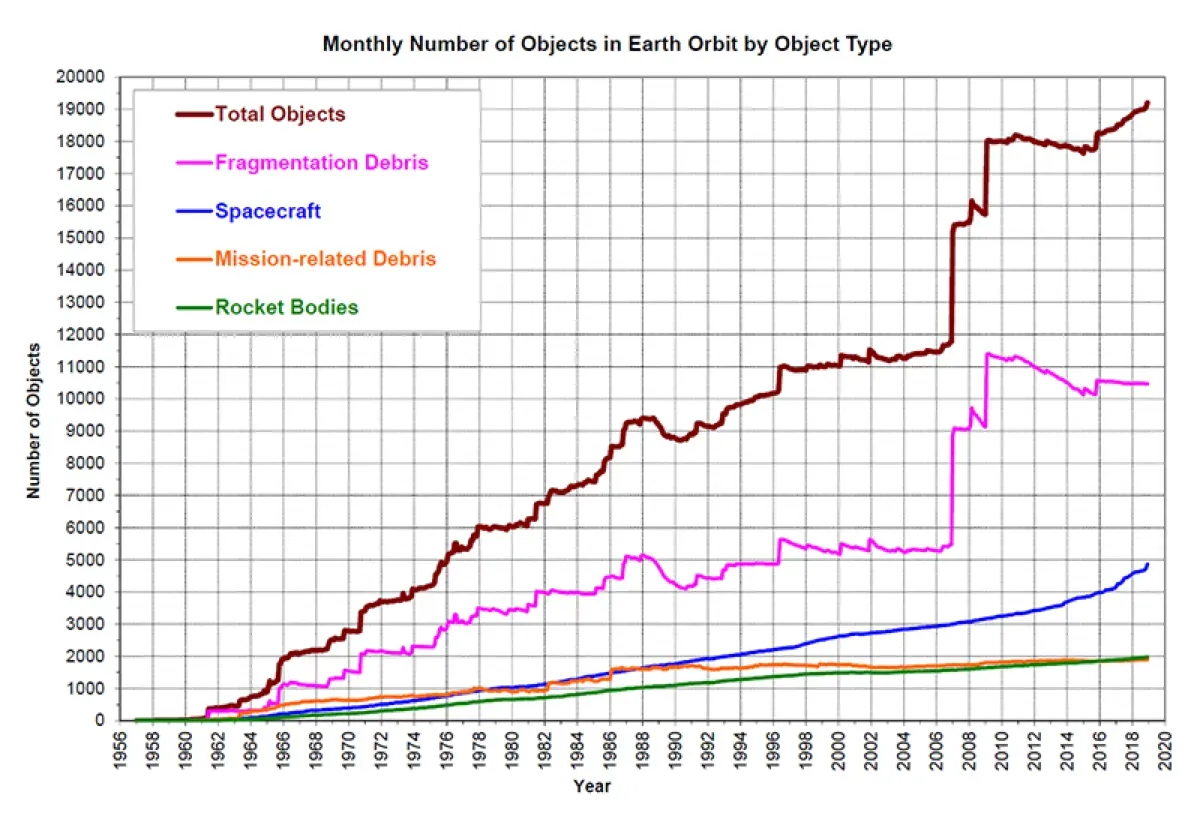
Earth orbit is getting crowded. ESA’s 2026 Space Environment Report says more than 300 launches put over 4,000 new payloads into orbit in 2025. About ten new payloads are launched every day, while more than three intact satellites or rocket bodies fall back each day. ESA warns that collisions creating fragments that cause further collisions, known as the Kessler syndrome, are becoming visible much earlier than expected.
To avoid collisions, operators need to know where everything is. Most tracking today relies on ground radars and telescopes. SatNews notes these are constrained by weather and geography, leaving data gaps. Smaller objects are the hardest to follow, yet a fragment of a few centimetres can still disable a satellite.
The product
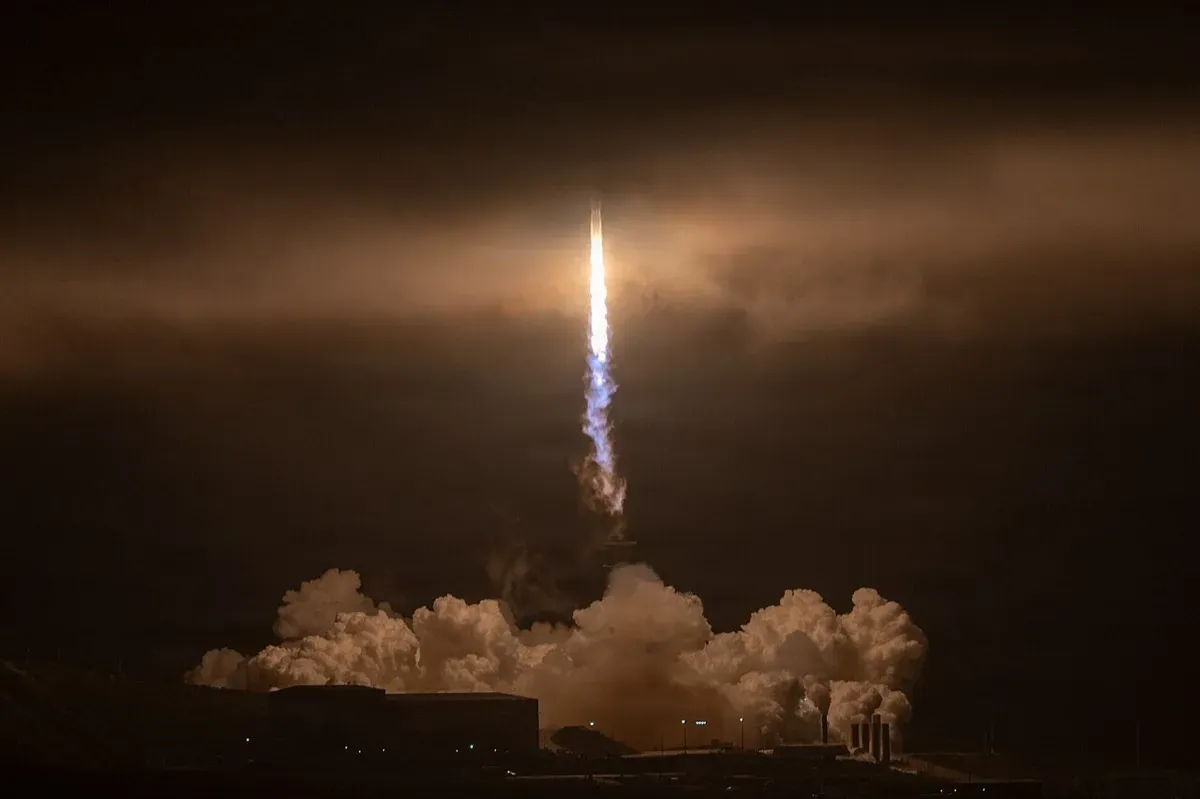
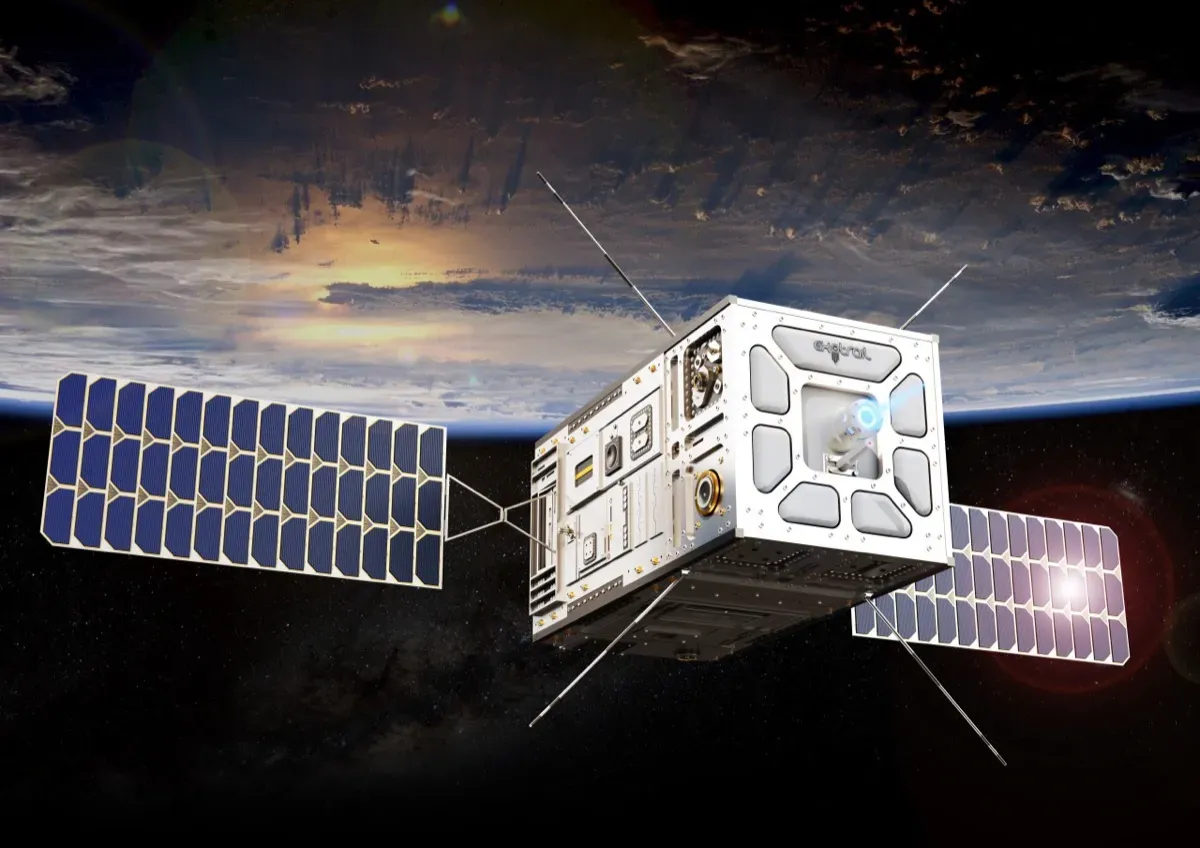
SCOT is a satellite designed to watch other objects in space. It launched on SpaceX’s Transporter-12 rideshare on 14 January 2025 into a sun-synchronous orbit. On 8 March 2025 Digantara announced that it had been commissioned and achieved first light, capturing an image of Buenos Aires as it passed over South America.
SCOT is designed to track objects as small as 5 cm, with a high revisit rate. The Economic Times reports this compares with an industry standard of around 10 cm. Digantara combines SCOT data with ground-based sensors and analytics software to provide what it calls space situational awareness: knowing what is in orbit, where it is going and whether it might hit something.
The Economic Times described SCOT as the world’s first commercial space-based surveillance satellite. Former ISRO chairman S Somanath said on X that SCOT showed India now had its own space-based situational awareness capability.
How it works
- Observe. A camera on SCOT watches nearby orbits from space, free of weather.
- Detect. Software picks out moving objects, including small fragments.
- Track. Repeated observations build up an object’s path.
- Fuse. Space data is merged with ground sensors and other catalogues.
- Screen. Analytics check whether a customer’s satellite is on a collision course.
- Alert. Operators get warnings in time to move their satellite.
Timeline
| Date | Milestone |
|---|---|
| 14 Jan 2025 | SCOT launches on SpaceX Transporter-12 |
| 8 Mar 2025 | SCOT commissioned; first light over Buenos Aires |
| 16 Dec 2025 | Series B of $50 million announced, with 360 ONE Asset, SBI Investment, Ronnie Screwvala, Peak XV and Kalaari; total raised $64.5 million |
| Jan 2026 | Filing shows Reliance Industries led the round at about $200 million valuation |
| 2 Feb 2026 | Agreement with Singapore’s Defence Science and Technology Agency |
| 2026 | Contract from Thailand’s space agency GISTDA |
| 2026 to 2027 | 15 more satellites planned |
Impact and numbers
Digantara has turned SCOT into a business. TechCrunch reported in December 2025 that it had closed contracts worth about $25 million. In February 2026, Singapore’s defence technology agency agreed to co-develop space situational awareness tools with the company. Sharma told PTI that Digantara would provide flight dynamics and conjunction screening, alerting Singapore when one of its satellites approaches a piece of debris, so it can “do sustainable space operations without having to worry about collisions in space”.
Thailand’s Geo-Informatics and Space Technology Development Agency followed with a contract to strengthen its space situational awareness, News9live reported. Thailand has its own reasons to care: its THEOS-2A satellite was lost in a failed ISRO launch, the first time ISRO had lost a foreign customer’s satellite. In the United States, Digantara has analytics contracts with US Space Command.
The money is going into hardware. CNBC-TV18 reported that the Series B will fund 15 satellites over 2026 and 2027, an expansion of the Bengaluru plant to build up to 30 small satellites a year, and a new facility in Colorado Springs for larger 100 to 150 kg platforms. About $10 million is earmarked for growth in the US and Europe, and Digantara plans to set up a European entity in 2026. TechCrunch explains the split: the US team builds larger spacecraft for American defence needs, while India concentrates on analytics, data processing and space situational awareness, because sensitive systems must be built domestically in each market.
Honest caveats
Defence is driving growth. TechCrunch’s headline on the Series B was about missile defence. Digantara’s US entity was selected for the Missile Defense Agency’s SHIELD contract vehicle, and Sharma told CNBC-TV18 that defence customers drove “multifold growth”. The Colorado Springs plant is aimed at missile detection satellites. Buyers focused on sustainability should be aware that the same sensors serve military surveillance.
Watching is not cleaning. Better tracking helps avoid collisions, but it removes no debris. Digantara itself adds satellites to orbit, and the sources reviewed do not describe their end-of-life disposal plans.
Conflicting company facts. TechCrunch says Digantara was founded in 2020; other profiles give earlier dates. Factory capacity is described as 30 satellites a year by CNBC-TV18 but 30 satellites at once for a planned Andhra Pradesh plant by TechCrunch.
Investor links. Reliance Industries led the Series B, according to a regulatory filing reported by The Economic Times. Reliance appears elsewhere in this series only as a customer mention.
What’s next
Through 2026 and 2027, Digantara plans more electro-optical and lidar satellites for space surveillance, early missile warning sensors and a larger network of ground observatories. Singapore engineers are due to help assemble and test one of its upcoming space sensors. It plans to spread its satellites across several orbits to cut data delays, particularly for defence and security customers, and Sharma told CNBC-TV18 the company is targeting revenue of between $25 million and $30 million by the end of 2026.
Why it matters for Europe and green buyers
For Europe, ESA now says prevention alone is no longer enough and that active debris removal is needed. Any removal or avoidance effort depends on knowing exactly where objects are, so independent space-based tracking adds to the data Europe relies on. Digantara’s planned European entity could make it a supplier to European operators, who should weigh its defence work.
For India, SCOT gives the country a homegrown, space-based view of its orbital neighbourhood, which matters as Indian launch rates and private satellites grow. For the world, a cleaner orbit starts with better tracking, and more independent eyes in space make collision warnings more reliable.
Sources & image credits
- SatNews, “Digantara launches India’s 1st homegrown space surveillance mission via SpaceX’s Transporter-12”, 14 Jan 2025. https://satnews.com/2025/01/14/digantara-launches-indias-1st-homegrown-space-surveillance-mission-via-spacexs-transporter-12/
- The Economic Times, “Digantara commissions commercial space surveillance satellite, SCOT”, 8 Mar 2025. https://economictimes.indiatimes.com/tech/startups/digantara-commissions-commercial-space-surveillance-satellite-scot/articleshow/118806004.cms
- TechCrunch, “India’s Digantara raises $50M for space-based missile defense tech”, 16 Dec 2025. https://techcrunch.com/2025/12/16/indias-digantara-raises-50m-for-space-based-missile-defence-tech/
- CNBC-TV18, “Digantara to use $50 million funding to launch 15 satellites, expand globally”, Dec 2025. https://www.cnbctv18.com/business/startup/digantara-series-b-funding-satellite-constellation-launch-global-expansion-plans-19799562.htm
- The Economic Times, “Reliance leads $50 million round in spacetech startup Digantara at $200 million valuation”, 31 Jan 2026. https://economictimes.indiatimes.com/tech/funding/reliance-leads-50-million-round-for-spacetech-startup-digantara/articleshow/127807185.cms
- The Economic Times, “Digantara inks pact with Singapore’s defence arm to protect satellites from space debris”, 2 Feb 2026. https://economictimes.indiatimes.com/news/defence/digantara-inks-pact-with-singapores-defence-arm-to-protect-satellites-from-space-debris/articleshow/127858446.cms
- News9live, “Digantara awarded SSA contract by Thailand’s GISTDA”, 2026. https://www.news9live.com/science/digantara-awarded-ssa-contract-by-thailands-gistda-2941855
- ESA, “ESA Space Environment Report 2026”. https://www.esa.int/Space_Safety/Space_Debris/ESA_Space_Environment_Report_2026
- Wikimedia Commons, “LEO-SpaceDebris-Nov2020”. https://commons.wikimedia.org/wiki/File:LEO-SpaceDebris-Nov2020.png
Images: “LEO-SpaceDebris-Nov2020”, NASA Orbital Debris Program Office, public domain, via Wikimedia Commons. Illustrative chart, not a Digantara image.