
The problem
Nylon 6 is one of the most widely used synthetic polymers, found in carpets, sportswear, hosiery, fishing nets and engineering plastics. It is normally made from caprolactam derived from crude oil. Most nylon products are hard to recycle mechanically because they are blended with other fibres, dyes and backings, so they are burned or landfilled at the end of life.
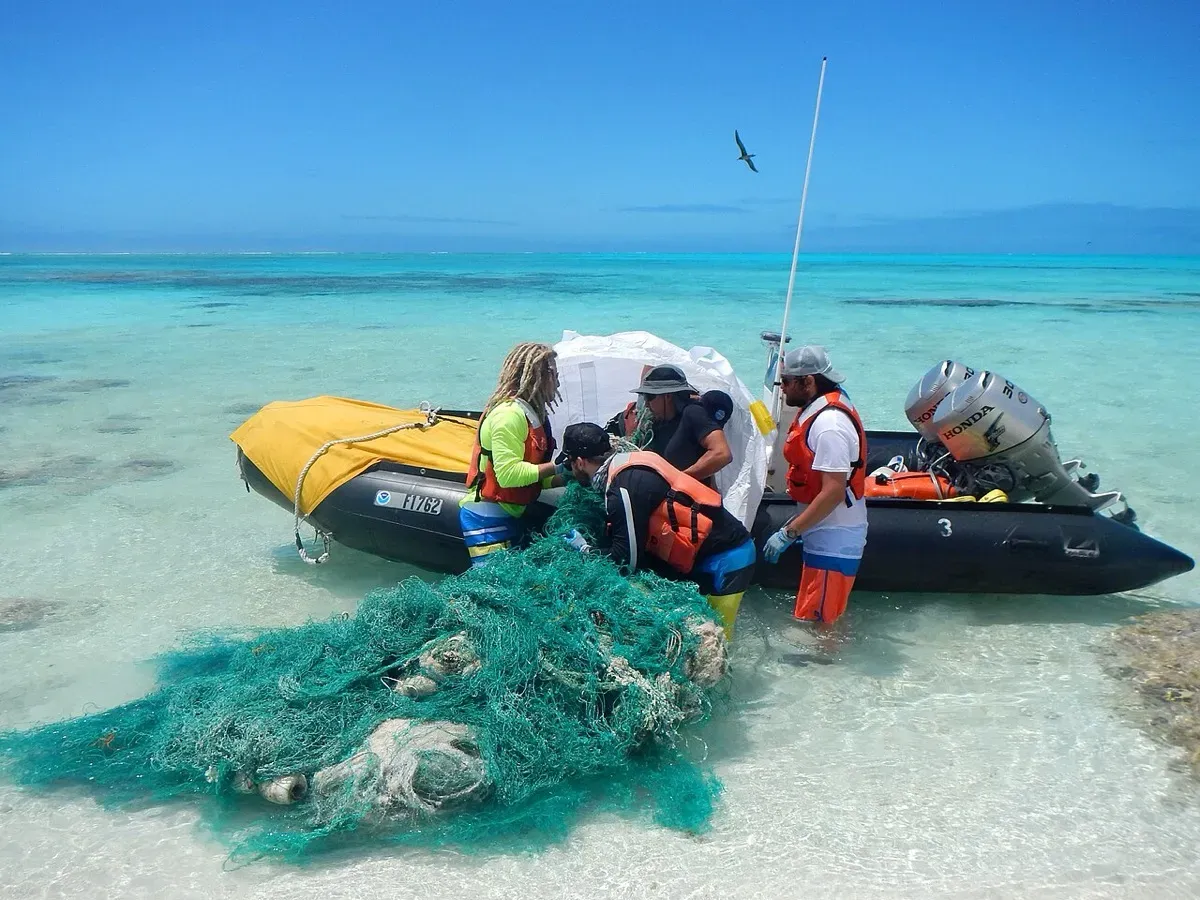
Lost and abandoned fishing nets, so-called ghost nets, are made largely of nylon and keep trapping marine life for years. In Europe, the wider textile waste problem is huge: each citizen generates about 12 kg of textile waste a year, more than 12.6 million tonnes in total, and less than 1% is recycled into new garments, according to the European Parliament data cited by Aquafil (Aquafil ESG Report 2025).
The product
ECONYL is Aquafil’s regenerated nylon 6, sold as polymer chips or as yarn. Aquafil says it has the same chemical and performance properties as nylon made from fossil sources, and that it can be recycled multiple times. It is used by more than 1,900 brands in fashion, interiors, cars and other sectors, from carpet makers Interface and Balsan to Gucci, Prada, Stella McCartney, BMW and Mercedes-Benz (ECONYL).
The regeneration plant in Ljubljana, Slovenia, began industrial production on 5 April 2011. At the time Aquafil said it could make about 2 million pounds (about 900 tonnes) of caprolactam and nylon 6 resin a month at full capacity, and planned to double capacity (Floor Daily).
ECONYL is a material, not a finished product: Aquafil sells it to carpet makers, weavers, swimwear and outdoor brands and plastics moulders, who turn it into goods under their own names.
How it works
- Collection: waste comes from three main streams: end-of-life carpets, mainly collected and processed in the United States; abandoned fishing nets, recovered with the aquaculture industry and groups such as Healthy Seas; and industrial waste such as textile scraps and plastic parts.
- Preparation: in Phoenix, Arizona, Aquafil separates carpets into nylon, polypropylene and calcium carbonate, and ships nylon pellets to Slovenia (Resource Recycling).
- Depolymerisation: in Ljubljana, the nylon is chemically broken down into caprolactam, its original building block, and purified.
- Repolymerisation: the caprolactam is turned back into nylon 6 polymer, then spun into yarn or compounded into engineering plastics at Aquafil’s plants.
Timeline
| Date | Milestone |
|---|---|
| 1965 | Aquafil founded in Arco, Italy |
| 5 Apr 2011 | ECONYL plant in Ljubljana starts industrial production |
| 2013 | Aquafil co-founds the Healthy Seas Foundation |
| May 2022 | Woodland, California carpet recycling plant closed for lack of carpet feedstock |
| 2024 | First fishing net made entirely of ECONYL, with Diopas and Philosofish |
| 2025 | North Sea field tests of circular nets with Nofir, Egersund and Hampidjan |
| 16 Oct 2025 | EU revised Waste Framework Directive with textile EPR enters into force |
| 27 Aug 2026 | H1 2026 results: ECONYL 60.2% of fibre revenue |
Impact and numbers
- Carbon: a third-party verified life cycle assessment under ISO 14040/44 says ECONYL polymer generates 74% fewer CO2e emissions than Aquafil’s standard nylon (Aquafil LCA). Aquafil also says every 10,000 tonnes of ECONYL caprolactam saves the equivalent of about 70,000 barrels of crude oil.
- Ocean waste: between 2013 and 2025, Healthy Seas recovered 1,309 tonnes of abandoned fishing nets and marine litter; in 2025 alone it collected 81.1 tonnes, and all recovered nylon 6 nets were sent to Aquafil.
- Business: in H1 2026, Aquafil reported revenue of EUR 269.5 million (down 4.1%), EBITDA of EUR 40.6 million (15.0% margin) and net profit of EUR 3.4 million, and said ECONYL products drove margins, reaching 61.3% of fibre revenue in Q2 (Aquafil).
- Waste target: Aquafil’s goal to collect 35,000 tonnes of post-consumer waste was “on hold” at 15,961 tonnes in 2025, to be reassessed after a strategic reorganisation.
Honest caveats. “Regenerated” does not mean all ECONYL comes from ocean nets: carpets and industrial scraps are major feedstocks, and early ECONYL polymer contained a minimum of 25% post-consumer content, with the rest post-industrial. The 74% CO2 saving is measured against Aquafil’s own standard nylon, not every fossil nylon on the market. Collection is the bottleneck: Aquafil closed its new California carpet plant in 2022 because it could not source enough carpet, its post-consumer waste target is on hold, and 2026 included reorganisation costs at its US carpet recycling unit. Products made with ECONYL, such as blended fabrics, are often not recycled again in practice, so “endless” recycling depends on take-back systems. Aquafil carries significant debt (net financial position EUR 196.9 million in June 2026) and posted a net loss of EUR 4.7 million in 2025.
What’s next
Aquafil is concentrating on efficiency at its ECONYL plants and on new circular value chains, such as nets made fully from ECONYL and mono-material carpets designed for recycling. The EU’s revised Waste Framework Directive, in force since 16 October 2025, requires member states to set up extended producer responsibility schemes for textiles and footwear by April 2028, which could create a much larger, paid-for stream of collected textiles (EUR-Lex).
Why it matters for Europe / green buyers
For European brands in fashion, carpets and car interiors, ECONYL is one of the few recycled nylons available at industrial scale with a verified LCA, made in Europe and chemically equivalent to virgin material. As textile EPR fees start to reward recycled content and recyclable design, materials like ECONYL can lower both emissions and future fees. Buyers should still ask for the share of post-consumer waste in their specific product and plan for take-back.
India is a major producer of synthetic textiles and has one of the world’s largest fishing fleets, so waste nylon from nets and textile factories is a big and largely untapped resource. Aquafil has no plant in India, but its model of collecting nets and industrial nylon scraps and chemically recycling them is relevant as India builds its own extended producer responsibility rules for plastics and textiles.
Sources & image credits
- Aquafil, ECONYL regenerated nylon website: https://econyl.aquafil.com/
- Aquafil, “H1 2026 Results” press release, 27 August 2026: https://www.aquafil.com/assets/uploads/260807_PR_Aquafil_Results-1H26.pdf
- Aquafil, ESG Report 2025: https://www.aquafil.com/assets/uploads/Aquafil-Report_SUSTAINABILITY_2025_EN.pdf
- Floor Daily, “Aquafil’s Econyl Plant Begins Production”, 5 April 2011: https://www.floordaily.net/flooring-news/aquafils-econyl-plant-begins-production
- Aquafil, LCA report of ECONYL polymer: https://www.aquafil.com/assets/uploads/LCA-Report-of-Econyl-Polymer.pdf
- Resource Recycling, “Aquafil closing its new California carpet recycling plant”, 25 May 2022: https://resource-recycling.com/plastics/2022/05/25/aquafil-closing-its-new-california-carpet-recycling-plant/
- Aquafil, AquafilSLO Ljubljana site: https://www.aquafil.com/locations/aquafilslo/
- EUR-Lex, Directive (EU) 2025/1892 amending Directive 2008/98/EC on waste (textiles and food waste): https://eur-lex.europa.eu/eli/dir/2025/1892/oj
Images:
- “PMNM - Hauling derelict fishing nets” by NOAA National Marine Sanctuaries, 2016, public domain (US federal government work), via Wikimedia Commons: https://commons.wikimedia.org/wiki/File:PMNM_-_Hauling_derelict_fishing_nets_(33963796612).jpg
.jpg)