The problem
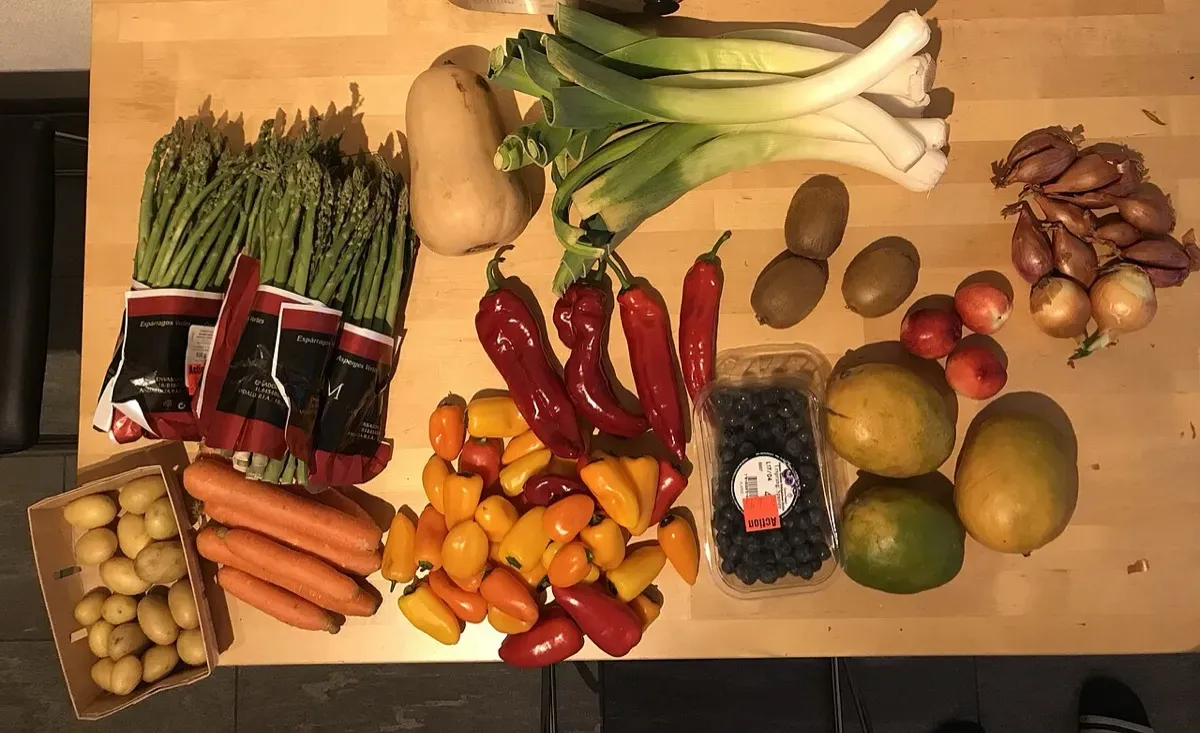
UNEP’s Food Waste Index Report 2024 estimates that 1.05 billion tonnes of food were wasted in 2022, with households responsible for 60% and retail for 12% (UNEP). Fresh fruit and vegetables are among the most wasted foods because they spoil fast.
The modern produce chain is built around that fragility. Fruit is often picked before it is ripe, kept in refrigerated containers and storage, and coated with waxes or wrapped in plastic to survive long journeys. Cucumbers are shrink-wrapped, asparagus is flown by air, and post-harvest fungicides fight mould. Each fix has a cost in energy, plastic or chemicals, and still a large share of produce is thrown away in shops and kitchens.
The product
Apeel was founded in 2012 by three scientists who met at the University of California, Santa Barbara. Its main product, Edipeel, is made from plant-based mono- and diglycerides derived from upcycled peels, pulp and seeds such as grapeseed. The coating can be washed off with warm water and gentle rubbing, according to the company (AgFunderNews).
In the EU, mono- and diglycerides of fatty acids are a food additive known as E 471. Commission Regulation (EU) 2019/801 of 17 May 2019 authorised E 471 for the surface treatment of citrus fruit, melons, pineapples, bananas, papayas, mangoes, avocados and pomegranates (Regulation (EU) 2019/801). Apeel’s partner Nature’s Pride, a Dutch importer, then integrated the coating into its avocado chain, and Apeel avocados reached EDEKA and Netto stores in Germany and Salling Group’s Føtex and Bilka stores in Denmark in December 2019 (Nature’s Pride).
Apeel now sells a family of “Fresh Formulaics”: Extend coatings to prolong shelf life, Shine coatings for appearance, and a new Protect range against mould and decay, alongside RipeTrack, a portable tool that measures fruit quality without cutting it.
How it works
When applied, the lipids in Edipeel self-assemble into a thin edible “skin” of consistent thickness over the produce’s natural peel. That layer keeps moisture in and moderates how quickly oxygen and carbon dioxide move in and out, creating what Apeel calls an optimised microclimate for each type of produce. Slower water loss means less shrivelling, and slower oxidation means slower ripening and decay.
The first version had to be mixed daily on site and needed dedicated drying equipment, with Apeel staff at supplier sites. James Rogers says the second version is supplied as a stable liquid that lasts for months, can be applied with existing packhouse equipment, and costs about ten times less to apply. That change allowed Apeel to sell directly to growers and suppliers instead of mainly to retailers. Apeel says its current formulation is comparable in price to food-grade wax.
Timeline
| Date | Milestone |
|---|---|
| 2012 | Apeel founded in Santa Barbara; first Bill & Melinda Gates Foundation research grant for post-harvest loss work in sub-Saharan Africa |
| 17 May 2019 | EU Regulation 2019/801 authorises E 471 for surface treatment of avocados and other fruit |
| December 2019 | Apeel avocados launch in Germany and Denmark with Nature’s Pride, EDEKA, Netto and Salling Group |
| 2021 | Apeel reaches about 450 employees and a valuation above $2 billion |
| 2022 | Two rounds of layoffs to fix business model inefficiencies |
| April 2023 | Coordinated online disinformation campaign against Apeel begins |
| 29 August 2025 | Apeel files a defamation and false advertising suit against an influencer, later settled with an apology |
| May 2026 | Apeel reports use in Germany, the UK, the Netherlands, Denmark and Norway |
Impact and numbers
- Shelf life: Apeel-treated avocados last up to 50% longer, and limes can triple their shelf life, according to the company.
- Retail waste: at its European launch, Apeel said its coating had shown a food waste reduction of more than 50% on average at retail level in the United States.
- Packaging and transport: Apeel cites cases where long English cucumbers no longer need plastic shrink-wrap, and asparagus can travel by sea instead of air.
- Market shift: Europe, the Middle East and Africa account for about 70% of the business and are the fastest-growing region, Rogers told AgFunderNews in June 2026.
- Cost of the campaign: Apeel’s 2025 lawsuit alleged the loss of more than 15 retail customers and over $60 million in expected revenue, plus a $36 million write-down of assets and inventory. At its peak, Rogers says, 60% of avocados in U.S. grocery stores were protected by Apeel; now it is none.
The controversy, in brief. From 2023, social media posts falsely claimed that Apeel’s coating was toxic, could not be washed off or was controlled by Bill Gates. Apeel says Gates has never been a shareholder; the Gates Foundation gave research grants of $100,000 in 2012 and $1 million in 2015. Apeel states that Edipeel has been reviewed by the U.S. FDA and the European Food Safety Authority. The episode shrank the company from about 450 staff in 2021 to about 50 by mid-2026, though Rogers acknowledges that business model problems and layoffs began in 2022, before the attacks.
What’s next
Apeel is expanding beyond shelf life. Its first Protect product, Zero MI, was due to soft launch in autumn 2026 and is designed to fight fungal problems such as stem-end rot in avocados and Penicillium rot in citrus, potentially replacing post-harvest fungicides such as imazalil, thiabendazole and prochloraz. In Europe, the revised Waste Framework Directive, Directive (EU) 2025/1892, now requires a 30% per-capita cut in food waste across retail, restaurants and households by 2030 against a 2021 to 2023 baseline (European Commission). Retailers with their own targets, such as Salling Group’s goal of halving food waste by 2030, need tools that work before produce reaches the shelf.
Why it matters for Europe / green buyers
Apeel’s story has two lessons. The first is technical: a plant-based, food-grade coating can extend shelf life enough to cut retail and household waste, reduce plastic wrap and avoid air freight, using an additive the EU has authorised for specific fruits. The second is about trust. A product can be scientifically reviewed and still be pushed out of a market by misinformation, which is why transparent ingredient lists and clear labelling matter as much as the chemistry.
For European buyers, the practical questions are: which produce categories and origins are covered, what shelf-life gain has been measured in your own supply chain, how it compares with existing waxes and fungicides, and how it is labelled for shoppers. Europe has quietly become the place where this technology is proving itself.
Sources & image credits
- Nature’s Pride, “Apeel & Nature’s Pride debut longer-lasting produce to fight food waste in Europe”, December 2019: https://www.naturespride.eu/en/news/news/apeel-nature-s-pride-debut-longer-lasting-produce-to-fight-food-waste-in-europe
- Commission Regulation (EU) 2019/801 of 17 May 2019 on the use of E 471 on certain fresh fruits: https://lawplayer.com/eu/act/32019R0801
- AgFunderNews, “Apeel founder on MAHA, misinformation, layoffs, and a second act in post-harvest tech”, 1 June 2026: https://agfundernews.com/apeel-founder-on-maha-misinformation-layoffs-and-a-second-act-in-post-harvest-tech
- Apeel, “A Note on the Free Press Story”, 15 May 2026: https://apeel.substack.com/p/a-note-on-the-free-press-story
- UNEP, Food Waste Index Report 2024 press release, 27 March 2024: https://www.unep.org/news-and-stories/press-release/world-squanders-over-1-billion-meals-day-un-report
- European Commission, “Revised Waste Framework Directive enters into force”, 16 October 2025: https://environment.ec.europa.eu/news/revised-waste-framework-directive-enters-force-2025-10-16_en
- The Packer, “Apeel Sciences addresses ‘widespread misinformation’ about its company, products”: https://www.thepacker.com/news/packer-tech/apeel-sciences-addresses-widespread-misinformation-about-its-company-products
Images:
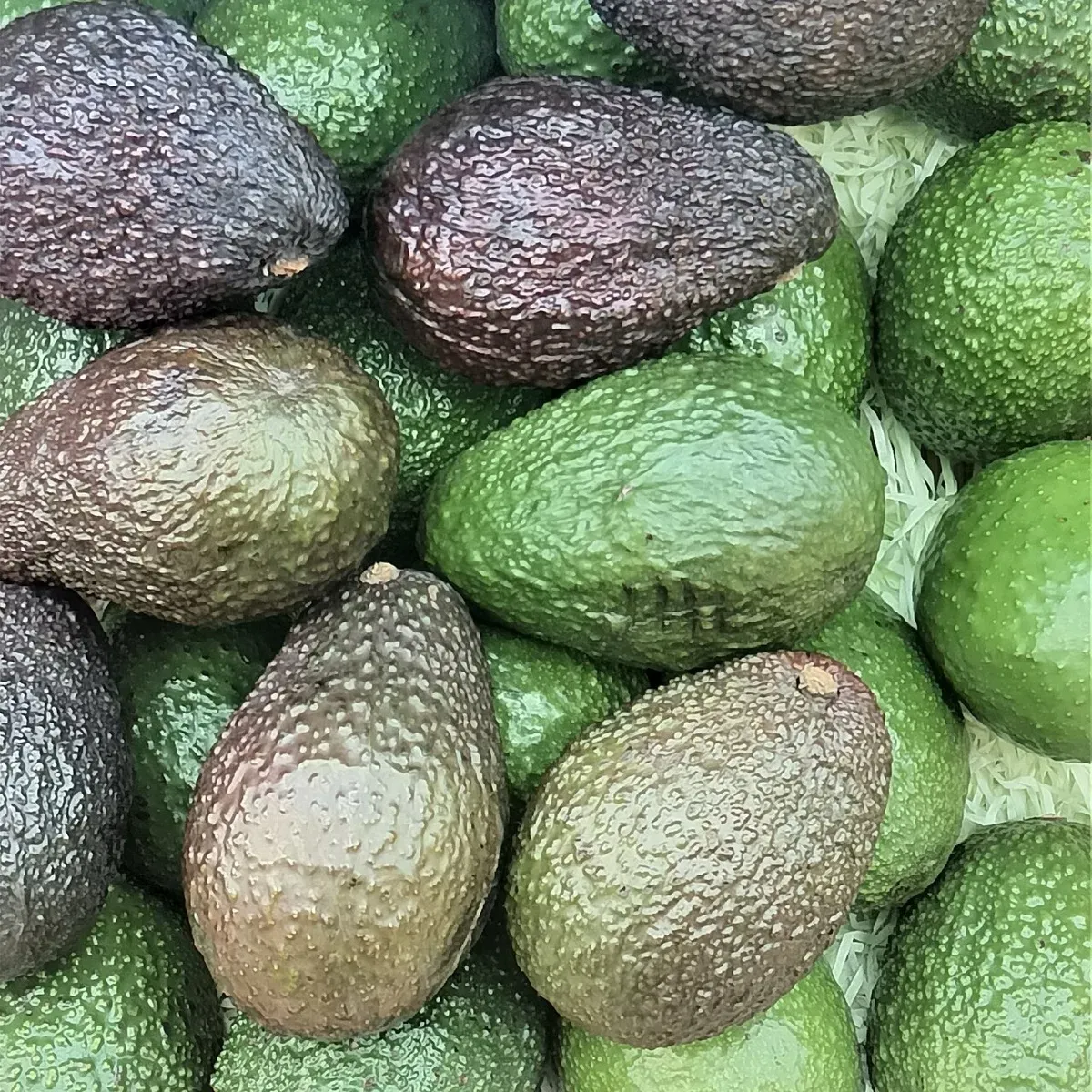
- “Avocados sold in supermarkets” by Fumikas Sagisavas, CC0 1.0 public domain dedication (http://creativecommons.org/publicdomain/zero/1.0/deed.en), via Wikimedia Commons: https://commons.wikimedia.org/wiki/File:Avocados_sold_in_supermarkets.jpg