
The problem
Finland is cold, dark for much of the winter and heavily industrialised, with pulp, paper and steel plants that need power around the clock. For years the country imported a large share of its electricity, much of it from Russia and Sweden, and burned coal and peat for the rest. Wind power has grown fast, but it does not blow on demand.
Utilities and heavy industry wanted a large, firm and low-carbon source of electricity that could run for decades. In 2002 the Finnish parliament approved a fifth reactor, and TVO, which supplies power at cost to its industrial owners, chose the French-German EPR design.
The product
The EPR (European Pressurised Reactor) is a large third-generation pressurised water reactor developed by Framatome and Siemens. It was designed for about 60 years of operation, with four independent safety trains, a double-walled containment and a “core catcher” under the reactor to hold molten fuel in a severe accident.
OL3 produces about 1,600 MW of electricity and, according to TVO, is “intrinsically operated at full power output” (TVO, 2023). In 2024 it produced 9.69 TWh, almost one-eighth of Finnish electricity consumption (TVO, 2025). In 2025 it produced 10.38 TWh, with an availability factor of 82.6% and no unplanned interruptions, and the whole Olkiluoto site supplied about a quarter of the country’s electricity (TVO, Jan 2026).
In spring 2025 OL3 received fuel for its first 18-month cycle. That cycle ran for a record 498 days and about 17.2 TWh, the longest in Olkiluoto’s history, before a 50-day service outage that began on 10 September 2026 (TVO, Sep 2026).
How it works
- Fission: enriched uranium dioxide fuel in the reactor core splits and releases heat.
- Primary loop: water at high pressure carries the heat from the core to four steam generators without boiling.
- Secondary loop: in the steam generators, heat passes to a second water circuit, which boils into steam.
- Generation: the steam drives one of the world’s largest turbine-generators, then condenses using cooling water from the Baltic Sea.
- Safety systems: four redundant safety trains, a thick double containment and a core catcher are designed to cool the reactor and contain radioactivity even in severe accidents.
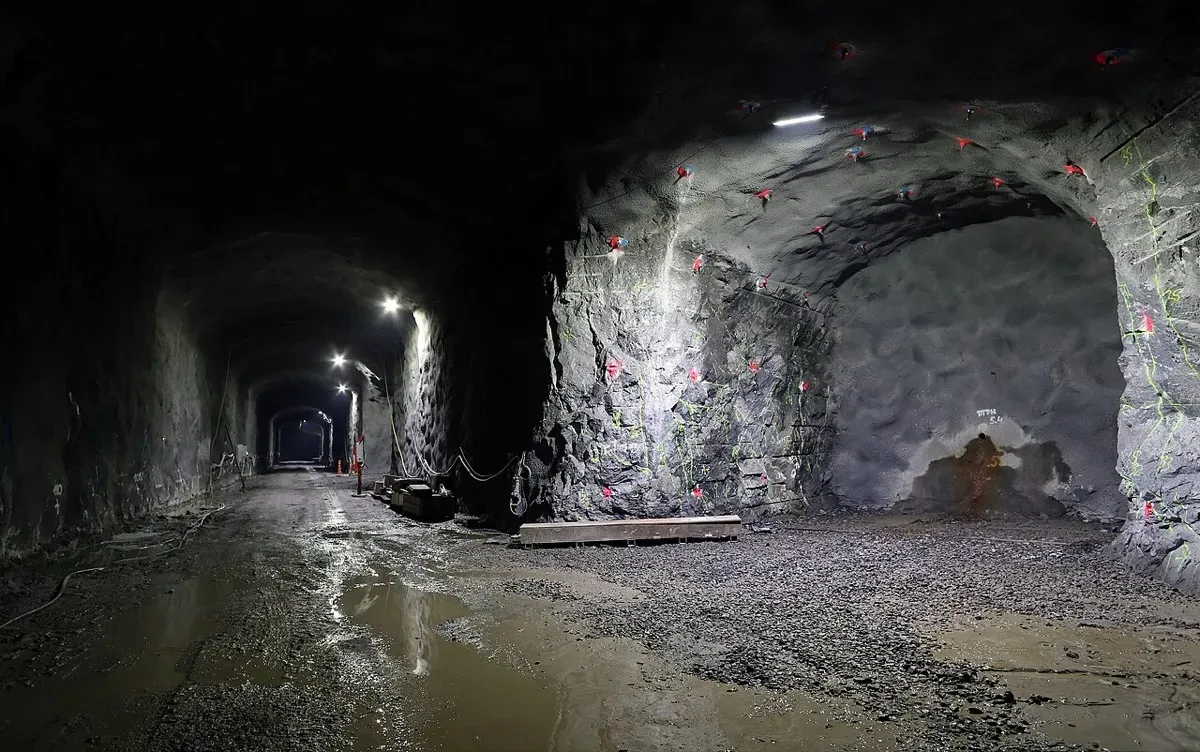
- Fuel cycle: spent fuel cools in pools and interim storage at Olkiluoto; it is due to go into Posiva’s ONKALO deep repository next door (Posiva).
Timeline
| Date | Milestone |
|---|---|
| 2002 | Finnish parliament approves a fifth reactor |
| Dec 2003 | Fixed-price turnkey contract with Areva-Siemens |
| 2005 | Construction begins; operation originally planned for 2009 |
| Mar 2018 | Global settlement: Areva-Siemens to pay TVO €450 million |
| Dec 2021 | First criticality |
| Mar 2022 | First connection to the grid |
| 16 Apr 2023 | Regular electricity production begins |
| Jun 2025 | Final acceptance after two-year warranty period |
| 10 Sep 2026 | First 18-month cycle ends after 498 days; outage until about 30 Oct |
| Spring 2028 | Next planned outage |
Impact and numbers
- Scale: at about 1,600 MW, OL3 is Europe’s most powerful reactor unit, and Olkiluoto as a whole produced 23.41 TWh in 2025, about twice its output in 1995.
- Reliability: after a difficult start, OL3 ran through all of 2025 without an unplanned outage and completed its first 18-month cycle without production disruptions.
- Climate: TVO calls OL3 “Finland’s greatest climate act”. Nuclear power has very low life-cycle emissions, and OL3 helped Finland become almost self-sufficient in electricity.
- Public support: support for nuclear power in Finland rose from about 60% when the project started to 83% in 2023, according to TVO.
- Lessons: the project employed people from more than 80 countries, with up to 4,500 on site, and test production alone involved about 3,300 tests.
Honest caveats. OL3 is a story of severe delays and overruns. Construction began in 2005 for a 2009 start; regular production came 14 years late, and the final cost is put at about €11 billion, around three times the first estimate (NEI). The contract price was about €3.2 billion, and the dispute between TVO and the suppliers ended only with a €450 million settlement in 2018 (WNN). Areva had to be restructured by the French state partly because of the project. Commissioning was slowed by cracked feedwater pump impellers in 2022, and late in the 2026 cycle problems with the reactor coolant pumps cut output to about 1,300 MW. A single 1,600 MW unit is also a large risk for a small grid when it trips or goes offline. Finally, spent fuel will remain radioactive for many thousands of years; Finland is ahead of most countries in having a repository, but it is not yet operating.
What’s next
TVO’s priority is the 2026 service outage, which includes refuelling, steam generator inspections and repairs to the reactor coolant pumps, before the next 18-month cycle. In the longer term, TVO aims to run OL3 for at least 60 years. The project’s lessons, in welding, documentation, subcontractor control and commissioning, are now feeding into France’s planned EPR2 reactors and other new builds in Europe.
Why it matters for Europe / green buyers
OL3 is the first EPR to operate in Europe. France’s Flamanville 3 EPR was connected to the grid in December 2024, also more than a decade late, and the UK’s Hinkley Point C is still under construction. For Europe, the lesson is mixed: large reactors can deliver very large amounts of firm, low-carbon power once running, but first-of-a-kind projects carry huge cost and schedule risk. For industrial buyers in the Nordics, OL3 shows how a cost-price ownership model (the “Mankala” model) can give energy-intensive companies long-term access to stable power.
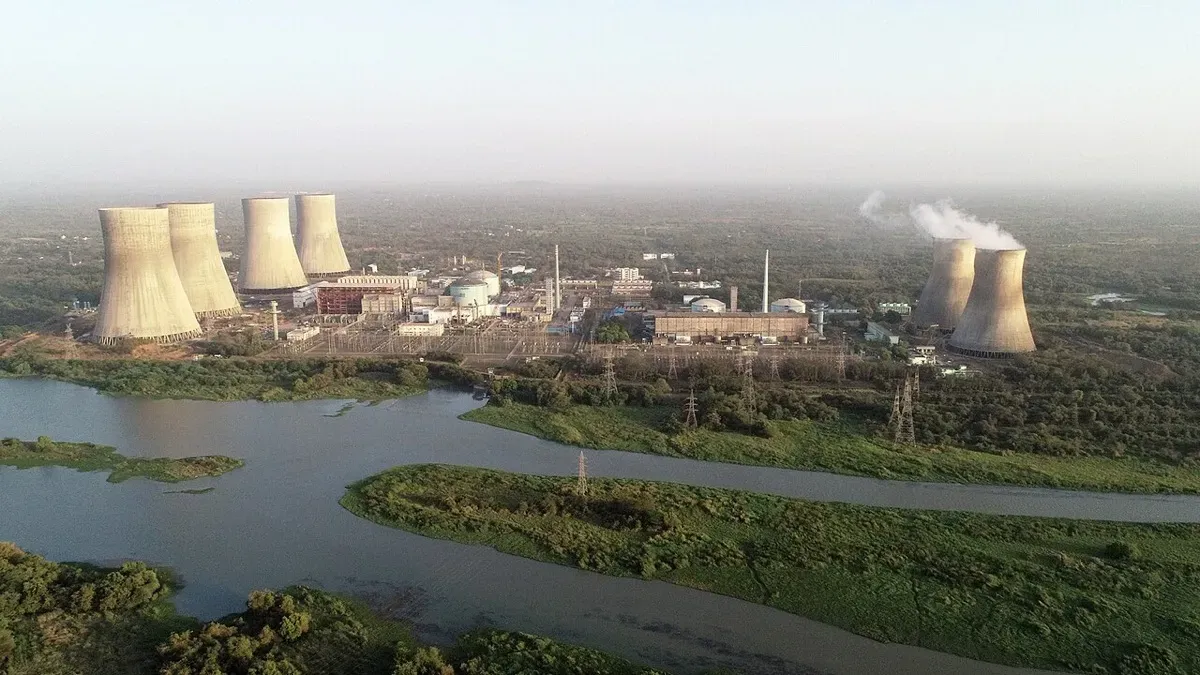
India is following a similar path with large reactors. A six-unit EPR project at Jaitapur in Maharashtra, with EDF, has been discussed for years but has not started construction. The OL3 experience shows why Indian planners now prefer standardised fleets of domestic designs and will scrutinise the cost of any imported large reactor.
Sources & image credits
- TVO, “Regular electricity production has started at Olkiluoto 3 EPR”, 16 April 2023: https://www.tvo.fi/en/index/news/pressreleasesstockexchangereleases/2023/regularelectricityproductionhasstartedatolkiluoto3epr.html
- TVO, “Olkiluoto produced about a quarter of Finnish electricity in 2025”, 5 January 2026: https://www.tvo.fi/en/index/news/pressreleasesstockexchangereleases/2026/olkiluotoproducedaboutaquarteroffinnishelectricityin2025.html
- TVO, “Olkiluoto 3 completes its first 18-month operating cycle without disruptions in production”, 8 September 2026: https://www.tvo.fi/en/index/news/pressreleasesstockexchangereleases/2026/5421999.html
- Nuclear Engineering International, “Final takeover of OL3 complete”, 25 June 2025: https://www.neimagazine.com/news/final-takeover-of-ol3-complete/
- World Nuclear News, “Olkiluoto 3 EPR parties agree settlement”, March 2018: https://www.world-nuclear-news.org/articles/olkiluoto-3-epr-parties-agree-settlement
- TVO, “Impressive figures, valuable lessons”, 2025: https://www.tvo.fi/en/index/news/pressreleasesstockexchangereleases/2025/impressivefigures-valuablelessons.html
- World Nuclear Association, “Nuclear Power in Finland”: https://world-nuclear.org/information-library/country-profiles/countries-a-f/finland
- Posiva, “STUK’s safety assessment takes the world’s first final disposal facility closer to an operating licence”, 4 August 2026: https://www.posiva.fi/en/index/news/pressreleasesstockexchangereleases/2026/stuk8217ssafetyassessmenttakestheworld8217sfirstfinaldisposalfacilityclosertoanoperatinglicence.html
Images:
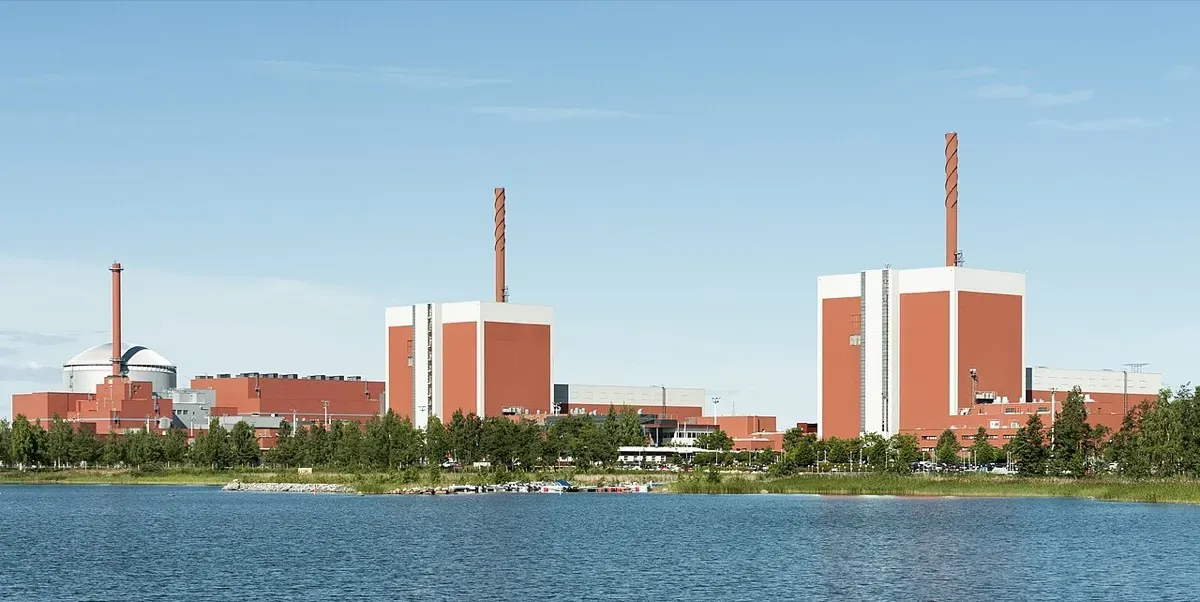
- “Olkiluoto Nuclear Power Plant 2015-07-21 001 (cropped)” by Hannu Huovila / TVO, licensed under CC BY 3.0 (https://creativecommons.org/licenses/by/3.0), via Wikimedia Commons: https://commons.wikimedia.org/wiki/File:Olkiluoto_Nuclear_Power_Plant_2015-07-21_001_(cropped).jpg
.jpg)