The problem
India is one of the world’s largest car markets, and most of its cars burn imported petrol and diesel. Its cities also suffer from serious air pollution, much of it from traffic. Electric cars could help with both, but for years they faced three barriers: high prices, few models made in India, and fears about range and battery life.
In FY 2020-21, the year after the Nexon EV launched, Tata sold just 4,216 electric cars, 1.89% of its passenger vehicles (Autocar Professional). Buyers also worry about the battery wearing out and losing resale value, and about where to charge. A mass-market EV had to answer all of these at a price close to a petrol SUV.
The product
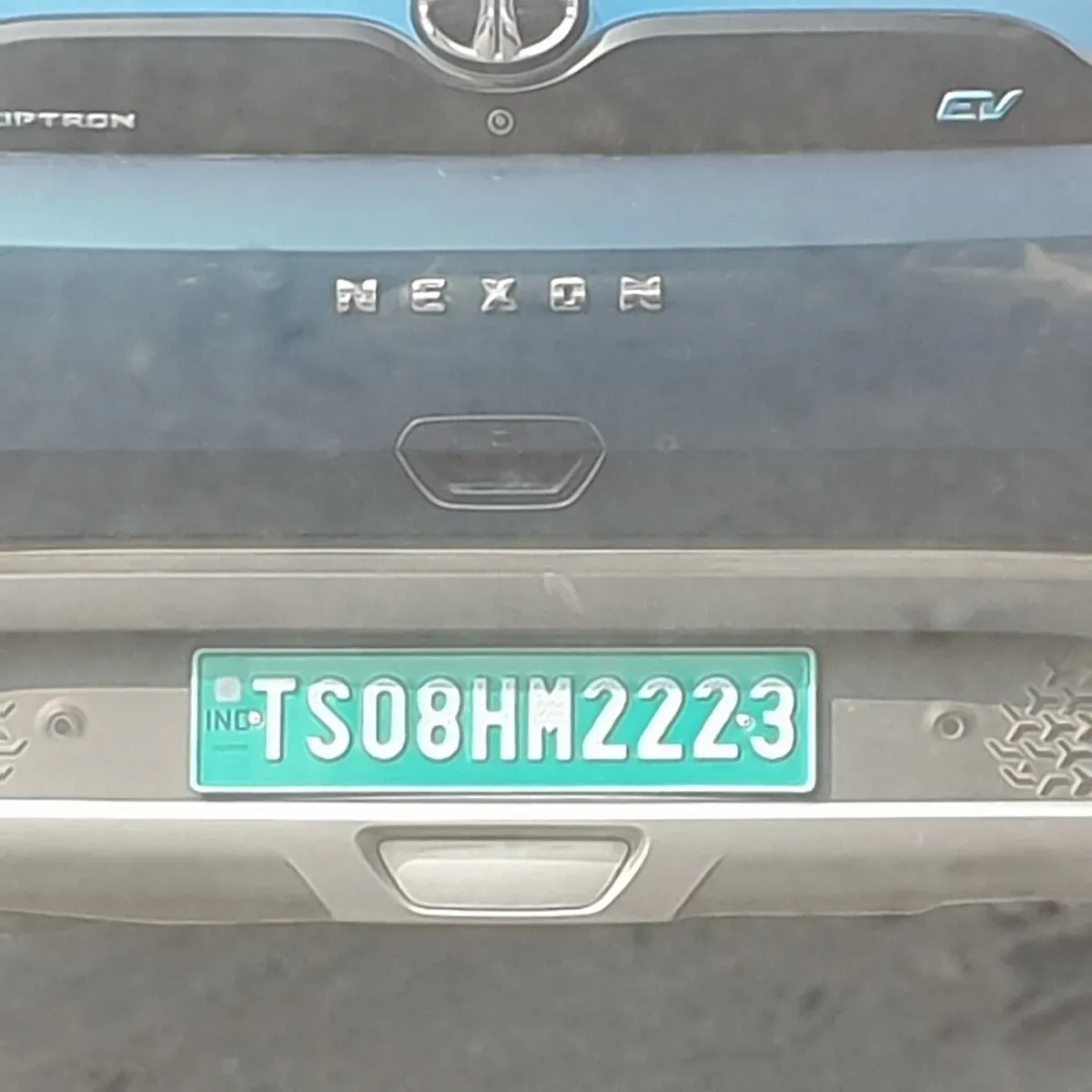
The Tata Nexon EV is the electric version of Tata’s popular compact SUV, built in India by Tata Motors. The current model, a facelift with Tata’s second-generation motor, offers (Autocar India; Tata.ev):
- a 30 kWh medium-range or a 45 kWh long-range battery;
- a claimed range of up to 489 km (MIDC) for the 45 kWh version, with real-world figures of about 350 to 375 km in Autocar India’s tests;
- a single front motor of up to 150 hp in the 45 kWh version;
- DC fast charging from 10 to 80% in about 40 minutes on a 60 kW charger, or 6 hours 36 minutes on a home AC charger;
- vehicle-to-load and vehicle-to-vehicle charging;
- a 5-star Bharat NCAP safety rating and Level 2 driver assistance in top trims.
Ex-showroom prices range from about ₹12.49 lakh to ₹17.89 lakh. For private owners of the 45 kWh version, Tata offers a lifetime high-voltage battery warranty with unlimited kilometres, defined as 15 years from first registration, and estimates savings of ₹8 to 9 lakh in running costs over 10 years. In September 2026, Tata also extended its Battery-as-a-Service (BaaS) offer to the Nexon EV, letting buyers pay separately for the battery (Autocar India).
How it works
- Charge: owners charge at home overnight or use public DC fast chargers on longer trips.
- Store: the battery pack under the floor stores energy for the front motor.
- Drive: the second-generation motor, 20 kg lighter and using fewer rare-earth materials, drives the front wheels.
- Recover: paddle-adjustable regenerative braking puts energy back into the battery.
- Share: vehicle-to-load and vehicle-to-vehicle functions let the car power devices or charge another EV.
- Update: connected-car software receives over-the-air updates.
Timeline
| Date | Milestone |
|---|---|
| Jan 2020 | First Nexon EV launched, Tata’s first mass-market electric SUV |
| FY 2020-21 | Tata sells 4,216 EVs, 1.89% of its passenger vehicles |
| 2024 | Facelift with 45 kWh battery and up to 489 km claimed range |
| FY 2025-26 | Tata EV wholesales reach a record 92,120; cumulative total passes 300,000 |
| H1 2026 | Nexon EV registers 16,567 units, third among India’s EV models |
| Sep 2026 | Tata’s record EV month (14,769 units); BaaS extended to Nexon EV |
Impact and numbers
- Volume: Tata Motors sold a record 92,120 electric cars and SUVs (wholesale) in FY 2025-26, up 43%, taking its cumulative EV wholesales to 304,156 since FY 2021. EVs were 15% of its passenger vehicle sales. The Nexon EV is understood to have sold well over 100,000 units, the first made-in-India electric SUV to do so (Autocar Professional).
- Market growth: India’s electric passenger vehicle retail sales hit a record 35,995 units in September 2026, up 94%. Tata led with 14,769 units and a 41% share, and the Nexon EV remains its biggest volume driver (Autocar India).
- Penetration: EVs reached about 8.5% of India’s four-wheeler registrations in September 2026; the Nexon EV registered 3,469 units that month (Cartoq).
Honest caveats. The 489 km MIDC figure is a test-cycle claim; Autocar India measured about 350 to 375 km in real driving. Tata does not publish model-by-model sales, so the “over 100,000” Nexon EV figure is an estimate, and wholesale and retail numbers differ (Tata retailed 78,848 EVs in FY 2025-26). Tata’s grip on the market has weakened: its full-year share fell to 39.2% in FY 2025-26 from 53.4% the year before as Mahindra and JSW MG Motor grew (Cartoq), and in September 2026 the newer Punch EV outsold the Nexon EV. Discounts of up to ₹1.41 lakh on older stock in early 2026 suggest uneven demand. The climate benefit depends on India’s electricity mix, which is still dominated by coal; no life-cycle figure is published in these sources. The lifetime battery warranty applies only to private first owners and comes with conditions.
The competition is now fierce. Mahindra, whose first “Born Electric” deliveries began only in February 2025, reached a 21.2% share in FY 2025-26, and JSW MG Motor’s Windsor EV is offered from about ₹13.5 lakh with a battery rental plan (Cartoq). The Nexon EV now competes on price, range and safety rather than on being first.
What’s next
Tata now sells a wide range of electric models, including the Punch EV, Curvv EV, Harrier EV and Sierra EV, and is betting on battery ownership options such as BaaS and the lifetime warranty to reduce buyers’ fears. The Nexon EV’s role is shifting from pioneer to one of several volume models in a much larger market.
Why it matters for Europe / green buyers
The EU and India concluded a free trade agreement in January 2026, expected to be signed by the end of 2026 and to take effect from 2027. It gives India a dedicated quota to export cars to the EU, while concessional access for European EVs into India only starts from year five, for EVs above EUR 20,000 (Autocar India). Indian-built EVs like the Nexon show how quickly a price-sensitive market can electrify with local production, and how lifetime battery warranties and battery subscriptions can build buyer trust: lessons relevant to Europe’s own push for affordable EVs.
In India, the Nexon EV proved that a locally made electric SUV could sell in volume. Its success helped create a market that grew 88% in the first half of FY 2026-27 to 190,946 units, with strong competition that should benefit buyers through better range, safety and prices.
Sources & image credits
- Tata.ev, “Tata Nexon EV: Features, Range and Tech”: https://ev.tatamotors.com/nexon/ev.html
- Autocar India, “Tata Nexon EV (2026): Price, Range and Expert Reviews”: https://www.autocarindia.com/cars/tata/nexon-ev
- Autocar Professional, “Tata EV sales cross 300,000 units, hit a new high in March and FY2026”: https://www.autocarpro.in/analysis-sales/tata-ev-sales-cross-300000-units-hit-a-new-high-in-march-and-fy2026-131982
- Cartoq, “Tata Motors is India’s EV king; Mahindra beats JSW-MG to take 2nd place” (FY26): https://www.cartoq.com/car-news/tata-motors-leads-ev-market-mahindra-rise-reshapes-competition-fy26/
- Autocar India, “September 2026 EV sales: Kia overtakes Maruti Suzuki for fifth spot”: https://www.autocarindia.com/industry/september-2026-ev-sales-kia-overtakes-maruti-suzuki-for-fifth-spot-440909
- Cartoq, “Tata Punch EV takes September electric car sales crown” (Oct 2026): https://www.cartoq.com/car-news/tata-punch-ev-september-2026-sales/
- Autocar India, “India-EU FTA to allow import of 1 lakh cars at lower tariffs in first year” (2026): https://www.autocarindia.com/car-news/india-eu-fta-to-allow-import-of-1-lakh-cars-at-lower-tariffs-in-first-year-440737
Images:
- “Tata Nexon EV in Hyderabad 01” by Rajasekhar1961, licensed under CC BY-SA 4.0 (https://creativecommons.org/licenses/by-sa/4.0), via Wikimedia Commons: https://commons.wikimedia.org/wiki/File:Tata_Nexon_EV_in_Hyderabad_01.jpg