The problem
The world’s clothes are made mostly from two fibres: polyester, which comes from oil and sheds microplastics, and cotton, which needs large amounts of irrigation water and land. Man-made cellulosic fibres such as viscose and lyocell use renewable wood, but they depend on dissolving the cellulose, in carbon disulphide and caustic soda for viscose or a recovered solvent for lyocell. These are energy- and chemical-intensive processes.
Demand for fibre keeps rising, and many analysts talk of a “cellulose gap”: cotton cannot grow much further without more pressure on water and land. The question is whether a wood or waste-based fibre can be made more simply.
The product
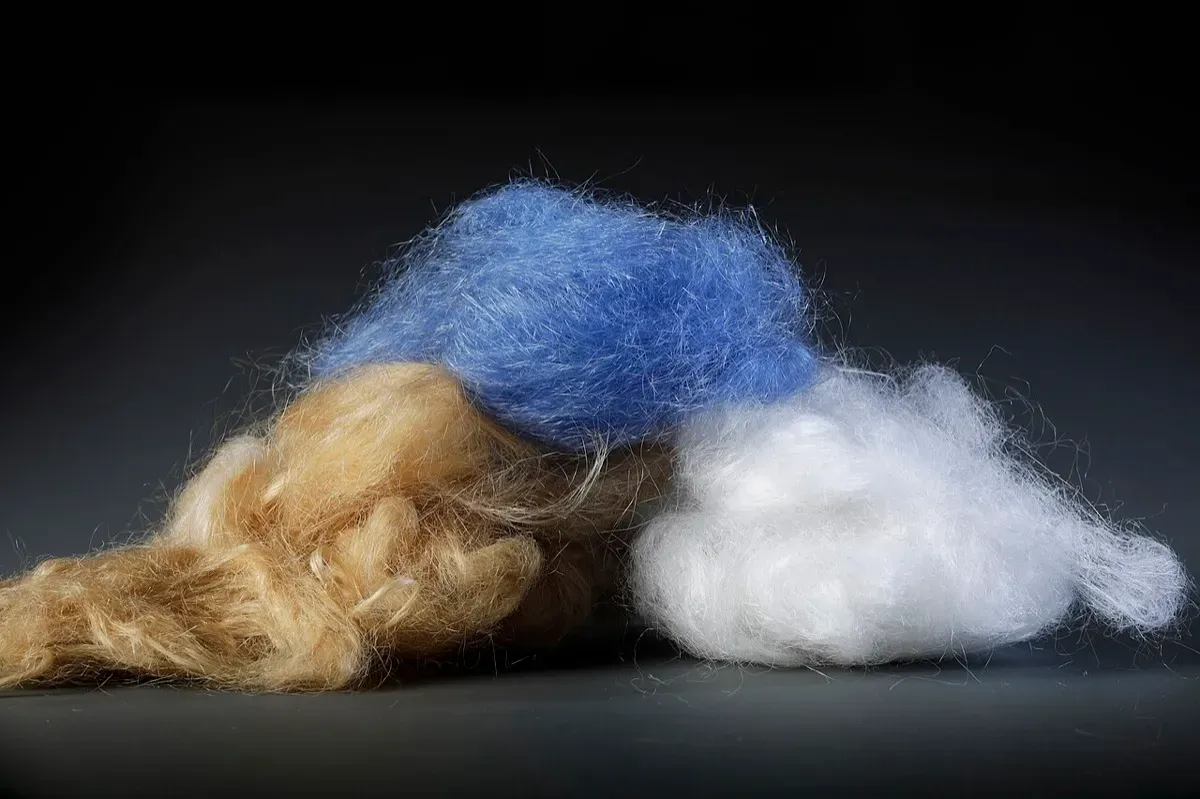
SPINNOVA fibre is a short staple fibre that can be blended with cotton, wool, lyocell or recycled fibres and processed on conventional spinning, knitting and weaving lines. Spinnova says it has the look, feel and anti-odour properties of natural cellulose fibres such as cotton, and positions it closer to wool and linen in price (Spinnova).
The raw material can be FSC-certified wood pulp or cellulose-rich waste, including leather, textile and agricultural waste. Spinnova holds FSC Chain of Custody certification for its pilot plant (licence FSC-C179138) and has signed Canopy’s forest-protection fibre procurement policy (Spinnova).
Brand partners have included JJXX, the womenswear brand of JACK & JONES, which added SPINNOVA outfits in 2026, and ECCO, which released a limited BIOM 720 shoe with a protein fibre made from leather waste through Spinnova’s Respin venture (Spinnova).
How it works
- Refining: pulp is mechanically refined into microfibrillated cellulose (MFC), a gel of very fine cellulose fibrils in water.
- Spinning: the suspension is pushed through a special nozzle at high pressure. The flow makes the fibrils rotate and line up, forming a filament.
- Drying: the fibre is simply dried, collected and cut, ready to be spun into yarn.
- Recovery: water and heat are recovered in a closed loop, and the process is designed to have no side streams.
- Recycling: in Spinnova’s own tests, SPINNOVA fibre can be run through the same process again without losing quality (Spinnova).
Spinnova says only “safe, widely used” additives are used, and that no dissolving or regeneration takes place.
Timeline
| Date | Milestone |
|---|---|
| May 2023 | Woodspin demo factory, a 50/50 joint venture with Brazil’s Suzano, opens in Jyväskylä (1,000 t/yr) |
| Feb 2025 | Strategic review of Woodspin begins |
| 10 Jun 2025 | Term sheet for Suzano’s exit agreed; Woodspin production shut down |
| 27 Aug 2025 | Spinnova agrees to buy all Woodspin and Suzano Finland shares for EUR 2 |
| Oct 2025 | Deal closes; the sites become Spinnova Refining |
| 9 Apr 2026 | Trial runs restart at the demo factory |
| 13 Aug 2026 | Spinnova announces plan for a US IPO and Nasdaq dual listing |
Impact and numbers
- Climate: 74% lower greenhouse gas emissions than the global average for conventional cotton, for eucalyptus-based fibre from raw material to factory gate (Spinnova).
- Water: up to 98% less water than average conventional cotton, mainly because eucalyptus is rain-fed while cotton is often irrigated.
- Capacity: the Woodspin demo plant has a nameplate of 1,000 tonnes a year (Just Style).
- Restart: initial trial runs were completed as planned and reached volumes and quality “comparable to the factory’s previous operating performance”; further runs and a broader ramp-up were planned for autumn 2026.
- Finances (H1 2026): revenue EUR 286,000 (EUR 100,000 a year earlier); operating result minus EUR 6.9 million; liquid funds about EUR 38.5 million; 58 permanent staff. Full-year 2025 loss was EUR 40.7 million, including an EUR 18.4 million impairment on Woodspin (Spinnova).
Honest caveats. SPINNOVA fibre is a real product, but it is not yet made at commercial scale. The only large plant stopped in 2025 after Suzano withdrew, and Spinnova bought it back for two euros plus a EUR 5 million capital contribution from Suzano (Spinnova). Ecotextile News described the 18 months before the restart as “turbulent” (Ecotextile News). Revenue is tiny compared with losses, and Spinnova gives no financial guidance for 2026. The 74% and 98% figures come from a screening LCA against average conventional cotton, not against other wood fibres such as lyocell, and they apply to eucalyptus pulp only. “Commercial demand exceeds capacity” is the company’s own view, based partly on non-binding letters of intent (with Tearfil and INSIDER). SPINNOVA fibre is usually blended, so a garment may contain only a share of it.
What’s next
Spinnova plans more test runs and a step-by-step ramp-up at Woodspin, while also optimising a smaller production concept with partners to lower future factory costs. It aims to license its technology, including in the United States, where it is weighing a Nasdaq listing. It is also developing recycled-textile feedstock, with Circulose joining its partner ecosystem in 2026, and sees interest in using agricultural residues in markets such as India.
Why it matters for Europe / green buyers
The EU’s revised Waste Framework Directive, Directive (EU) 2025/1892, requires every member state to set up extended producer responsibility (EPR) schemes for textiles and footwear by April 2028, with producers paying for collection, sorting and recycling (EUR-Lex). Brands will need fibres that use recycled or low-impact feedstock and that can themselves be recycled. A fibre made without dissolving chemistry, from wood or waste, could fit that demand if it reaches stable, affordable production. For buyers today, it is a fibre to trial in small capsules rather than a bulk supply. Brands that want to test it should ask for the LCA scope, the blend share in the final fabric, and confirmed delivery volumes from the restarted plant before committing to a full collection.
India generates about 7,793 kilotonnes of textile waste a year, about 8.5% of the global total, according to Fashion for Good (Fashion for Good). Spinnova reports rising interest in turning Indian crop residues into fibre, which could matter in a country with large volumes of stubble and agricultural waste. That remains at the discussion stage, and no Indian production partner or plant has been announced.
Sources & image credits
- Spinnova, “Fibre production technology”: https://spinnova.com/technology/
- Spinnova, “Sustainability”: https://spinnova.com/sustainability/
- Spinnova Plc, “Binding agreements signed: Spinnova buys all Woodspin and Suzano Finland shares” (27 Aug 2025): https://spinnovagroup.com/releases/binding-agreements-signed-spinnova-buys-all-woodspin-and-suzano-finland-shares-and-secures-exclusivity-rights-on-wood-based-fibre/
- Spinnova Plc, “Spinnova begins trial runs at Woodspin demo factory” (9 Apr 2026): https://spinnovagroup.com/releases/spinnova-begins-trial-runs-at-woodspin-demo-factory-and-prepares-to-restart-production/
- Spinnova Plc, Half-Year Report January to June 2026 (31 Aug 2026): https://spinnovagroup.com/releases/spinnova-plcs-half-year-report-january-june-2026-spinnova-progressed-the-test-runs-at-the-woodspin-demonstration-plant-while-continuing-to-develop-an-ecosystem-of-partners-across-the-textile/
- Just Style, “Spinnova prepares to restart Woodspin demo factory production” (14 Apr 2026): https://www.just-style.com/news/spinnova-woodspin-demo-factory/
- Ecotextile News, “Spinnova restarts trials at demo factory” (9 Apr 2026): https://www.ecotextile.com/2026040962363/news/materials-production-news/spinnova-restarts-trials-at-demo-factory/
- EUR-Lex, Directive (EU) 2025/1892 amending the Waste Framework Directive: https://eur-lex.europa.eu/eli/dir/2025/1892/oj/eng
- Fashion for Good, “Wealth in Waste” (India textile waste): https://www.fashionforgood.com/report/wealth-in-waste/
Images:
- “Spinnova fibre” by Spinnova, 2020, licensed under CC BY-SA 4.0 (https://creativecommons.org/licenses/by-sa/4.0), via Wikimedia Commons: https://commons.wikimedia.org/wiki/File:Spinnova_fibre.jpg