The problem
On windy, sunny days, European grids increasingly have more renewable power than they can use, and operators pay wind and solar farms to switch off. Industry analysts at Aurora estimated that Europe curtailed around 72 TWh of renewable electricity in 2024, and the European Commission’s Joint Research Centre has projected that up to 310 TWh could be curtailed by 2040 without more flexibility. At the other end, winter “dunkelflaute” spells of low wind and weak sun can last several days.
Lithium-ion batteries are excellent for daily cycling over two to four hours, but their cost per stored kilowatt-hour stays high for long durations, and they rely on metals that Europe imports and lists as critical raw materials. Ofgem in Great Britain defines long-duration storage as eight hours or more; multi-day storage, covering 24 to 100 hours, is a further step that few technologies can reach cheaply.
The product
Ore Energy’s battery is an iron-air system packaged in modules for utility and industrial sites. According to the company, it can store electricity for up to four days and discharge it over 24 to more than 100 hours, using some of the most abundant materials on Earth (Ore Energy).
The first system was connected to the grid at The Green Village, an innovation testing ground on the TU Delft campus, in July 2025. Trade press reported it as the first grid-connected iron-air battery in Europe (ESS News; Tech.eu). A second system ran at EDF Lab Les Renardières in Écuelles, France, from August to November 2025, under the EU-funded StoRIES programme, and cycled for up to 100 hours (Ore Energy, February 2026).
The first commercial customer is Budget Thuis, a Dutch energy supplier in the Nuts Groep with over a million customers. Their June 2026 agreement covers up to 1 GWh of storage, with a first committed phase of 400 MWh in 2028 (ESS News, 24 June 2026).
How it works
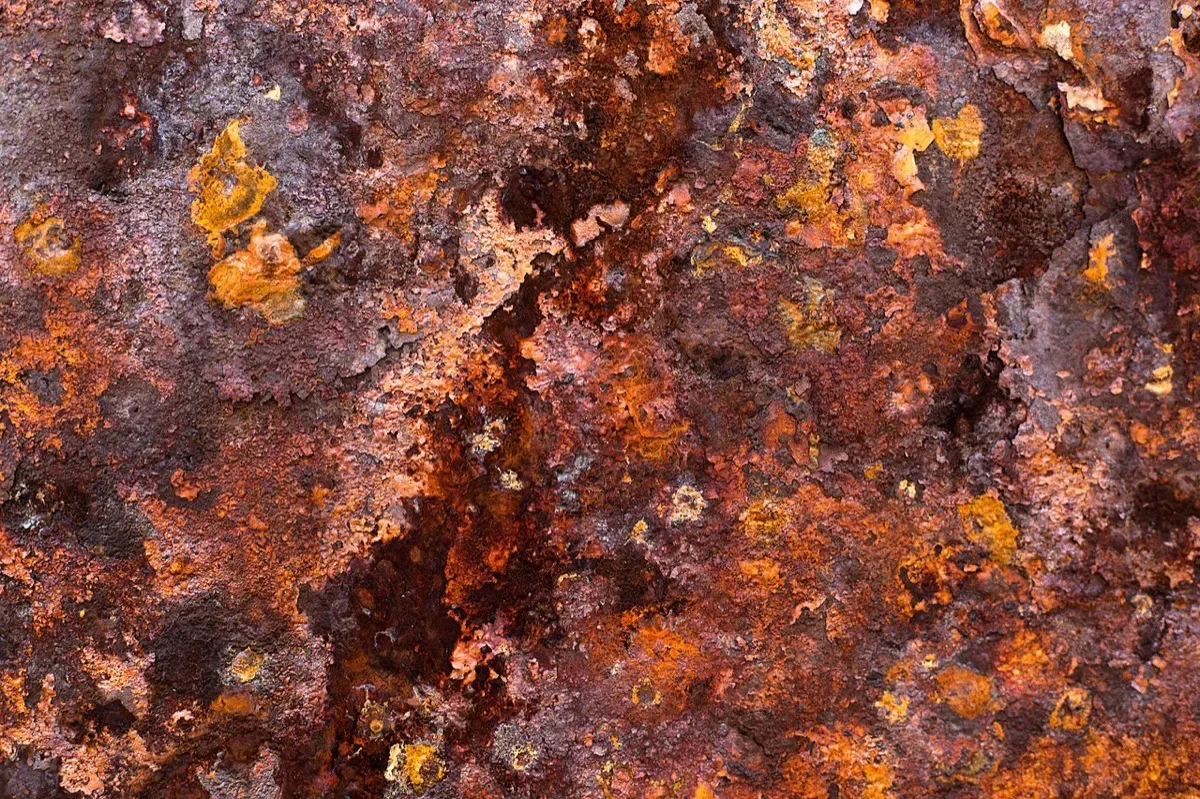
An iron-air battery uses reversible rusting:
- Charging: electricity converts iron oxide (rust) at the negative electrode back into metallic iron, releasing oxygen.
- Storing: the metallic iron holds the energy chemically, inside a water-based electrolyte that cannot burn.
- Discharging: the battery breathes in oxygen from the air at the positive electrode. Iron oxidises back into rust, and the reaction releases electrons that flow as electricity.
- Scaling: because iron is cheap and the cells are relatively slow, the design favours long discharge times at low cost per kilowatt-hour rather than high power.
Timeline
| Date | Milestone |
|---|---|
| 2022 to 2023 | Ore Energy founded as a TU Delft spin-out |
| Jul 2025 | First grid-connected iron-air battery in Europe at The Green Village, Delft |
| Aug to Nov 2025 | 100-hour pilot at EDF Lab Les Renardières, France, under EU StoRIES |
| Feb 2026 | Ore Energy announces completion of the EDF pilot |
| Jun 2026 | 1 GWh framework agreement with Budget Thuis, first 400 MWh phase for 2028 |
| Aug 2026 | US$43 million Series A led by Plural and HV Capital |
| 2028 | Target for first gigawatt-hour scale deliveries from Ore’s first factory |
Impact and numbers
- Duration: 24 to over 100 hours of discharge, against about 2 to 4 hours for most lithium-ion grid batteries.
- Proven runtime: 100-hour cycles demonstrated at EDF R&D in France (Ore Energy).
- Order book: up to 1 GWh with Budget Thuis, 400 MWh of it committed (Energy-Storage.news).
- Funding: US$43 million Series A, taking total funding to US$61 million, to build the company’s first manufacturing plant (Energy-Storage.news, August 2026).
- Materials: no lithium, cobalt or nickel, which reduces exposure to EU critical raw material supply risks.
Honest caveats. Iron-air is not yet proven at commercial scale in Europe. Ore’s pilots are small compared with the 400 MWh first phase it has promised, and scaling cell manufacturing is where many battery start-ups have stumbled. Round-trip efficiency is much lower than lithium-ion, so roughly half or less of the electricity put in may come back out in many iron-air designs; the case only works if charging power is very cheap or otherwise curtailed. The US company Form Energy is further ahead with the same chemistry and has larger utility deals, so Ore faces strong competition. Cost targets of under US$20 per kWh discussed by both companies are aspirations, not delivered prices. The curtailment figures quoted above are estimates from analysts and the JRC, not measured EU totals.
What’s next
With its Series A, Ore Energy plans to build its first factory and to move from pilot systems to the first phase of the Budget Thuis project in 2028. Its stated goal is gigawatt-hour scale production by 2028, which would make it one of the first multi-day storage makers manufacturing in Europe. Policy will matter: the Netherlands has severe grid congestion, and multi-day storage could ease it by soaking up local surplus power, if network tariffs and market rules reward that service.
Why it matters for Europe / green buyers
For Europe, iron-air storage is attractive because almost everything in it can be sourced locally: iron, water, air and steel enclosures. It turns wasted wind and solar into firm supply for a cold, still week, which today usually comes from gas. Energy suppliers like Budget Thuis can also use it to hedge against price spikes. Utilities and large industrial users should treat Ore as an early-stage supplier: suitable for pilots and staged contracts with clear performance guarantees, rather than for critical capacity on day one.
India’s grid will face similar multi-day challenges as solar dominates, especially during the monsoon, when solar output can fall for days. Low-cost chemistries without lithium imports fit India’s goals for self-reliance, and iron-air could complement pumped storage there.
Sources & image credits
- Ore Energy, “Ore Energy connects its first grid-connected iron-air battery”, July 2025: https://www.oreenergy.com/news/ore-energy-connects-its-first-grid-connected-iron-air-battery
- Ore Energy, “Ore Energy completes EU-funded multi-day iron-air energy storage pilot at EDF R&D”, 10 February 2026: https://www.oreenergy.com/news/ore-energy-completes-eu-funded-multi-day-iron-air-energy-storage-pilot-at-edf-r-d
- ESS News, “Ore Energy brings first grid-connected iron-air battery online in the Netherlands”, 30 July 2025: https://www.ess-news.com/2025/07/30/ore-energy-brings-first-grid-connected-iron-air-battery-online-in-the-netherlands/
- Tech.eu, “Ore Energy connects world’s first grid-connected iron-air battery in Delft”, 30 July 2025: https://tech.eu/2025/07/30/ore-energy-connects-worlds-first-grid-connected-iron-air-battery-in-delft/
- ESS News, “Ore Energy, Budget Thuis announce 1 GWh iron-air storage deal”, 24 June 2026: https://www.ess-news.com/2026/06/24/ore-energy-budget-thuis-announce-1-gwh-iron-air-storage-deal/
- Energy-Storage.news, “Multi-day energy storage startup Ore Energy signs 1GWh iron-air battery deal with Dutch utility”, June 2026: https://www.energy-storage.news/multi-day-energy-storage-startup-ore-energy-signs-1gwh-iron-air-battery-deal-with-dutch-utility/
- Energy-Storage.news, “European multi-day energy storage startup Ore Energy raises US$43 million in Series A”, August 2026: https://www.energy-storage.news/european-multi-day-energy-storage-startup-ore-energy-raises-us43-million-in-series-a/
- Ofgem, “Ofgem boosts long-duration storage to secure more homegrown energy for customers”, 26 June 2026: https://www.ofgem.gov.uk/press-release/ofgem-boosts-long-duration-storage-secure-more-homegrown-energy-customers
Images:
- “Rust on iron” by Laitr Keiows, licensed CC BY-SA 3.0 (https://creativecommons.org/licenses/by-sa/3.0), via Wikimedia Commons: https://commons.wikimedia.org/wiki/File:Rust_on_iron.jpg