The problem
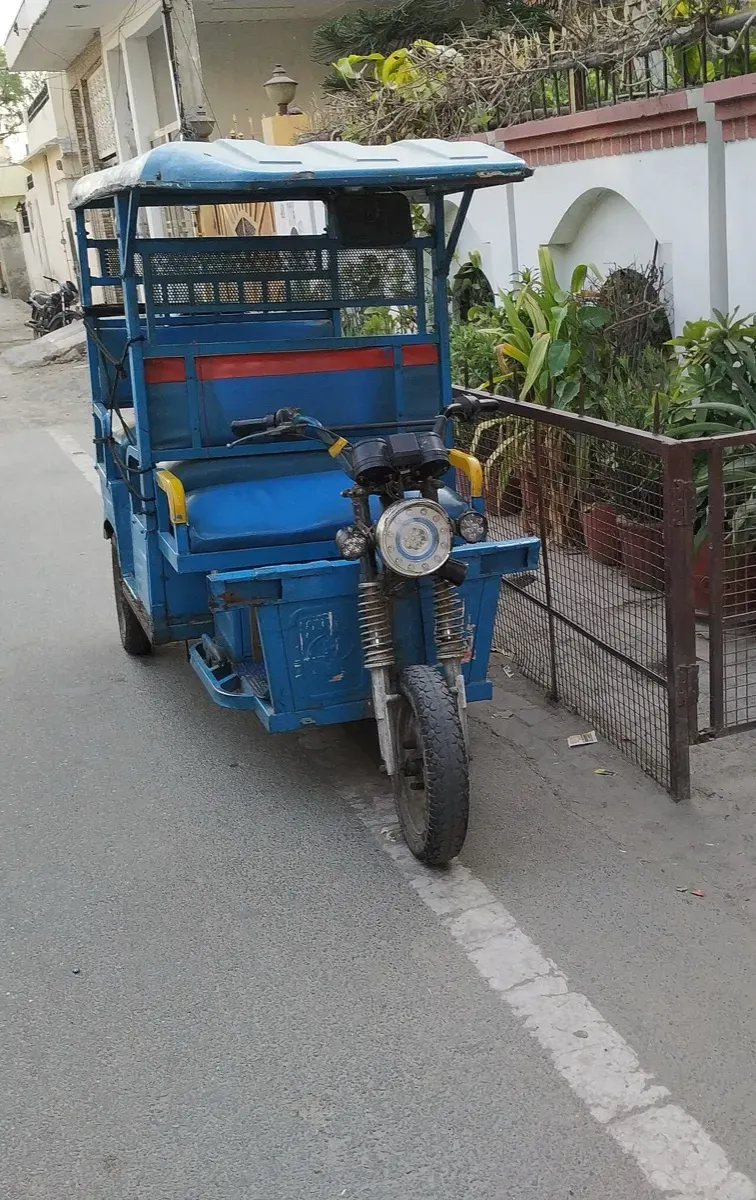
India overtook China in 2023 as the world’s largest market for electric three-wheelers, and its sales grew close to 20% in 2024 to reach nearly 700,000 vehicles, according to the IEA (IEA, Global EV Outlook 2025). The government has set a goal for 80% of three-wheelers to be electric by 2030. But for commercial drivers, charging time is lost income. Slow overnight charging works for some, but many drivers rent a vehicle in shifts or run long daily distances.
Battery swapping is one answer, but it requires a pool of spare batteries, standard pack designs and a dense network of swap stations. Conventional fast charging is another, but pushing current into cells quickly generates heat that shortens battery life, so most fast chargers for small vehicles charge relatively slowly.
The product
Exponent’s approach is to treat the battery and the charger as a single product. The e^pack is a cell-agnostic LFP pack with its own battery management system, which the company says measures cell voltage ten times more accurately than typical systems (Exponent Energy). The e^pump is the charging station, and the e^plug is a 600-amp connector between them.
The key design choice is to keep the cooling equipment off the vehicle. Exponent says charging in 15 minutes produces 256 times more heat than a four-hour charge. Instead of fitting each vehicle with a heavy cooling system, the e^pump pumps chilled water through the e^plug and around the cells during charging. The pack still works with any standard DC charger, where a full charge takes about an hour, or with a home charger.
Exponent sells through vehicle makers. Early partners included Altigreen and Montra in 2022 (TechCrunch). In April 2024, Omega Seiki launched the Stream City Qik passenger three-wheeler with an 8.8 kWh Exponent pack at ₹3,24,999. By December 2025, five vehicle models were available, and the company had begun retrofitting existing CNG and LPG autos through Exponent Oto, completing a conversion in about 24 hours (eMobility+).
How it works
- Plug in: the driver connects the e^plug, which carries both high current and cooling water.
- Cell-level monitoring: the BMS tracks each cell’s voltage and temperature so that charging current can stay high without pushing any cell out of its safe window.
- Chilled charging: the e^pump pumps refrigerated water through the pack, removing heat as current flows in, so the cells stay cool even at 15-minute rates.
- Drive away: the pack does not carry the cooling hardware, so the vehicle stays light and the station does the heavy lifting.
- Scale up: the same principle extends to larger packs; Exponent describes bus charging at up to 1.5 MW.
Timeline
| Date | Milestone |
|---|---|
| 2020 | Exponent Energy founded in Bengaluru |
| 2022 | First vehicle maker partnerships with Altigreen and Montra |
| Apr 2024 | Passenger three-wheeler launch with Omega Seiki; 60 stations in six cities |
| Dec 2025 | First retail EV store opens in Laggere, Bengaluru; more than 150 stations |
| Feb 2026 | Exponent One financing arm launched to provide loans to drivers |
| Jun 2026 | ₹200 crore (about US$21 million) raised from 360 ONE Asset and TDK Ventures |
Impact and numbers
- Network: more than 150 e^pump stations, over 70 of them in Bengaluru, and more than 2,500 vehicles on the road by December 2025 (eMobility+).
- Usage: more than 1 million charging sessions and about 50 million kilometres driven.
- Station economics: in 2024 Exponent said a station cost about ₹5 lakh and could charge 20 to 30 vehicles a day (TechCrunch).
- Funding: ₹200 crore in June 2026, co-led by 360 ONE Asset and TDK Ventures with Hitachi Ventures, taking total funding to about US$65.7 million (Economic Times; Inc42).
- Finance: the Exponent One subsidiary offers loans to drivers buying Exponent-powered autos, tackling one of the main barriers to adoption (Mint).
Honest caveats. This is mobile energy storage, not grid storage: the climate benefit depends on India’s electricity mix, which is still dominated by coal, although an electric auto typically emits less over its life than a CNG or petrol one. Exponent missed its own 2024 targets of 1,000 stations and 25,000 vehicles by 2025, reaching about 150 stations and 2,500 vehicles. Rapid charging at high current puts more strain on local grid connections than slow charging. The 3,000-cycle warranty and heat claims are the company’s own, and long-term field data on battery life under daily rapid charging are not yet public. A co-founder moved to an advisory role in May 2026.
What’s next
The new funding is aimed at research and development, at expanding the charging network beyond Bengaluru, and at retail, retrofits and financing. Exponent is also working with heavier commercial vehicles and buses, where its larger packs and megawatt-scale charging could compete with battery swapping and depot charging. The Laggere store in Bengaluru sells vehicles directly to drivers, with loans from Exponent One, a sign that the company wants to own more of the customer relationship instead of relying only on vehicle makers and on early fleet customers such as Magenta and Fyn. Retrofits through Exponent Oto add a second route: converting the large existing fleet of CNG and LPG autos rather than waiting for drivers to buy new vehicles.
Why it matters for Europe / green buyers
Europe has few auto-rickshaws, but it does have a fast-growing market for electric vans, last-mile delivery vehicles and city buses, where downtime is just as costly. Exponent’s model of putting the expensive cooling and power electronics in the station rather than in every vehicle is an interesting alternative to bigger batteries or swapping, and its cell-agnostic packs can use LFP cells from multiple suppliers. European fleet operators should watch whether the approach scales to heavier vehicles and whether field data back up the cycle life claims.
For India, Exponent is a home-grown answer to a national priority. Electric three-wheelers move millions of people and goods every day, and a 15-minute charge removes one of the biggest reasons drivers still choose CNG.
Sources & image credits
- Exponent Energy, “Product” (e^pack, e^pump and e^plug): https://www.exponent.energy/product
- TechCrunch, “India’s Exponent Energy brings 15-minute rapid charging to passenger three-wheelers”, 12 April 2024: https://techcrunch.com/2024/04/12/india-exponent-energy-brings-15-minute-rapid-charging-to-passenger-three-wheelers/
- eMobility+, “Exponent Energy enters EV retail market, opens first three-wheeler EV store in Bengaluru”, 1 December 2025: https://emobilityplus.com/2025/12/01/exponent-energy-enters-ev-retail-market-opens-first-three-wheeler-ev-store-in-bengaluru/
- The Economic Times, “Exponent Energy secures Rs 200 crore funding from 360 ONE Asset, TDK Ventures”, June 2026: https://economictimes.indiatimes.com/tech/funding/exponent-energy-secures-rs-200-crore-funding-from-360-one-asset-tdk-ventures/articleshow/131614315.cms
- Inc42, “EV charging startup Exponent Energy nets ₹200 Cr to accelerate R&D”, June 2026: https://inc42.com/buzz/ev-charging-startup-exponent-energy-nets-%E2%82%B9200-cr-to-accelerate-rd/
- Mint, “Exponent Energy launches Exponent One, an EV finance subsidiary”, February 2026: https://www.livemint.com/companies/exponent-energy-exponent-one-ev-finance-subsidiary-battery-autorickshaw-loans-ev-adoption-india-11771217024436.html
- Altigreen, “neEV TEZ electric three-wheeler”: https://altigreen.com/vehicle/cargo/electric-3-wheeler/tez
- International Energy Agency, “Global EV Outlook 2025: Trends in other light-duty electric vehicles”, 14 May 2025: https://www.iea.org/reports/global-ev-outlook-2025/trends-in-other-light-duty-electric-vehicles
Images:
- “Electric rickshaw in Meerut, Uttar Pradesh, India” by Libreravi, licensed CC BY-SA 4.0 (https://creativecommons.org/licenses/by-sa/4.0), via Wikimedia Commons: https://commons.wikimedia.org/wiki/File:Electric_rickshaw_in_Meerut,_Uttar_Pradesh,_India.jpg