The problem
Returning people to the Moon, and eventually building lasting bases there, needs a lot of groundwork. Engineers must understand how lunar dust sticks to equipment, how engine plumes blast the surface during landing, how electronics survive radiation and how to navigate without a lunar GPS.
Government missions alone cannot test all of this quickly or cheaply. NASA’s Commercial Lunar Payload Services (CLPS) programme instead buys rides to the Moon from companies. But early commercial attempts have often failed, and soft, upright landings remain hard.
The product
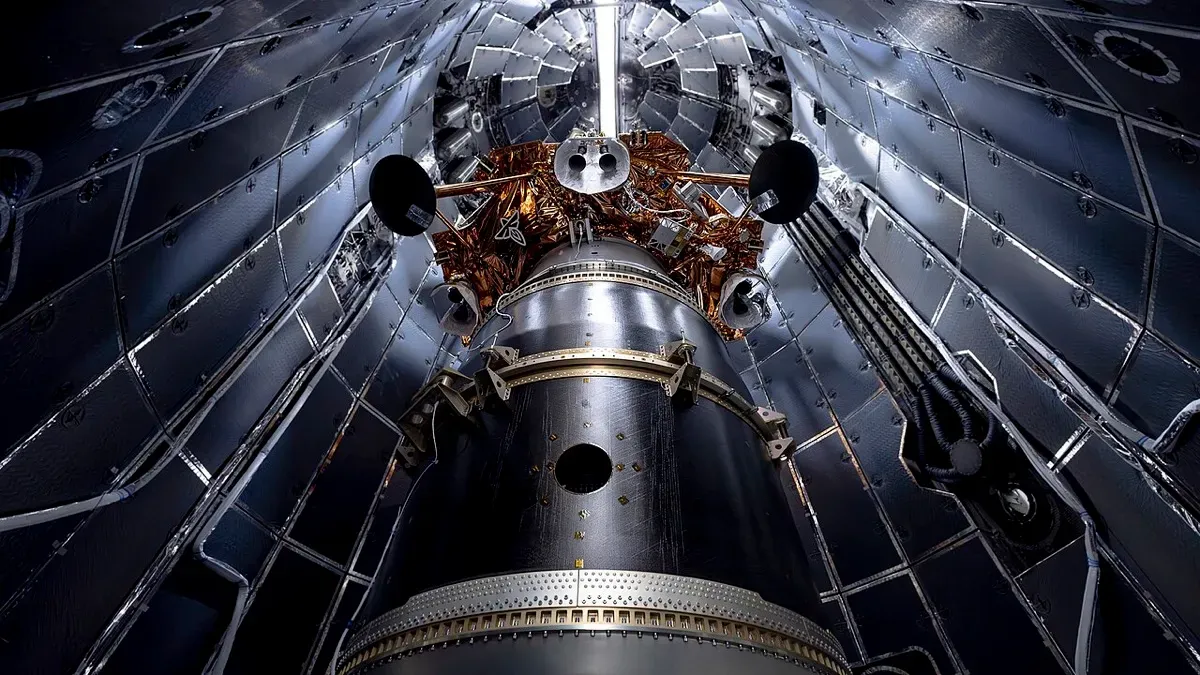
Blue Ghost is Firefly’s robotic lunar lander. On Mission 1, launched on a SpaceX Falcon 9 in January 2025, it carried ten NASA science and technology payloads to Mare Crisium on the Moon’s near side. NASA said it was more payloads than had ever flown on a CLPS delivery before.
Firefly says the 2 March landing was the first fully successful commercial Moon landing. Blue Ghost then completed more than 14 days of surface operations, 346 hours of daylight, and kept working for just over five hours into the lunar night before its final data arrived on 16 March. Firefly called it the longest commercial operation on the Moon to date. Firefly later said vision navigation software from Space-ng, a company it has since acquired, performed autonomous hazard avoidance in the final hour before touchdown.
The next version stacks Blue Ghost on Elytra, an orbital vehicle that can deploy satellites and relay communications from lunar orbit.
How it works
- Launch. Blue Ghost rides a commercial rocket and spends weeks in transit.
- Orbit. It enters lunar orbit and lines up with its landing site.
- Land. Autonomous navigation avoids hazards during the final descent.
- Deploy. Instruments drill, sample, sense and track signals.
- Relay. Data is sent back to Earth throughout the lunar day.
- Shut down. Operations end as the cold lunar night sets in.
Timeline
| Date | Milestone |
|---|---|
| 15 Jan 2025 | Blue Ghost Mission 1 launches from Kennedy Space Center |
| 2 Mar 2025 | Lands in Mare Crisium |
| 14 Mar 2025 | Images a total eclipse from the lunar surface |
| 16 Mar 2025 | Final data received after 14 days of operations |
| 29 Apr 2025 | Alpha FLTA006 launch failure |
| 2025 | Alpha first stage lost in a ground test; cause traced to contamination |
| Q2 2026 | Record $117.7 million quarterly revenue; two more NASA lunar missions won |
| 2027 | Blue Ghost Mission 2 to the far side, no earlier than 2027 |
Impact and numbers
Several Mission 1 payloads did things no instrument had done before. LuGRE, mounted on Blue Ghost’s antenna gimbal, tracked signals from GPS and Europe’s Galileo constellation in transit and on the surface. NASA said it was the first navigation solution achieved using such signals in lunar orbit and on the Moon. LISTER, a gas-powered drill, reached about three feet down to measure heat flow, making it the deepest robotic planetary subsurface thermal probe. The Electrodynamic Dust Shield lifted and removed lunar regolith from glass and radiator surfaces, a promising fix for one of the Moon’s most damaging hazards.
RadPC, a computer designed to withstand radiation, kept working through Earth’s Van Allen belts and on the surface into the lunar night. The Lunar PlanetVac collected and sorted regolith using pressurised nitrogen gas, a low cost and low mass approach to future robotic sampling.
Other payloads measured the Moon’s interior to depths of up to 700 miles, recorded how the lander’s engine plume disturbed the surface and reflected laser pulses from Earth observatories. On 14 March, Blue Ghost photographed a total eclipse as Earth passed in front of the Sun.
Commercially, Firefly reported second quarter 2026 revenue of $117.7 million, its first quarter above $100 million, and a record $1.5 billion backlog. It says it is executing five lunar missions in parallel, including a mission to the Gruithuisen Domes and an accelerated Blue Ghost landing.
Honest caveats
Loss-making. Firefly reported a GAAP net loss of $92.3 million in the second quarter of 2026.
National security work. Firefly’s earnings call highlights AI software used in national security operations, a hypersonic task order and an Alpha launch agreement with Lockheed Martin. This story covers only its civil lunar lander.
Rocket setbacks. Firefly’s Alpha rocket failed on 29 April 2025 while carrying a Lockheed Martin satellite demonstrator: the first stage ruptured just after separation and the second stage ended up three seconds short of orbital velocity. Firefly traced the most probable cause to excessive heating from plume induced flow separation. Separately, SpaceNews reported that an Alpha first stage was lost in a later ground test because of contamination in a fluid line. Blue Ghost Mission 1 launched on a SpaceX rocket, not Alpha.
Schedules slip. Firefly says Mission 2 will launch no earlier than 2027, and lunar landings depend on monthly one-week windows, so a single delay can cost weeks.
Climate relevance is indirect. Lunar landers do not reduce emissions. Their value lies in science, technology and skills, such as dust-resistant materials and radiation-tolerant computing.
What’s next
Blue Ghost Mission 2, “Riders 2 the Dark”, will stack Blue Ghost on Elytra. In lunar orbit, Elytra will release the lander and the European Space Agency’s Lunar Pathfinder communications satellite. Blue Ghost will then attempt the first US landing on the Moon’s far side, carrying NASA’s LuSEE-Night radio telescope and payloads from the UK, UAE, Australia and Canada.
Why it matters for Europe and green buyers
For Europe, Blue Ghost has already proven that Galileo signals can help navigate at the Moon, and its next mission will carry ESA’s Lunar Pathfinder, a relay satellite for future European and international lunar missions. Commercial landers give ESA and European scientists affordable rides to the surface, and European instruments can fly on American landers without waiting for a dedicated European mission. The dust shield and radiation tolerant computer results are also useful to European firms designing lunar hardware.
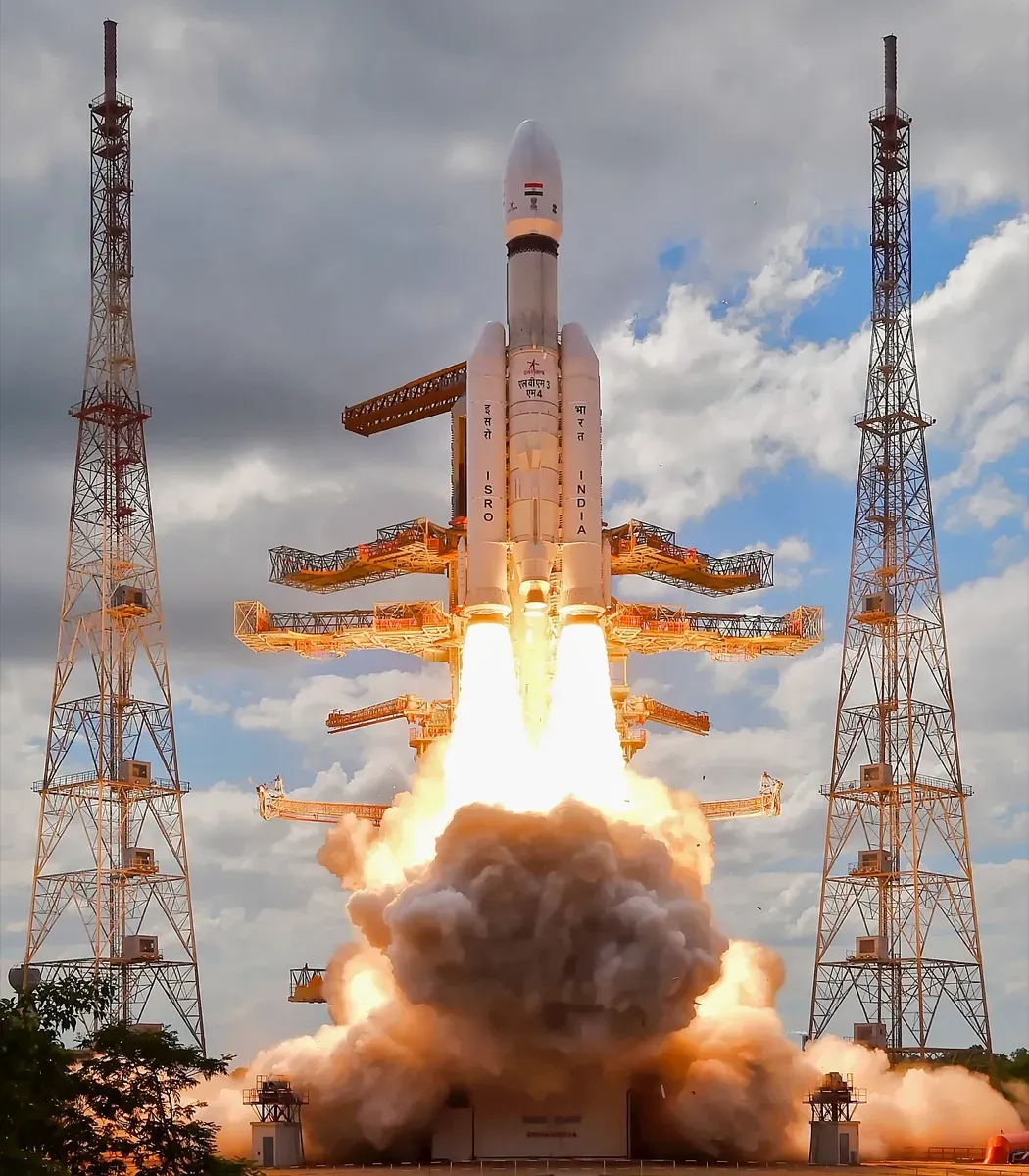
For India, which landed Chandrayaan-3 near the lunar south pole, commercial landers like Blue Ghost offer potential partners for future instruments and shared data. For the world, cheaper and more frequent access to the Moon speeds up science on dust, radiation and navigation that will matter for any lasting human presence.
Sources & image credits
- Firefly Aerospace, “Firefly Aerospace Successfully Completes 14 Days of Surface Operations on the Moon”, Mar 2025. https://fireflyspace.com/news/firefly-aerospace-successfully-completes-14-days-of-surface-operations-on-the-moon/
- NASA, “NASA Science Continues After Firefly’s First Moon Mission Concludes”, Mar 2025. https://www.nasa.gov/news-release/nasa-science-continues-after-fireflys-first-moon-mission-concludes/
- NASA, “NASA Science Data Received, Blue Ghost Captures Eclipse From Moon”, 14 Mar 2025. https://www.nasa.gov/blogs/missions/2025/03/14/nasa-science-data-received-blue-ghost-captures-eclipse-from-moon/
- Firefly Aerospace, “Blue Ghost + Elytra: Lunar Far Side”. https://fireflyspace.com/missions/blue-ghost-mission-2/
- Alpha Spread, “Firefly Aerospace (FLY) Q2 2026 earnings call”, 11 Aug 2026. https://www.alphaspread.com/security/nasdaq/fly/investor-relations/earnings-call/q2-2026
- SpaceNews, “Firefly identifies cause of Alpha booster test failure”, 2025. https://spacenews.com/firefly-identifies-cause-of-alpha-booster-test-failure/
- Firefly Aerospace, “Alpha FLTA006” mission page. https://fireflyspace.com/missions/alpha-flta006/
- Wikimedia Commons, “Blue Ghost M1 in fairing”. https://commons.wikimedia.org/wiki/File:Blue_Ghost_M1_in_fairing.jpg
Images: “Blue Ghost M1 in fairing”, SpaceX, 12 Jan 2025, CC0, via Wikimedia Commons. Shows the flight lander.