
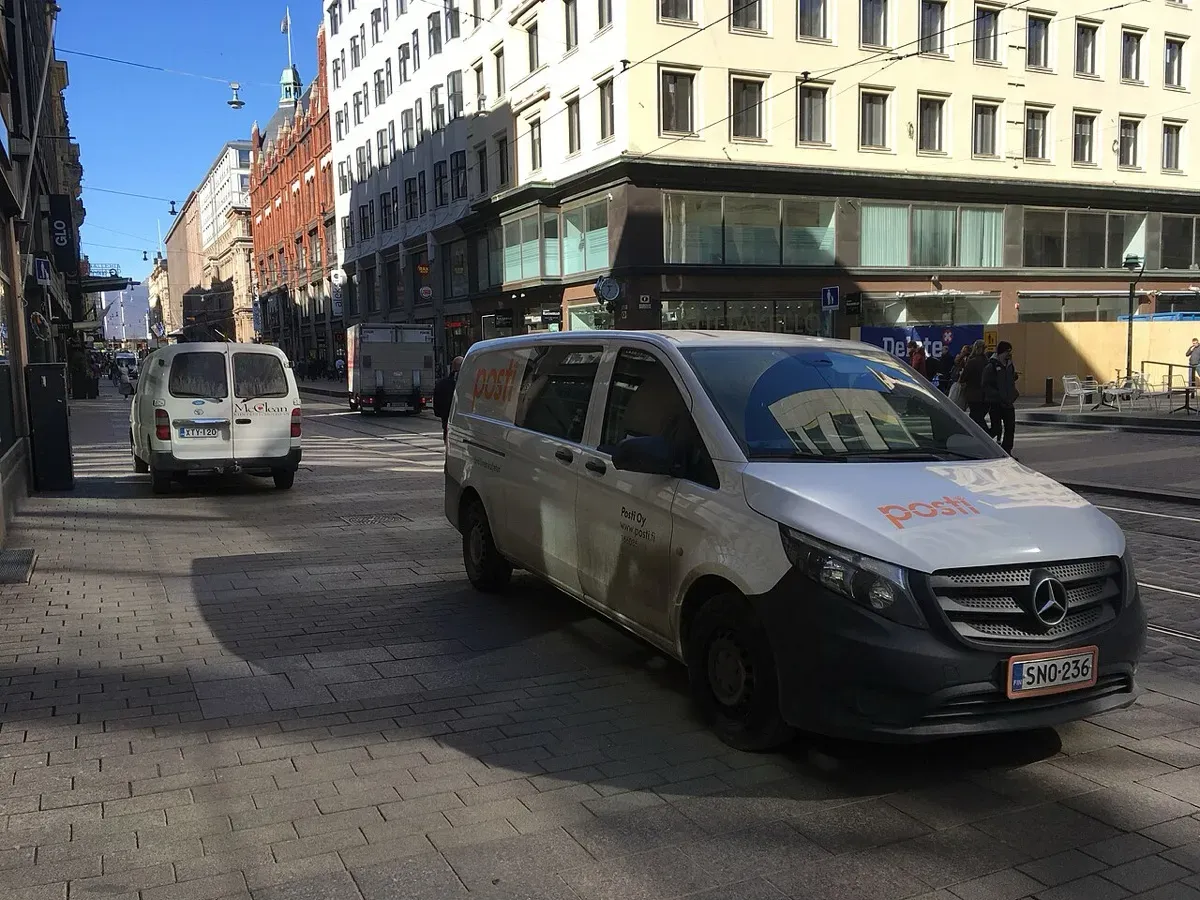
The problem
Online shopping, quick commerce and home delivery have put millions more vans and motorbikes on city streets. Each failed delivery means a second trip; each poorly planned route means extra kilometres; each customer who does not know when a parcel will come is a phone call to a support centre. Retailers, food chains and manufacturers increasingly run their own deliveries or juggle many carriers, and they need software to coordinate them.
The environmental side is direct. A van that drives fewer kilometres, makes fewer repeat visits and uses electric vehicles or cargo bikes where possible emits less CO2 and less local air pollution.
The product
The FarEye Delivery Management Platform is software as a service for enterprises that move goods from the first mile to the last (FarEye). It brings together:
- orchestration, managing orders and assigning them to in-house fleets or carriers;
- route optimisation, planning stops for each vehicle;
- real-time visibility, tracking every delivery;
- carrier allocation, choosing the right delivery partner for each shipment;
- branded customer tracking, telling recipients when to expect their delivery;
- sustainability tools, added in February 2022: green vehicle route planning that mixes in cargo bikes, bikes and foot couriers, long-haul truck routing to reduce idling, and a dashboard measuring carbon by mode, route and carrier, down to the package level (FarEye).
By 2021 FarEye said more than two million vehicles and over 25,000 drivers were on the platform, processing more than 100 million transactions a month for customers such as Walmart, UPS, DHL eCommerce, Domino’s, Posti and Amway (TechCrunch).
How it works
- Ingest: orders arrive from the customer’s e-commerce, ERP or order systems.
- Allocate: the platform decides whether each order goes to the company’s own fleet or to one of 260+ connected carriers, covering courier, parcel, same-day, next-day and big-and-bulky services.
- Plan: route optimisation builds daily routes, using electric vehicles, bikes or foot couriers where they fit.
- Track: drivers use a mobile app, and every delivery is tracked in real time.
- Inform: recipients get branded tracking with accurate time windows and, for some customers, photos.
- Measure: dashboards report on-time performance, cost and carbon emissions per route and carrier.
Timeline
| Date | Milestone |
|---|---|
| 2013 | FarEye founded in Noida with 35 employees and 10 customers |
| 25 May 2021 | USD 100 million Series E led by TCV and Dragoneer, total raise about USD 153 million |
| 23 Feb 2022 | Green vehicle routing and sustainability dashboard launched |
| 4 Apr 2025 | Interflora UK partnership announced |
| 11 Dec 2025 | FY25 results: revenue Rs 197.5 crore, EBITDA 57% better |
| 26 Jun 2026 | More than 1 billion shipments handled in the last fiscal year |
Impact and numbers
- Revenue: FarEye’s revenue rose 25.9% to Rs 197.5 crore in the year to March 2025, from Rs 157 crore, and EBITDA improved by 57% (The Economic Times).
- Customers: it added 13 new customers in FY25, raised average revenue per customer by 15.4% and reports an NPS of 71. More than a dozen Fortune Global 500 companies use it, including what FarEye calls the world’s largest retailer and largest container shipping operator, and revenue is split roughly evenly between the Americas, EMEA and Asia-Pacific (FarEye).
- Volume: the platform handled more than 1 billion shipments in the last fiscal year, around 60% from enterprises with revenue above USD 1 billion, and FarEye aims to serve more than 5,000 enterprises within five years (PTI via Rediff).
- Carbon: FarEye said customers using its platform collectively reduced their carbon footprint by 40,961 tonnes in 2021.
- Europe: Interflora UK, with a network of more than 900 florist members, adopted FarEye to give customers real-time visibility and photos of deliveries and to cut order execution time, fuel use and emissions (FarEye).
Honest caveats. FarEye’s figures are company-reported, and the 40,961 tonnes of CO2 reduced in 2021 is not explained in detail, so it is unclear what baseline was used. The platform makes deliveries more efficient but cannot by itself make them zero-emission: that depends on customers switching to electric vans and bikes. FarEye was still loss-making after tax in FY25 and only expected positive PAT in FY26, according to its own release. It has raised more than USD 150 million from venture investors, including Honeywell, and has not yet listed, so detailed accounts are limited. Its “world’s largest retailer” and other unnamed customers cannot be checked from public sources. Faster, more convenient home delivery can also encourage more deliveries overall, which may offset some of the efficiency gains.
What’s next
FarEye is positioning itself as an AI-powered delivery management platform, has been recognised in 11 Gartner Market Guides, including for multicarrier parcel management, and expects to turn a profit after tax in FY26. Its growth is driven by large enterprises expanding the platform across more countries and business units.
Why it matters for Europe / green buyers
The EU’s CountEmissionsEU rules, which entered into force on 1 June 2026, set a common method aligned with EN ISO 14083:2023 for calculating transport emissions, including door-to-door delivery chains, so that published figures are consistent and verifiable (European Commission). For European retailers and parcel operators, last-mile software that measures carbon per route and per parcel, and plans cargo bike and electric van use, is a practical tool for both reporting and cutting emissions.
FarEye is an Indian success story in software exports, grown from 35 staff and 10 customers in 2013 to a global company, and it still serves Indian brands such as the furniture retailer Pepperfry, where big-and-bulky deliveries are especially hard to plan. India itself needs better last-mile logistics. The National Logistics Policy, launched in September 2022, aims to bring logistics costs down from about 13% of GDP to a single-digit share (PIB). Indian e-commerce and retail firms that use route optimisation and carrier allocation can cut both cost and emissions in some of the world’s most congested cities.
Sources & image credits
- FarEye, “About us”: https://fareye.com/about
- TechCrunch, “Indian logistics SaaS startup FarEye raises $100 million” (25 May 2021): https://techcrunch.com/2021/05/25/indian-logistics-saas-startup-fareye-raises-100-million/
- FarEye, “FarEye introduces new sustainability capabilities to minimize CO2 emissions” (23 Feb 2022): https://fareye.com/au/en/news/fareye-introduces-new-sustainability-capabilities-to-minimize-co2-emissions
- FarEye, “Interflora partners with FarEye to revolutionize the customer delivery experience” (4 Apr 2025): https://fareye.com/news/interflora-partners-with-fareye-to-revolutionize-the-customer-delivery-experience
- FarEye, “FarEye delivers 25.9% revenue growth and 57% improvement in EBITDA as global enterprises double-down on last mile” (12 Dec 2025): https://fareye.com/au/en/news/fareye-delivers-25-9-revenue-growth-and-57-improvement-in-ebitda-as-global-enterprises-double-down-on-last-mile
- The Economic Times, “FarEye revenue grows 26% to Rs 197.5 crore in FY25” (11 Dec 2025): https://economictimes.indiatimes.com/tech/technology/fareye-revenue-grows-26-to-rs-197-5-crore-in-fy25/articleshow/125915355.cms
- PTI via Rediff Money, “FarEye handles 1 billion shipments, aims for AI leadership” (26 Jun 2026): https://money.rediff.com/news/market/fareye-handles-1-billion-shipments-aims-for-ai-leadership/49539620260626
- European Commission, DG MOVE, “New EU rules harmonising transport emissions calculations take effect” (1 Jun 2026): https://transport.ec.europa.eu/news-events/news/new-eu-rules-harmonising-transport-emissions-calculations-take-effect-2026-06-01_en
- Press Information Bureau, Government of India, “Prime Minister launches National Logistics Policy” (17 Sep 2022): https://www.pib.gov.in/Pressreleaseshare.aspx?PRID=1860230
Images:
- “Delivery vans on sidewalk (27813176497)” by Eric Fischer, licensed under CC BY 2.0 (https://creativecommons.org/licenses/by/2.0), via Wikimedia Commons: https://commons.wikimedia.org/wiki/File:Delivery_vans_on_sidewalk_(27813176497).jpg
.jpg)