The problem
India generates about 7,793 kilotonnes of textile waste a year, around 8.5% of the world’s total, according to Fashion for Good. About 59% is reused or recycled, but only a small part goes back into new garments; the rest is downcycled, burned or dumped (Fashion for Good).
Viscose, the most common man-made cellulosic fibre, is made from dissolving wood pulp. Every tonne of fibre made from waste instead of wood eases pressure on forests and gives cotton scraps a higher-value use.
Birla Cellulose is well placed to try. It runs viscose and lyocell plants in India, including Nagda and Kharach, with about 890,000 tonnes a year of staple fibre capacity, and supplies spinners who make yarn for global brands. If a producer of this size can blend waste into standard fibre without changing quality, recycled content can reach mass-market clothes rather than only niche collections.
The product
LIVA Reviva is Birla Cellulose’s circular fibre range, sold to spinners, mills and brands:
- Liva Reviva Viscose and Liva Reviva Excel (lyocell), with up to 30% textile waste blended with wood from FSC-certified forests (Liva).
- Liva Reviva made with Circulose, with 30% recycled pulp from Sweden’s Circulose, RCS-certified and traceable with Birla’s GreenTrack system (Aditya Birla).
- Liva Reviva M, launched on 14 October 2025, described as India’s first cellulosic fibre made with up to 50% mechanically recycled post-consumer textile waste, certified to GRS and FSC (Fibre2Fashion).
From 1 July 2026, Birla renamed its Birla Excel lyocell as Livaeco Lyocell, aligning FSC pulp and tracer technology across its Nagda and Kharach plants (Birla Cellulose).
How it works
- Source waste: brands such as PVH and Tesco ask their suppliers in Bangladesh, India and Sri Lanka to send cotton scraps to Birla.
- Prepare: the original process needs fully cotton textiles with less than 1% impurities, so most feedstock is pre-consumer factory waste.
- Convert: cotton waste is turned into a biomass fed directly into the viscose process, skipping a separate pulping step, which Birla says saves extra water, chemicals and energy.
- Spin: once blended, the process is identical to standard viscose, so the fibre has the same properties.
- Trace: a marker is embedded in the fibre and tracked by a blockchain tool; a QR code shows the journey from fibre to garment (Sourcing Journal).
Birla also issues GreenTrack transaction certificates and tracer test reports, so buyers can check that a fabric really contains its fibre. Liva Reviva M takes a different route: post-consumer garments are mechanically recycled into short fibres and blended with man-made cellulosic fibre, with no hazardous chemicals, according to Birla.
Timeline
| Date | Milestone |
|---|---|
| Late 2019 | Liva Reviva viscose launched with at least 20% pre-consumer cotton fabric waste, RCS-certified |
| 2022 | Line output grows from 2 tonnes a day toward 120; 30% recycled content goes commercial |
| 14 Oct 2025 | Liva Reviva M launched (up to 50% post-consumer waste) |
| 16 Feb 2026 | Circulose names Aditya Birla a strategic fibre partner for its restart |
| 1 Jul 2026 | Birla Excel lyocell renamed Livaeco Lyocell |
Impact and numbers
- Resource use: Birla said in 2022 that Reviva fibres use 60% less water and 20 to 25% less energy than conventional viscose (Sourcing Journal).
- Price: 20 to 30% more than conventional viscose at fibre level, or about 20 to 50 US cents per garment, in 2022.
- Brands: Selected (Bestseller), H&M Group and Pimkie; Reviva also featured in Fashion for Good’s Full Circle Textiles project with Kering and PVH.
- Group scale: Grasim’s cellulosic staple fibre business sold 869 kilotonnes in FY 2025-26 (844 in FY 2024-25), from capacity of about 890,000 tonnes a year, on revenue of INR 17,104 crore (Grasim).
Honest caveats. Birla does not publish Liva Reviva volumes, so it is impossible to say what share of its 869,000 tonnes contains recycled content. In 2019 Birla said it would develop products with more than 50% waste by 2020; in 2022 it targeted 50% recycled content and 100,000 tonnes a year by 2024 (Aditya Birla). Today the chemically recycled range is still “up to 30%”, and the 50% product uses mechanical recycling, which gives shorter fibres. Most feedstock has been pre-consumer factory waste, which is easier to recycle than worn clothes. The 60% water and 20 to 25% energy savings are company figures from 2022 without a published LCA. Viscose production has a history of chemical pollution concerns in the wider industry, and “up to” figures mean individual batches may contain less.
What’s next
Grasim’s FY26 report highlights Liva Reviva M as its newer circular product and says R&D will focus on lyocell, specialty and circular fibres, with pilot facilities to speed up scale-up. The partnership with Circulose, whose Swedish plant restarts in late 2026, could give Birla more recycled pulp for its lyocell and viscose lines.
Why it matters for Europe / green buyers
Liva Reviva goes into garments for global brands, such as H&M Group and Bestseller’s Selected, that sell heavily in Europe. Under Directive (EU) 2025/1892, EU countries must set up textile EPR schemes by April 2028, which will push brands to show recycled content (EUR-Lex). RCS- and GRS-certified fibres with built-in tracers make such claims easier to verify. European buyers should ask whether a fabric uses Liva Reviva (up to 30%, chemical), Reviva with Circulose, or Reviva M (up to 50%, mechanical), because they differ in feedstock and recycled share.
In India, Birla’s ability to collect cotton scraps from garment factories in Bangladesh, India and Sri Lanka shows how a large producer can build reverse logistics in South Asia. The next challenge is post-consumer waste, which is messier and far larger in volume. Reviva M is Birla’s first answer to it; how much of that waste it can absorb will depend on better sorting in India’s informal recycling hubs, such as Panipat.
Sources & image credits
- Liva by Birla Cellulose, “Liva Reviva”: https://www.livabybirlacellulose.com/business/liva-reviva
- Aditya Birla Group, Liva Reviva brand page (with Circulose): https://www.adityabirla.com/en/businesses/brands/liva-reviva/
- Aditya Birla Group, “Birla Cellulose manufactures viscose fibre using pre-consumer cotton waste” (2019): https://www.adityabirla.com/en/media/media-reports/birla-cellulose-manufactures-viscose-fibre-using-pre-consumer-cotton-waste/
- Sourcing Journal (WWD), “How Birla Cellulose is scaling its circular Liva Reviva fibers” (11 Mar 2022): https://wwd.com/sourcing-journal/industry-news/birla-cellulose-liva-reviva-viscose-circularity-production-expansion-1238791365/
- Fibre2Fashion, “Birla Cellulose launches Liva Reviva M” (14 Oct 2025): https://www.fibre2fashion.com/news/textile-news/birla-cellulose-launches-liva-reviva-m-pioneering-circular-fashion-305858-newsdetails.htm
- Birla Cellulose, “Sales FAQ: Livaeco Lyocell product name transition” (Jul 2026): https://www.livabybirlacellulose.com/livacms/uploads/policies_reports_files/policies_1781873556.pdf
- Grasim Industries, Integrated Annual Report 2025-26, Management Discussion and Analysis: https://www.grasim.com/integrated-annual-report-2025-26/pdf/MDA.pdf
- Fashion for Good, “Wealth in Waste”: https://www.fashionforgood.com/report/wealth-in-waste/
- EUR-Lex, Directive (EU) 2025/1892 amending the Waste Framework Directive: https://eur-lex.europa.eu/eli/dir/2025/1892/oj/eng
Images:
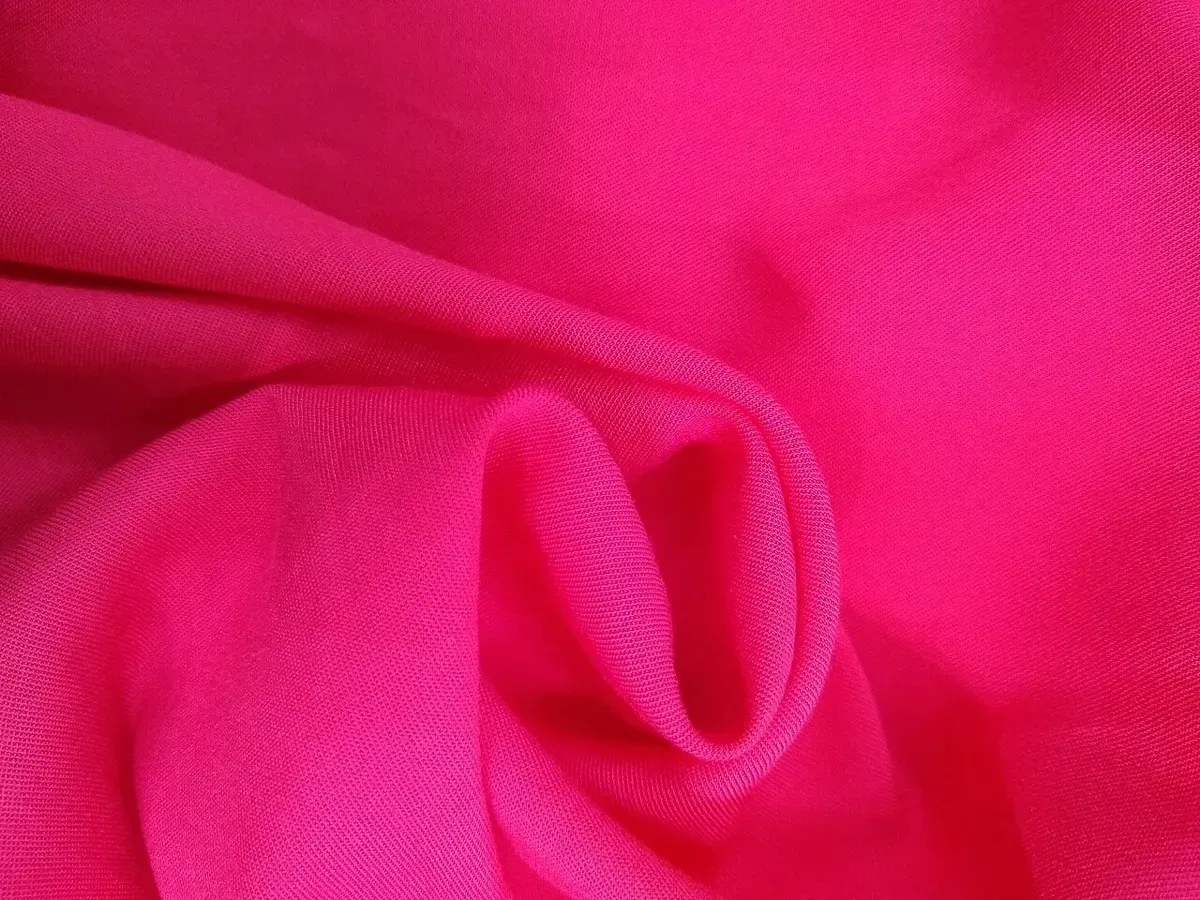
- “Rayon sample” by Arkirkland, 2023, released under CC0 (http://creativecommons.org/publicdomain/zero/1.0/deed.en), via Wikimedia Commons: https://commons.wikimedia.org/wiki/File:Rayon_sample.jpg