The problem
Business aviation produces about ten times more CO2 per passenger than commercial flights, Beyond Aero says, and it faces growing public and political scrutiny (Airframer). Sustainable aviation fuel cuts lifecycle emissions but still burns in the engine, and supplies are small and costly. Batteries are far too heavy for a jet that has to cross a continent.
Hydrogen fuel cells make electricity from hydrogen and air, with water as the only exhaust. The catch is that hydrogen takes up a lot of space, even when compressed, and a fuel cell system has to shed a great deal of heat. Fitting all of that into an existing airframe designed for kerosene is hard, which is why Beyond Aero decided to design a new aircraft around the fuel instead.
The product
The BYA-1, which Beyond Aero markets as “One”, is a hydrogen-electric business aircraft aimed at certification under EASA CS-25 and FAA Part 25 transport-category rules (Aerospace Testing International). After its preliminary design review in March 2026, the design has:
- six 400 kW fuel cells running on gaseous hydrogen, with 950 kW of total propeller shaft power;
- 700 bar hydrogen tanks mounted externally above the wing structure, which also accept 350 bar mobile refuelling;
- twin pusher propfans, replacing the electric ducted fans shown in earlier drawings;
- a planned range of 1,480 km at 556 km/h, a top speed of 667 km/h and a ceiling of 26,000 ft;
- a maximum take-off weight of 9,600 kg and a payload of 760 kg, for eight passengers and two pilots.
The tangible hardware so far is the powertrain. Beyond Aero says it has completed flight testing of an 85 kW sub-scale prototype, and it holds 800 kW-class propulsion data from full-scale flight tests through its purchase of Universal Hydrogen’s assets.
How it works
- Store: hydrogen gas is held at 700 bar in Type IV tanks above the wing, where any leak vents naturally into the air.
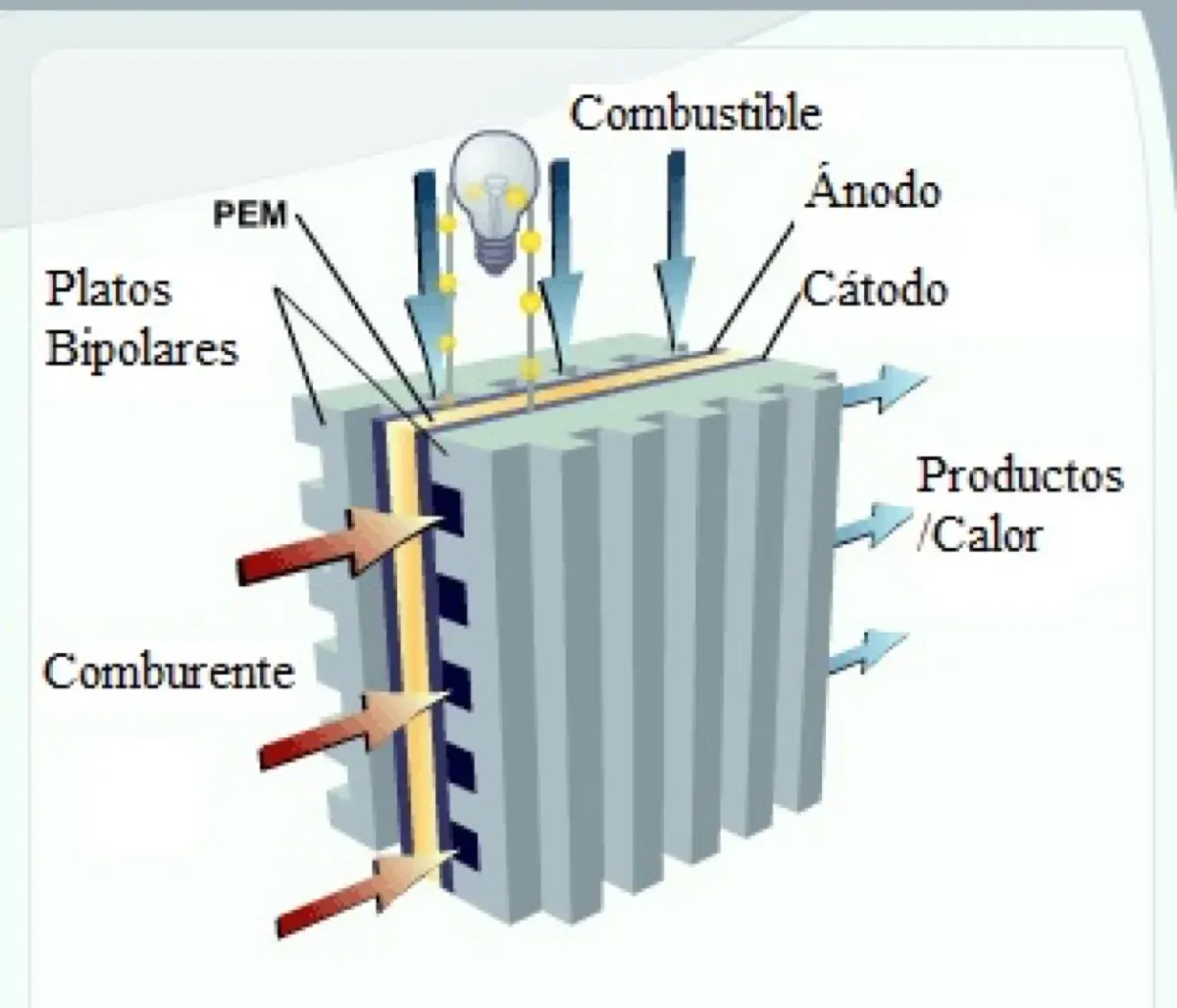
- Convert: low-temperature PEM fuel cells combine the hydrogen with oxygen from outside air to produce electricity, heat and water.
- Condition: DC-DC converters and power electronics shape the electricity for the motors.
- Cool: a thermal management system removes the fuel cells’ waste heat.
- Propel: electric motors drive two pusher propfans at the rear of the aircraft.
- Refuel: on the ground, the aircraft can take hydrogen from fixed 700 bar stations or 350 bar mobile refuellers, avoiding cryogenic liquid hydrogen.
Timeline
| Date | Milestone |
|---|---|
| 2020 | Beyond Aero founded in Toulouse |
| Feb 2024 | First hydrogen-powered flight in France, on a retrofitted two-seat light aircraft |
| Apr 2024 | Application for EASA Design Organisation Approval submitted |
| 29 Oct 2024 | USD 20 million Series A brings total capital to USD 44 million |
| Oct 2025 | Full-scale powertrain ground test reaches TRL6; Universal Hydrogen’s assets acquired |
| Mar 2026 | Preliminary design review completed; pusher propfans confirmed |
| Apr 2026 | Luxaviation Group named launch operator |
Impact and numbers
- First flight in France: in February 2024 Beyond Aero flew a two-seat light aircraft retrofitted with one of its hydrogen-electric powertrains, the first hydrogen-powered flight in France (AeroTime).
- Full power on the ground: in October 2025 the company said its fuel cell propulsion system had completed a full-scale test campaign to technology readiness level 6. Its Toulouse lab can run three channels with different fuel cell suppliers, up to 1,200 kW in total, and can compress, fill and store hydrogen at 700 bar (Aerospace Testing International).
- Inherited flight data: the same month it bought Universal Hydrogen’s intellectual property, flight test and digital data, test bench parts including electric turbocompressors, and key staff. Universal Hydrogen had flown a partly hydrogen-powered Dash 8 at Moses Lake, Washington in 2023 before it wound up in 2024 when it ran out of money (The Seattle Times).
- Supply chain: partners include EKPO, whose NM20 fuel cell platform does the energy conversion, plus FEV, AVL, BrightLoop and Bureau Veritas.
- Infrastructure: Beyond Aero says it has agreements with more than 10 airport operators and over 16 hydrogen production and distribution partners.
- Operating cost claims: the company says the all-electric powertrain has 90% fewer moving parts and could cut operating costs by up to 55%, with fuel costs 17% below Jet A-1 by 2030 (CompositesWorld).
- Money: the Series A was co-led by Giant Ventures and Bpifrance’s Deeptech 2030 fund, taking total capital, including debt and grants, to USD 44 million.
Honest caveats. The BYA-1 has not flown; what has flown is an 85 kW powertrain on a small two-seater, and the 800 kW-class data came from another company’s aircraft. Letters of intent worth USD 914 million for 108 aircraft are not binding orders, and Luxaviation is described as a launch operator that “could later this decade” perform demonstration flights, not as a buyer (FlightGlobal). The specifications have moved a lot: in 2025 the company described a CS-23 light jet with a 2.4 MW fuel cell stack, tanks inside the wingbox and a 573 km/h cruise speed, while the 2026 design is a CS-25 aircraft with tanks above the wing and propfans (FlightGlobal). USD 44 million is very little next to the cost of certifying a new transport-category aircraft. The cost savings are company projections, and the climate benefit depends on green hydrogen being available at business airports, which today it is not. The fate of Universal Hydrogen shows how quickly a hydrogen aviation start-up can run out of cash.
What’s next
The programme has moved into detailed design and verification of the integrated systems. The company still says it aims to deliver its first certified hydrogen-electric aircraft by 2030. Its EASA Design Organisation Approval application, filed in April 2024, has completed its first phase, with a second phase under way, and it holds a pre-application contract with EASA on the aircraft itself. With Luxaviation, it plans to study airport refuelling, ground handling and maintenance readiness before any demonstration flights.
Why it matters for Europe / green buyers
The EU’s ReFuelEU Aviation Regulation (EU) 2023/2405 obliges fuel suppliers at EU airports to supply rising shares of sustainable aviation fuels and counts renewable hydrogen for aviation as one route to cleaner flight (EUR-Lex). Business jet operators face the same pressure as airlines, with the added problem that their customers are highly visible. A French aircraft certified by EASA, with a mostly European supply chain, would give European operators a home-grown zero-emission option.
For India, the question is hydrogen supply, which the country is building. Under the National Green Hydrogen Mission, India targets 5 million tonnes of green hydrogen a year by 2030 and has backed pilot projects in mobility, steel and shipping (PIB). Gaseous hydrogen at 700 bar, the same pressure as hydrogen cars, could in principle be supplied from road refuelling networks as they appear.
Sources & image credits
- Aerospace Testing International, “Beyond Aero completes preliminary design review of hydrogen business jet” (18 Mar 2026): https://www.aerospacetestinginternational.com/news/beyond-aero-completes-preliminary-design-review-of-hydrogen-business-jet.html
- FlightGlobal, “Beyond Aero picks pusher props over ducted fans as it advances hydrogen business jet past PDR” (Mar 2026): https://www.flightglobal.com/business-jets/2026/03/beyond-aero-picks-pusher-props-over-ducted-fans-as-it-advances-hydrogen-business-jet-past-pdr/
- Aerospace Testing International, “Beyond Aero hits key testing milestone with hydrogen-electric aircraft propulsion system” (2 Oct 2025): https://www.aerospacetestinginternational.com/news/beyond-aero-hits-key-testing-milestone-with-hydrogen-electric-aircraft-propulsion-system.html
- Airframer (Beyond Aero press release), “Beyond Aero raises total capital to $44M to electrify aviation with hydrogen propulsion” (Oct 2024): https://www.airframer.com/news/release/beyond-aero-raises-total-capital-to-44m-to-electrify-aviation-with-hydrogen
- AeroTime, “Beyond Aero closes €20M Series A funding round” (29 Oct 2024): https://www.aerotime.aero/articles/french-hydrogen-aviation-startup-beyond-aero-closes-e20m-series-a-funding-round
- CompositesWorld, “BYA-1 jet integrates 700-bar hydrogen tanks above wing box” (23 Mar 2026): https://www.compositesworld.com/news/bya-1-jet-integrates-700-bar-hydrogen-tanks-above-wing-box
- FlightGlobal, “Beyond Aero leverages BYA-1 launch operator Luxaviation to drive operational readiness” (Apr 2026): https://www.flightglobal.com/business-jets/2026/04/beyond-aero-leverages-bya-1-launch-operator-luxaviation-to-drive-operational-readiness/
- The Seattle Times, “Universal Hydrogen, pioneer of hydrogen-powered flight, goes bust” (2024): https://www.seattletimes.com/business/boeing-aerospace/universal-hydrogen-pioneer-of-hydrogen-powered-flight-goes-bust/
- EUR-Lex, Regulation (EU) 2023/2405 (ReFuelEU Aviation): https://eur-lex.europa.eu/eli/reg/2023/2405/oj/eng
- Press Information Bureau, Government of India, National Green Hydrogen Mission release: https://www.pib.gov.in/PressReleasePage.aspx?PRID=2189126
Images:
- “Planar Stack PEM” by the US Department of Energy, Office of Energy Efficiency and Renewable Energy (EERE), public domain, via Wikimedia Commons: https://commons.wikimedia.org/wiki/File:Planar_Stack_PEM.jpg