The problem
India is getting hotter, and millions of people work in heat with no cooling at all: factory workers, guards, drivers, vendors and construction crews. Heat stress cuts productivity and can be deadly. Air conditioners cannot cool open or semi-open spaces, they dump heat into the street, they use refrigerants that warm the climate if they leak, and their electricity demand adds to peak loads on India’s grid.
The India Cooling Action Plan, published in 2019, projects India’s total cooling demand to grow about eight times by 2037-38 compared with 2017-18 (MoEFCC). Most of that would be met by air conditioning unless cheaper, passive options become normal.
The product
The CoolAnt Beehive is an evaporative cooling installation designed as public art. Hundreds of porous terracotta cones, made by local potters, are stacked in a honeycomb pattern on a steel frame. Water trickles over and through the cones from a tank, and hot air passing through them is cooled as the water evaporates (CoolAnt).
According to Ant Studio:
- there is no refrigerant and no plastic in the cooling surface;
- water is recirculated from a collection tank, and a small pump is the main power use;
- a Beehive about 15 feet tall and 10 feet across, with a cooling radius of about 15 feet, uses about 0.63 kWh an hour (MIT Solve);
- the design is modular and can be built as a screen, a facade or a free-standing sculpture.
The studio says that moss and biofilm that grow naturally on the wet terracotta also help trap dust, and it has stopped removing them in outdoor installations (UNEP). It also offers other products, including terracotta facade and tile installations.
How it works
- Wet: a pump lifts recirculated water to the top of the frame, and it runs over the terracotta cones.
- Soak: porous clay absorbs water, so both the inner and outer surfaces of each cone stay wet.
- Flow: hot air, from the wind, a fan or, at the first site, a diesel generator’s exhaust, passes through the cones.
- Evaporate: water evaporating from the clay takes heat from the air, lowering its temperature.
- Collect: excess water drips into a tank below and is reused.
The beehive geometry gives a large wet surface in a small footprint and was refined using computational analysis, the studio says.
Timeline
| Date | Milestone |
|---|---|
| 2010 | Monish Siripurapu founds Ant Studio in New Delhi |
| 2017 | First Beehive installed at Deki Electronics, Noida, to cool air from a generator |
| Feb 2019 | One of 12 winners of UN Environment’s Asia-Pacific Low-Carbon Lifestyles Challenge (US$10,000 grant) |
| After 2019 | Selected for What Design Can Do’s Clean Energy Challenge; about 20 installations and 150 enquiries reported |
Impact and numbers
- First site: at Deki Electronics in Noida, a diesel generator at the entrance blew hot air at workers in an area where temperatures already approached 40 to 50 °C. After installation, temperatures around the Beehive fell by 6 to 8 °C when outside air was above 40 °C (designboom, CoolAnt).
- Energy: about 0.63 kWh an hour for a large installation, roughly a quarter to a third of a 1.5 tonne air conditioner, as stated by the studio.
- Growth: What Design Can Do reports about 20 installations, 150 enquiries, US$40,000 raised for R&D and a team that grew from three to seven full-time staff (What Design Can Do).
- Durability: the studio claims a 25-year life, longer than an air conditioner.
Honest caveats. Almost all performance figures come from Ant Studio itself or from award write-ups based on its material; no independent, peer-reviewed measurement was found. The 6 to 8 °C drop is measured close to the installation, not across a whole space. Evaporative cooling works best in hot, dry air, as in Delhi in May, and loses much of its effect in humid monsoon weather or in coastal cities such as Mumbai and Chennai. It also uses water, which is scarce in many Indian cities in summer, and the studio does not publish water consumption per installation. Cooling and air cleaning at the first site depended on a strong air flow from a generator; elsewhere, fans may be needed. What Design Can Do notes that the main challenge is standardising manufacture, which depends entirely on local potters. With around 20 installations, CoolAnt is still a small, early business.
What’s next
Ant Studio wants to make smaller, standard units for cafes, railway and metro stations, bus stops and tourist sites, and is exploring “personal cooling” that cools the air around people rather than whole rooms. The key steps for scale are standard modules, reliable supply of cones, and independent testing that buyers and governments can rely on. Public buyers such as railway operators, metro companies and municipal corporations would be the biggest prize, but they usually need tested specifications before they can include a product in tenders.
Why it matters for Europe / green buyers
Southern Europe is getting Indian-style summers, and cities are looking for ways to cool streets, playgrounds and bus stops without adding to air conditioning. The EU Nature Restoration Regulation, Regulation (EU) 2024/1991, pushes cities to keep and grow urban green space and tree canopy (EUR-Lex), but trees take years to grow. Low-tech evaporative devices made of local clay, similar to traditional Mediterranean water jars, could provide quick, low-carbon cool spots in dry heat in Spain, Italy and Greece. European buyers would want measured cooling, water use and hygiene data, including checks for legionella in recirculated water.
In India, the case is stronger. Workers in factories, warehouses, markets and transport hubs face rising heat with little protection, and city heat action plans increasingly call for cooling in public spaces. A refrigerant-free cooler built by local potters supports rural crafts and cuts electricity demand. With independent testing and standard designs, products like CoolAnt could become part of India’s response under the India Cooling Action Plan.
Sources & image credits
- CoolAnt (Ant Studio), “Beehive”: https://www.coolant.co/products/beehive
- CoolAnt, “Deki Electronics” project gallery: https://www.coolant.co/gallery/deki-electronics
- designboom, “ant-studio develops terracotta ‘beehive’, an alternative to air conditioning” (28 Sep 2017): https://www.designboom.com/design/ant-studio-deki-cooling-installation-09-28-2017/
- UN Environment Programme, “Indian architect turns to bees and terracotta to design innovative cooling system” (4 Feb 2019): https://www.unep.org/news-and-stories/story/indian-architect-turns-bees-and-terracotta-design-innovative-cooling-system
- What Design Can Do, “Beehive: a biomimetic cooler and air purifier made from earthenware pots”: https://www.whatdesigncando.com/project/beehive/
- MIT Solve, “CoolAnt: Beehive” solution profile: https://solve.mit.edu/solutions/9284
- Ministry of Environment, Forest and Climate Change (India), India Cooling Action Plan (2019): https://ozonecell.nic.in/wp-content/uploads/2019/03/INDIA-COOLING-ACTION-PLAN-e-circulation-version080319.pdf
- EUR-Lex, Regulation (EU) 2024/1991 on nature restoration: https://eur-lex.europa.eu/eli/reg/2024/1991/oj/eng
Images:
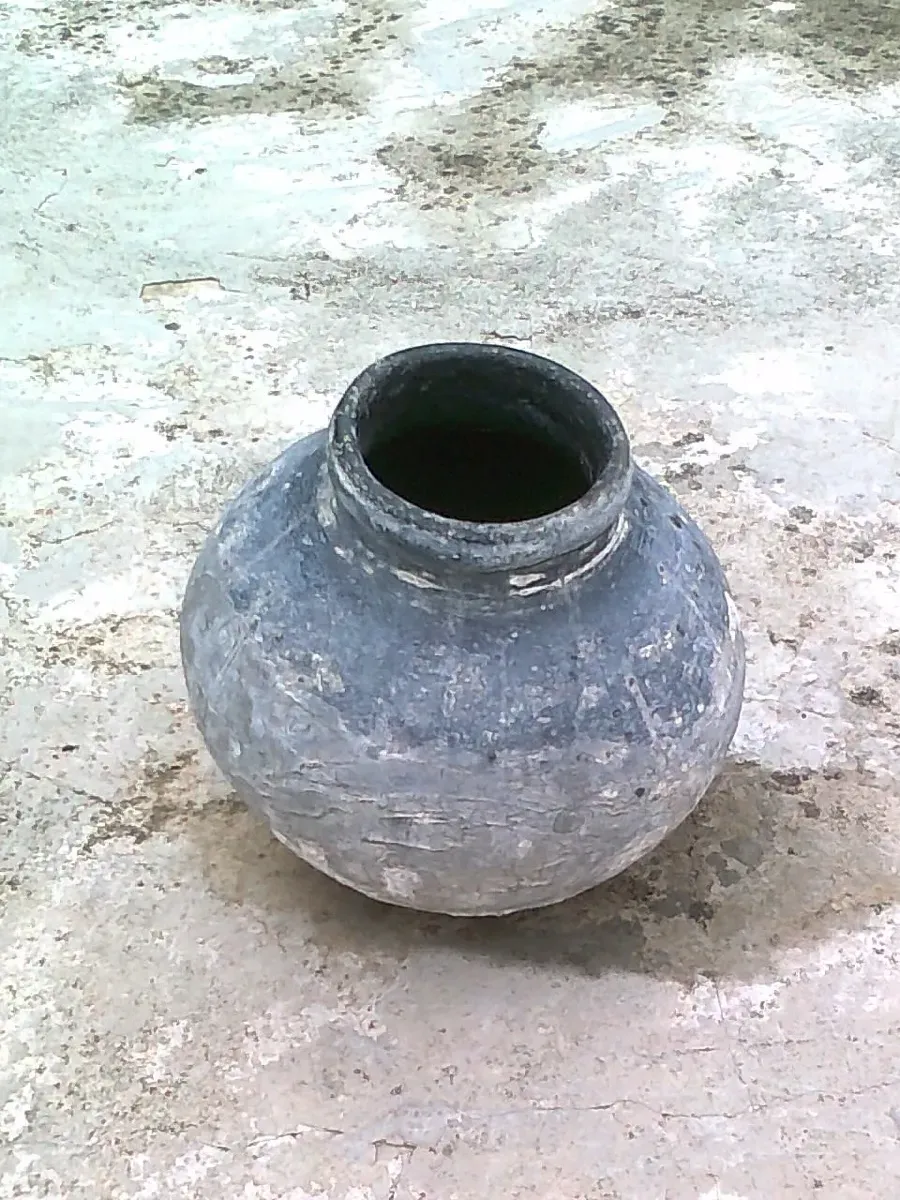
- “Matki (earthen pot)” by Abhi, 2014, licensed under CC BY-SA 3.0 (https://creativecommons.org/licenses/by-sa/3.0), via Wikimedia Commons: https://commons.wikimedia.org/wiki/File:Matki_%28earthen_pot%29.jpg